
Beautiful Plants For Your Interior
Beautiful Plants For Your Interior
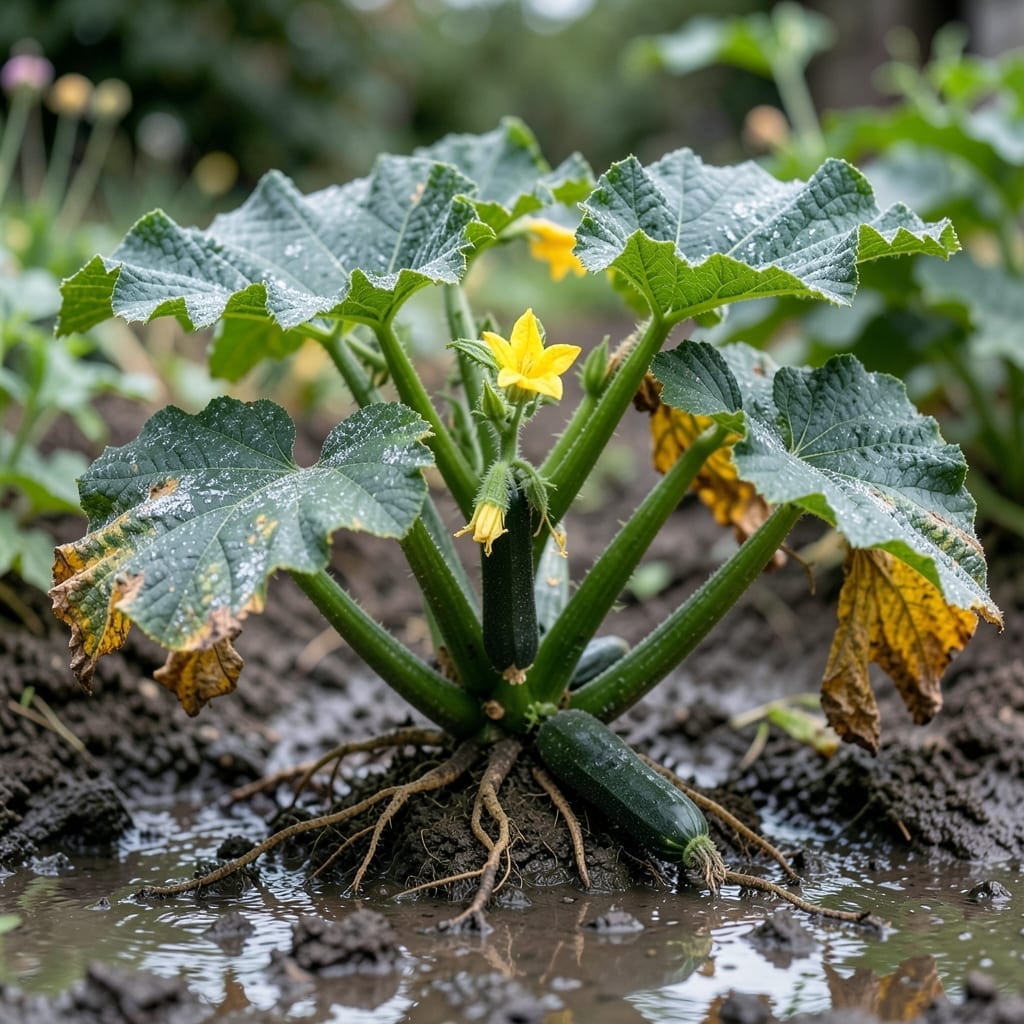
Yellow leaves and droopy stems in your zucchini patch mean trouble. I’ve seen this exact scenario play out in my own garden—overwatering is the silent killer that sneaks up when you’re trying too hard to care for your plants.
The problem starts with good intentions: you want to keep the soil moist, but zucchini roots need air as much as water. Soggy conditions suffocate the roots, leading to wilting that looks suspiciously like underwatering. It’s confusing until you check the soil.
You can turn this around in 24-48 hours with the right approach. The key is letting the soil dry slightly between waterings while improving drainage. Your plants will bounce back faster than you expect.
This fix works for container-grown and in-ground zucchini alike. The same principles apply whether you’re dealing with heavy clay soil or a pot without proper drainage holes.
Overwatering your zucchini plant isn’t just about giving it too much water—it’s about disrupting the delicate balance of moisture, oxygen, and nutrients in the soil. Here’s why it happens:
Zucchini plants thrive in well-draining soil. When the soil retains too much water (e.g., clay-heavy or compacted soil), roots suffocate. Root asphyxiation occurs because water fills the air pockets that roots need for respiration. Without oxygen, roots rot, leading to wilting leaves and stunted growth.
Watering too often—especially in small amounts—encourages shallow root systems. Zucchini roots grow deep to seek moisture, but if the topsoil is constantly damp, they stay near the surface. This makes the plant more vulnerable to drought stress and overwatering, as the roots can’t access deeper, drier layers.
Large pots or containers without drainage holes trap excess water. Even with good soil, gravity can’t pull water away from the roots. Fungal pathogens like Phytophthora thrive in soggy conditions, attacking the roots and stems. Always use containers with drainage and match the pot size to the plant’s needs.
Cool temperatures or high humidity slow evaporation, leaving soil wet longer. If you water on a fixed schedule without checking soil moisture (stick your finger 1–2 inches deep—if it’s damp, wait), you risk overwatering. Zucchinis in shaded areas or during rainy spells need even less frequent watering.
If your zucchini plant is showing signs of overwatering, don’t panic—it’s often fixable! Start by addressing the root causes with these practical steps.
If the leaves are turning yellow, the soil is likely waterlogged. Stop watering immediately and let the top 1-2 inches of soil dry out. Check your pot or garden bed for proper drainage: if water pools on the surface, amend the soil with compost or perlite to improve aeration. For container plants, ensure drainage holes are unclogged.
Prevention tip: 💡 Use well-draining soil from the start, and avoid heavy clay mixes.
Wilting despite wet soil? This means roots are suffocating. Hold off on watering for 3–5 days, then resume with a lighter hand. If stems are mushy, trim affected areas with clean shears to prevent rot from spreading. Water only when the top inch of soil feels dry to the touch.
Prevention tip: 🌡️ Water deeply but less frequently—zucchinis prefer 1–1.5 inches per week, including rain.
White mold or black spots on leaves signal excess moisture. Remove damaged foliage and space plants at least 2–3 feet apart for better airflow. Water at the base (not overhead) to keep leaves dry. A light layer of mulch can help regulate soil moisture without trapping water.
Prevention tip: ✨ Water in the early morning so leaves dry by evening, reducing fungal risks.
With these adjustments, your zucchini should bounce back in 1–2 weeks. Consistency is key—stick to a watering schedule and always check soil moisture before adding more!
Water deeply 1-2 times per week, allowing the top 1-2 inches of soil to dry between waterings. Adjust based on rainfall and temperature—more in heat, less in cool weather.
Yes, if caught early. Stop watering immediately, improve drainage, and remove severely damaged leaves. New growth should appear within 7-10 days.
Use well-draining mix with compost and perlite. Avoid heavy clay or compacted soil. For containers, ensure drainage holes are unclogged.
Wilting in soggy soil signals root suffocation. Roots can’t breathe in waterlogged conditions, causing the plant to wilt despite moisture. Stop watering and let soil dry.