
Beautiful Plants For Your Interior
Beautiful Plants For Your Interior
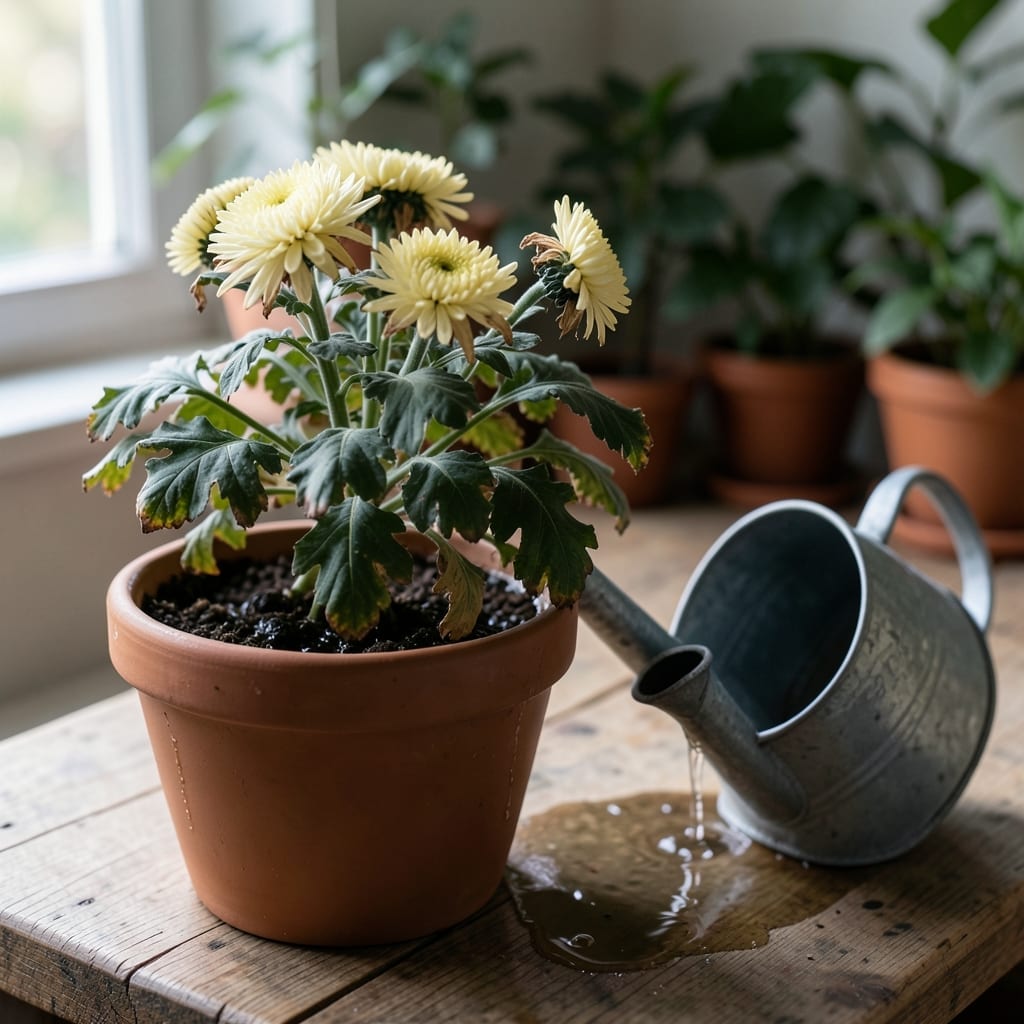
Yellowing leaves and mushy stems spell trouble for potted mums. I’ve lost more than a few to overwatering before learning the warning signs—soggy soil, wilting despite wet conditions, and that telltale sour smell from the roots.
This problem sneaks up fast, especially in cool weather when plants drink less. The fix starts with stopping the water and checking the roots—black and slimy means trouble, but firm white roots can still bounce back.
With a few simple steps—better drainage, fresh soil, and a sunnier spot—you can nurse them back to health. Most recover in 7-10 days if caught early enough.
Prevention is easier than cure: water only when the top inch of soil feels dry, and always use pots with drainage holes.
Overwatering potted mums often stems from well-intentioned but misguided care. Understanding the root causes can help you adjust your routine and prevent soggy, suffering plants.
Many pots lack adequate drainage holes, trapping excess water at the roots. Even with holes, compacted soil or a missing drainage layer (like gravel) can slow water escape, leading to waterlogged conditions. Mums thrive in well-draining soil—without it, their roots suffocate and rot.
Consistency doesn’t mean frequency. Watering on a rigid schedule (e.g., daily) ignores the plant’s actual needs, which vary by season, humidity, and pot size. Mums prefer soil that dries slightly between waterings—constant moisture disrupts their ability to absorb oxygen.
Oversized pots hold more soil, which retains moisture longer. Smaller pots dry out faster, but if they’re paired with heavy soil, they can still trap too much water. Match pot size to the mum’s root ball and use a lightweight, porous potting mix to balance moisture.
Cool temperatures or low light slow evaporation, so watering habits that work in summer may drown mums in fall. Always check soil moisture (stick your finger an inch deep) before watering, and adjust for weather and indoor conditions.
Reviving overwatered potted mums starts with quick, targeted fixes. Here’s how to tackle the most common issues and prevent future soggy disasters:
If your pot is swimming, stop watering immediately and tilt the container to drain excess moisture. Place it in a shaded, well-ventilated spot to speed up drying. For severe cases, gently remove the plant, wrap the root ball in a dry towel to absorb moisture, and repot in fresh, well-draining soil.
Prevention tip: 💡 Always use pots with drainage holes, and empty saucers 30 minutes after watering.
Trim off mushy, discolored leaves with clean scissors to redirect energy to healthy growth. Check the roots—if they’re brown and soft, trim the rotten parts before repotting. Hold off on watering until the top inch of soil feels dry.
Prevention tip: ✨ Water only when the soil is dry to the touch, and use a moisture meter for precision.
Fungus or a sour smell means root rot has set in. Remove the plant from its pot, rinse the roots under lukewarm water, and snip off any black or slimy sections. Repot in sterile potting mix and a clean container. Treat with a copper-based fungicide if the issue persists.
Prevention tip: 🎯 Space pots apart for airflow, and avoid overhead watering to keep foliage dry.
If your mum isn’t bouncing back, it may need a nutrient boost. Use a balanced, water-soluble fertilizer (diluted to half strength) to avoid stressing the roots further. Keep the plant in bright, indirect light and resist the urge to overcompensate with extra water.
Prevention tip: 🌡️ Feed mums lightly every 4–6 weeks during the growing season, not when they’re waterlogged.
Look for yellowing leaves, mushy stems, or a sour smell from the soil. The roots may appear brown and slimy when gently checked.
Stop watering immediately and move the pot to a shaded, well-ventilated area. For severe cases, remove the plant and wrap the root ball in a dry towel to absorb excess moisture.
Yes, if caught early. Trim off black or slimy roots, rinse the remaining ones, and repot in fresh, sterile soil. Treat with fungicide if needed.
Only when the top 1 inch of soil feels dry. In cool weather, this may mean watering every 5-7 days instead of daily.