
Beautiful Plants For Your Interior
Beautiful Plants For Your Interior
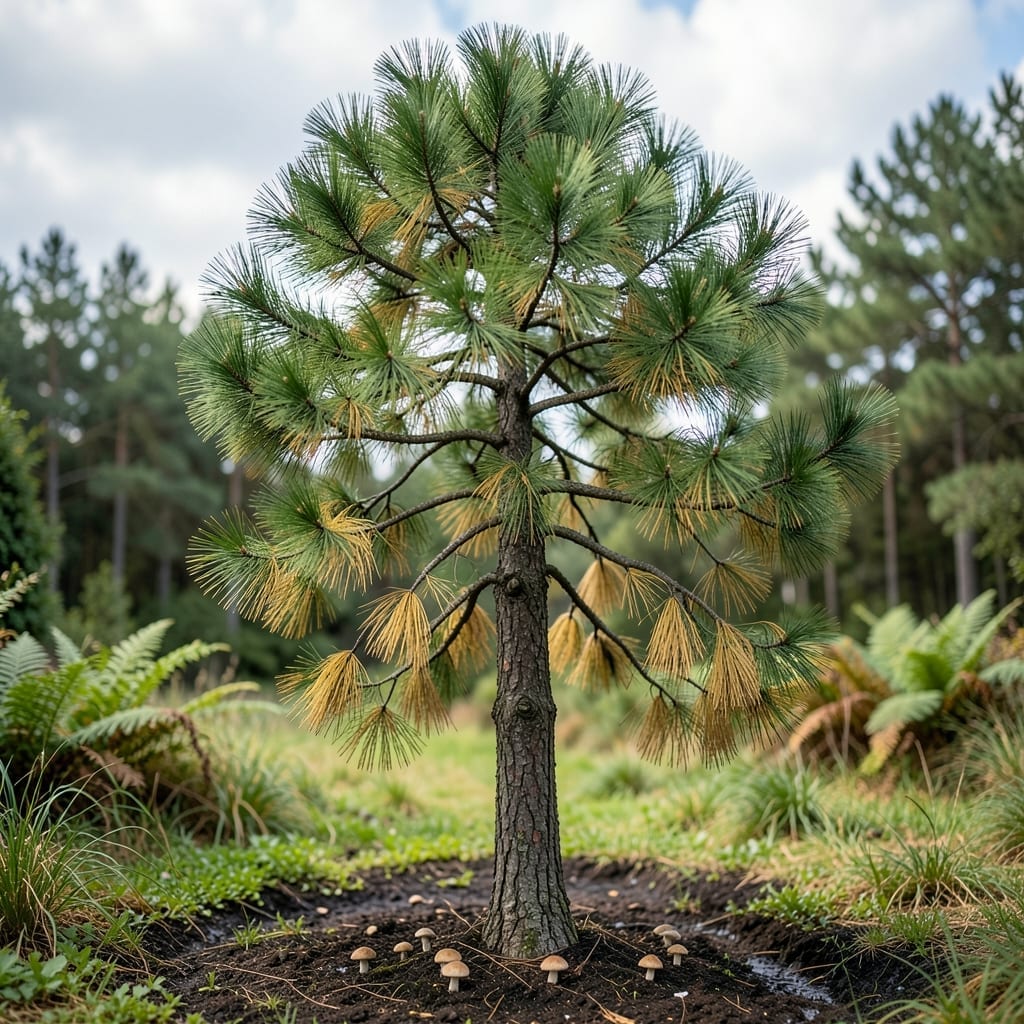
That sinking feeling when your pine’s needles turn yellow? I’ve been there. Overwatering sneaks up fast, especially with pines that prefer it on the dry side.
Root rot starts where you can’t see it—underground. The first clue is often needles dropping or turning brown at the tips. Left too long, the tree stops growing and the bark may darken.
Here’s the thing—pines in well-draining soil rarely have this problem. It’s usually our enthusiasm with the hose that causes trouble. The fix starts with letting the soil dry out between waterings.
Recovery is possible if you act quickly. I’ll walk you through the steps to nurse your pine back to health.
Overwatering a pine tree isn’t just about giving it too much water—it’s about disrupting the delicate balance of its root system and environment. Here’s why it happens:
Pine trees thrive in well-draining soil. When planted in compacted or clay-heavy soil, water pools around the roots instead of filtering through. This suffocates the roots, preventing them from absorbing oxygen, and creates the perfect anaerobic conditions for Phytophthora and other root-rot fungi to thrive.
Many gardeners assume more water equals healthier growth, but pines are drought-tolerant and prefer infrequent, deep watering. Frequent shallow watering keeps the soil constantly moist, which softens the roots and invites pathogens. A mature pine typically needs only 1–2 inches of water per week, including rainfall.
Pines planted in low-lying areas, near downspouts, or in poorly graded landscapes are prone to waterlogging. Their natural habitat is often sandy or rocky soil with excellent drainage. If the site collects runoff or has a high water table, the tree’s roots can’t escape excess moisture.
While mulch helps retain moisture, piling it too high (over 3–4 inches) or directly against the trunk traps moisture against the bark and roots. This encourages fungal growth and can lead to girdling roots, where roots grow in circles and strangle the tree. Always leave a 2–3 inch gap around the base.
If your pine tree is suffering from overwatering, quick action can help it recover. Below are targeted fixes for common issues, along with prevention tips to keep your tree healthy long-term.
If the soil around your pine tree is soggy, stop watering immediately. Use a garden fork to gently aerate the soil, which helps water drain faster. For severe cases, create small trenches around the base to redirect excess water. Consider mixing in sand or gravel to improve soil structure. Prevention tip: Always check soil moisture before watering—pines prefer dry conditions over damp ones. 💡
If you notice dark, mushy roots, root rot may have set in. Trim away affected roots with sterilized pruning shears, then apply a copper-based fungicide to the remaining healthy roots. Replace the soil with fresh, well-draining mix. Prevention tip: Avoid over-mulching, as it can trap moisture. Keep mulch thin and away from the trunk. ✨
Yellow or drooping needles often signal overwatering. Let the soil dry out completely between waterings. If your pine is in a container, ensure the pot has drainage holes. Prevention tip: Water deeply but infrequently—once every 2-3 weeks is usually enough for established pines. 🎯
Overwatering can deplete soil nutrients. Add organic compost or a balanced fertilizer to restore vitality. Avoid high-nitrogen fertilizers, as they can stress the tree further. Prevention tip: Test your soil’s moisture and nutrient levels regularly to maintain optimal conditions. 🌡️
Look for yellowing needles, especially near the bottom, and bark that appears darker or softer than usual. The soil may stay soggy long after watering.
Only if the damage is minor. Stop watering immediately and let the soil dry completely. For severe cases, you’ll need to improve drainage and possibly treat root rot.
Water deeply but rarely—once every 2-3 weeks is often enough for established trees. Always check soil moisture first; pines prefer dry conditions over damp ones.