
Beautiful Plants For Your Interior
Beautiful Plants For Your Interior
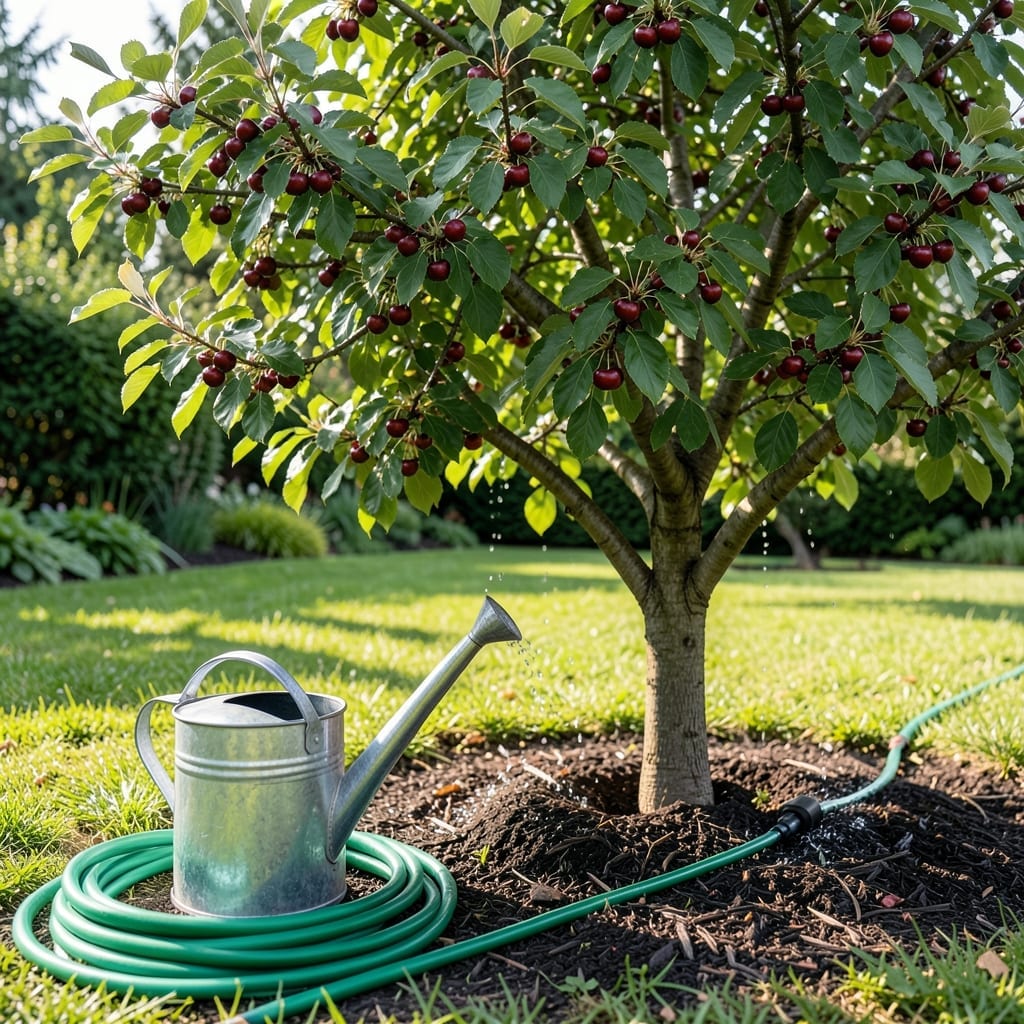
Proper watering is the key to a thriving 🌳 Cherry Tree, but overdoing it can be just as harmful as underwatering.
Many gardeners struggle to find the right balance, especially as seasons change. What works in spring may drown your tree in summer.
I’ll show you exactly how to adjust your approach for each growth stage. Whether you’re nurturing a young sapling or maintaining a mature tree, getting this right ensures healthy growth.
Discover the simple but crucial seasonal adjustments that make all the difference for your Cherry Tree’s productivity and longevity.
Getting the watering right for your cherry tree means understanding its changing needs through the seasons. I’ve found that young trees need more frequent attention than mature ones, especially during their first two years.
In spring, as your tree starts to bloom, it’s crucial to provide consistent moisture to support flower and leaf development. This is when the root system is most active, soaking up nutrients for growth.
| Season | Water Frequency | Key Notes |
|---|---|---|
| Spring | Weekly | Deep soak for bloom support |
| Summer | 2x per week | Critical for fruit development |
| Fall | Bi-weekly | Prepare for dormancy |
| Winter | Monthly | Minimal for root health |
During summer, your cherry tree is working hard to produce fruit. I recommend watering deeply twice a week, especially if you’re in a dry climate. This prevents fruit splitting and ensures juicy, healthy cherries.
As fall approaches, start tapering off the water to help your tree prepare for winter dormancy. Bi-weekly watering is usually sufficient, but always check the soil moisture first. If it’s still damp 2 inches down, you can skip a session.
In winter, your tree needs very little water, but don’t let the roots dry out completely. A monthly deep soak on a warmer day should do the trick, especially for young trees that are still establishing themselves.
For young cherry trees, I’ve found that consistent moisture is key during the first two years. Aim for 1-2 inches of water per week, either from rainfall or irrigation. This helps the root system grow strong and deep.
Mature trees are more drought-tolerant but still need regular watering, especially during fruit set and hot spells. A good rule of thumb is to water when the top 2-3 inches of soil are dry.
If you’re dealing with drought conditions, prioritize deep watering over frequent shallow sessions. This encourages the roots to grow deeper, making your tree more resilient in the long run.
Always water in the early morning to reduce evaporation and prevent fungal diseases. This gives your tree the best chance to absorb the moisture before the heat of the day kicks in.
Remember, overwatering can be just as harmful as underwatering. Yellowing leaves or waterlogged soil are signs you might be giving your cherry tree too much love 🌳
I’ve found that cherry trees often show clear distress signals when their water needs aren’t being met. Recognizing these early can save your tree from stress or even fruit loss. 🌳
One of the most obvious signs is wilting leaves, which can indicate underwatering. On the flip side, yellowing leaves might signal overwatering or poor drainage.
Another key indicator is fruit splitting, which often happens when there’s uneven watering during the fruit development stage. This is especially common in summer months when trees need consistent moisture.
Don’t overlook soil conditions. If the soil around your cherry tree is bone dry a few inches down, it’s time to water deeply. Conversely, if it’s soggy, you may be overdoing it.
Fungal growth at the base is a red flag for overwatering. Cherry trees prefer well-draining soil, and standing water can lead to root rot, which is often fatal.
Finally, leaf drop outside of fall can signal water stress. If your tree is shedding leaves in summer, check your watering routine immediately. 🌿