
Beautiful Plants For Your Interior
Beautiful Plants For Your Interior
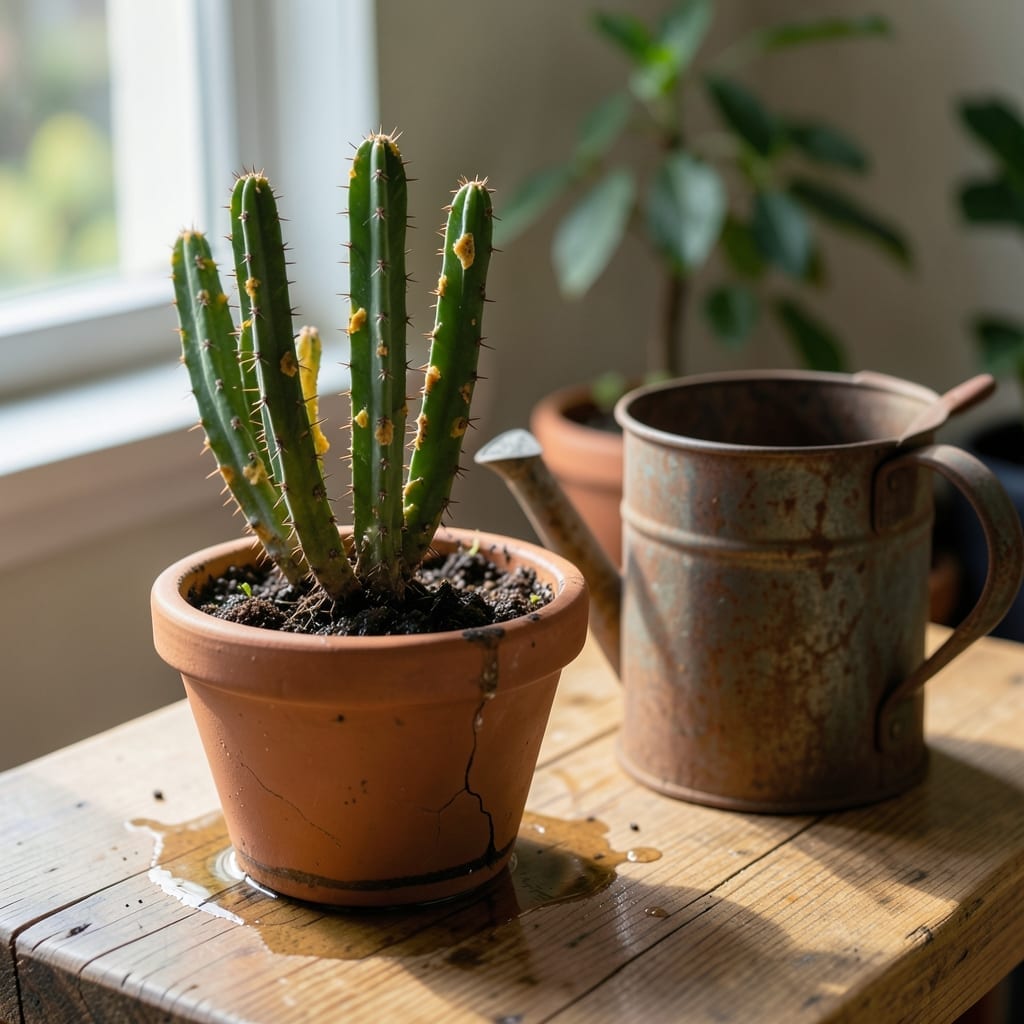
Yellowing stems and mushy roots spelled disaster for my first pencil cactus. Overwatering is the silent killer—this plant thrives on neglect, not kindness.
I learned the hard way that these succulents need dry soil between waterings and full light to bounce back. The fix starts with stopping all water and checking the roots for rot.
With the right drainage and a sunny spot, you’ll see new growth in 2-3 weeks. The key is patience and resisting the urge to dote on it.
Prevent future issues with a well-draining mix and a pot with holes. Trust me, less really is more with this one.
The pencil cactus (Euphorbia tirucalli) is a drought-tolerant succulent that thrives in arid conditions. Overwatering disrupts its natural survival mechanisms, leading to root rot and other issues. Here’s why it happens:
Pencil cacti store water in their thick, fleshy stems, allowing them to survive long dry spells. When watered too often, the soil remains soggy, suffocating the roots. Water only when the top 1-2 inches of soil are completely dry—this mimics its native desert environment.
Pots without drainage holes trap excess water, creating a stagnant, oxygen-deprived environment. Even well-draining soil can’t compensate for a container that doesn’t allow water to escape. Always use pots with drainage holes and a gritty, fast-draining soil mix (e.g., cactus/succulent blend with perlite or sand).
Dense, moisture-retentive soils (like regular potting mix) hold water for too long. Pencil cacti need a porous, aerated medium to prevent root rot. Opt for a mix with 50-70% inorganic materials (perlite, pumice, or coarse sand) to ensure rapid drainage.
Planting a pencil cactus in a container that’s too large can also lead to overwatering. Larger pots hold more soil, which stays wet longer, increasing the risk of root rot. Choose a pot just slightly larger than the plant’s root ball to avoid excess moisture retention.
If your pencil cactus is suffering from overwatering, act fast to prevent root rot and restore its health. Below are targeted fixes for common issues, along with prevention tips to keep your plant thriving.
Repot your cactus in a well-draining mix (e.g., cactus/succulent soil with perlite or sand). Use a pot with drainage holes to allow excess water to escape. If the soil is waterlogged, remove the plant, trim any black/mushy roots, and let it dry for a day before repotting.
Prevention: Water only when the top 1-2 inches of soil are completely dry. 💡 Pro tip: Stick your finger in the soil—if it’s damp, wait!
Cut back on watering immediately. Pencil cacti are drought-tolerant and prefer infrequent, deep watering over small, frequent sips. If leaves are yellow or falling, hold off on water for 1-2 weeks, then resume a moderate schedule (e.g., every 3-4 weeks in summer, less in winter).
Prevention: Use a moisture meter or the finger test to avoid guesswork. 🌡️ Pro tip: Water in the morning to allow excess moisture to evaporate during the day.
If you notice a foul smell or dark, mushy roots, your cactus may have root rot. Carefully remove it from the pot, trim all affected roots with sterilized scissors, and repot in fresh, dry soil. Avoid watering for at least a week to let the roots recover.
Prevention: Always use clean pots and tools to prevent bacterial/fungal spread. ✨ Pro tip: Add a layer of gravel at the bottom of the pot to enhance drainage.
Overwatering often goes hand-in-hand with insufficient light, leading to weak, leggy growth. Move your cactus to a bright, sunny spot (south- or west-facing window) and rotate it occasionally for even exposure. If natural light is limited, supplement with a grow light for 6-8 hours daily.
Prevention: Pair proper watering with adequate light to keep your cactus compact and healthy. 🎯 Pro tip: Dust leaves occasionally to maximize light absorption.
Water only when the top 1-2 inches of soil are bone dry. Typically, this means every 3-4 weeks in summer, even less in winter.
Yes, if you act quickly! Remove it from the pot, trim all black or soft roots, and repot in fresh, dry soil. Wait 1 week before watering again.
Use a container with drainage holes that’s just slightly larger than the root ball. Terracotta pots are ideal because they allow soil to dry faster.
This is a classic sign of excess moisture. Stop watering immediately and ensure the pot has proper drainage. Yellow stems often recover with 2-3 weeks of dry conditions.