
Beautiful Plants For Your Interior
Beautiful Plants For Your Interior
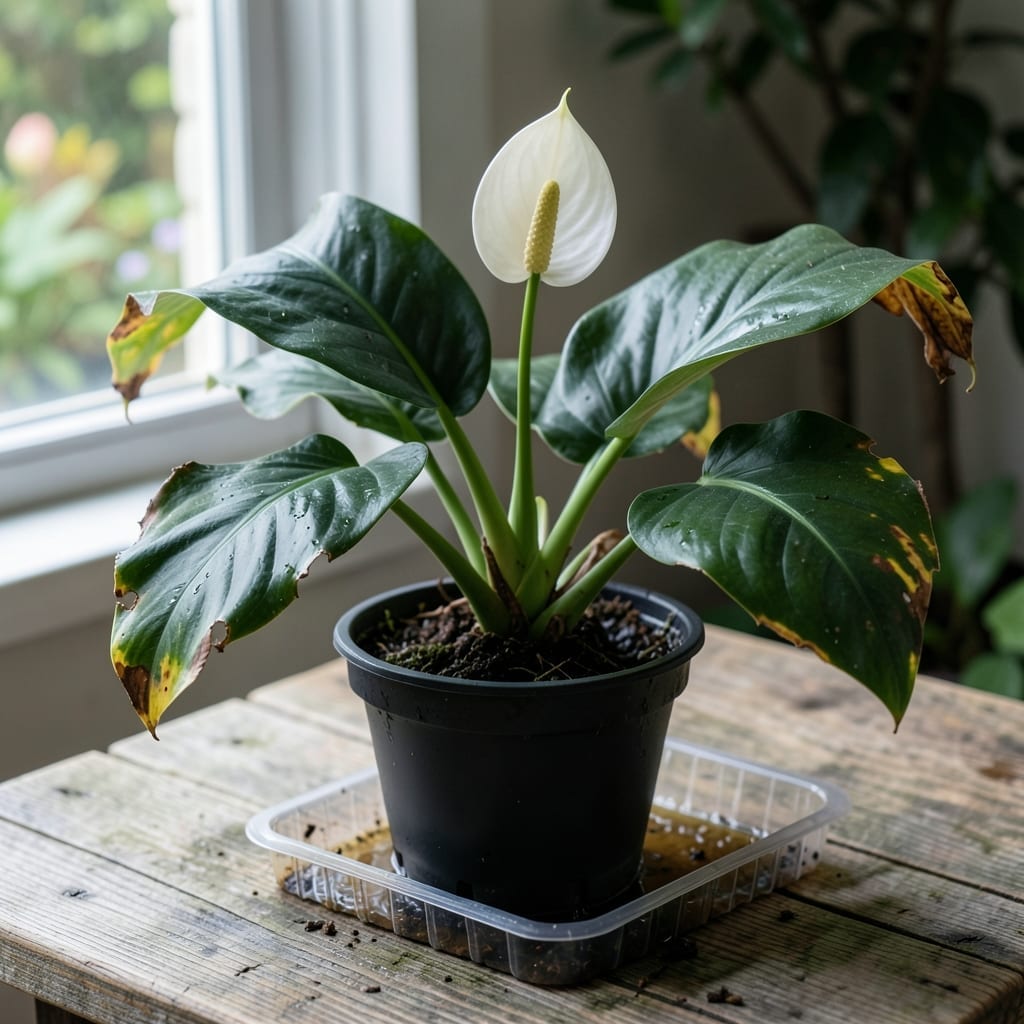
Drooping yellow leaves on your peace lily? That’s the classic sign. I’ve saved dozens from overwatering by acting fast when I see the first limp stems.
Here’s the thing—most people think more water equals happier plants, but peace lilies drown easily. The roots suffocate, turning mushy and brown, while the soil stays soggy for days. I learned this after killing three before getting it right.
Pull it from the pot immediately and check the roots. Healthy ones are white and firm. Cut away the dark, squishy ones without hesitation. This seems drastic but it’s the only way to stop the rot from spreading.
Repot in fresh soil with good drainage. Within 2 weeks, you’ll see new growth if you caught it in time. The plant tells you exactly what it needs—listen to those leaves.
Overwatering a peace lily (Spathiphyllum) is often the result of well-meaning but misguided care. This common issue stems from a few key causes, each tied to how the plant interacts with its environment.
Peace lilies thrive in well-draining soil and pots with drainage holes. When water cannot escape, it pools at the bottom, suffocating the roots. Root asphyxiation occurs because the roots cannot absorb oxygen from waterlogged soil, leading to rot and decay.
Many plant owners water on a fixed schedule rather than checking soil moisture. Peace lilies prefer their soil to dry slightly between waterings. Consistent overwatering disrupts this balance, causing the soil to remain soggy and promoting fungal growth like Pythium or Phytophthora.
Using a pot without drainage holes or heavy, compact soil (like garden soil) traps moisture. Peace lilies need a light, aerated potting mix (e.g., peat-based or coconut coir) to allow excess water to evaporate. Without this, roots drown in stagnant water.
Low light, high humidity, or cool temperatures slow evaporation, making the soil stay wet longer. In such conditions, reducing watering frequency is critical to prevent overwatering, even if the topsoil appears dry.
If your peace lily is suffering from too much water, act fast to revive it. Below are targeted fixes for common symptoms, paired with prevention tips to keep your plant thriving long-term.
If the leaves are turning yellow, pause watering immediately. Gently remove the plant from its pot and inspect the roots. Healthy roots are firm and white, while rotten roots appear mushy and dark. Trim away any damaged roots with clean scissors, then repot in fresh, well-draining soil. Prevention tip: 💡 Water only when the top inch of soil feels dry.
Drooping often signals waterlogged soil. Move your peace lily to a pot with drainage holes if it doesn’t have one. Elevate the pot on a tray with pebbles to ensure excess water can escape. If the soil is soggy, replace it with a mix of potting soil and perlite for better aeration. Prevention tip: ✨ Use a pot with drainage and avoid saucers that trap water.
Brown leaf tips or edges can result from inconsistent watering or mineral buildup. Flush the soil with distilled water to remove excess salts, then let the soil dry out slightly before watering again. Switch to room-temperature water to avoid shocking the roots. Prevention tip: 🌡️ Test soil moisture with your finger before watering—wait if it feels damp.
White mold or a foul smell means fungal growth from overwatering. Remove the plant from its pot, discard the infected soil, and clean the pot with a bleach solution (1 part bleach to 9 parts water). Repot with fresh soil and consider a fungicide if the issue persists. Prevention tip: 🎯 Ensure good airflow around the plant and avoid overcrowding with other plants.
With these steps, your peace lily can bounce back in just a few weeks. Stay consistent with care, and it’ll reward you with lush, vibrant foliage!
Water when the top 1-2 inches of soil feel dry. This usually means watering every 1-2 weeks, but check first—overwatering kills more peace lilies than underwatering!
Yes, if you act quickly. Remove the plant, trim all mushy brown roots, and repot in fresh soil. It may take 2-3 weeks to recover, but new growth signals success.
Yellow, drooping leaves are classic overwatering signs. The roots can’t breathe in soggy soil, so the plant wilts. Stop watering and check the roots immediately.