
Beautiful Plants For Your Interior
Beautiful Plants For Your Interior
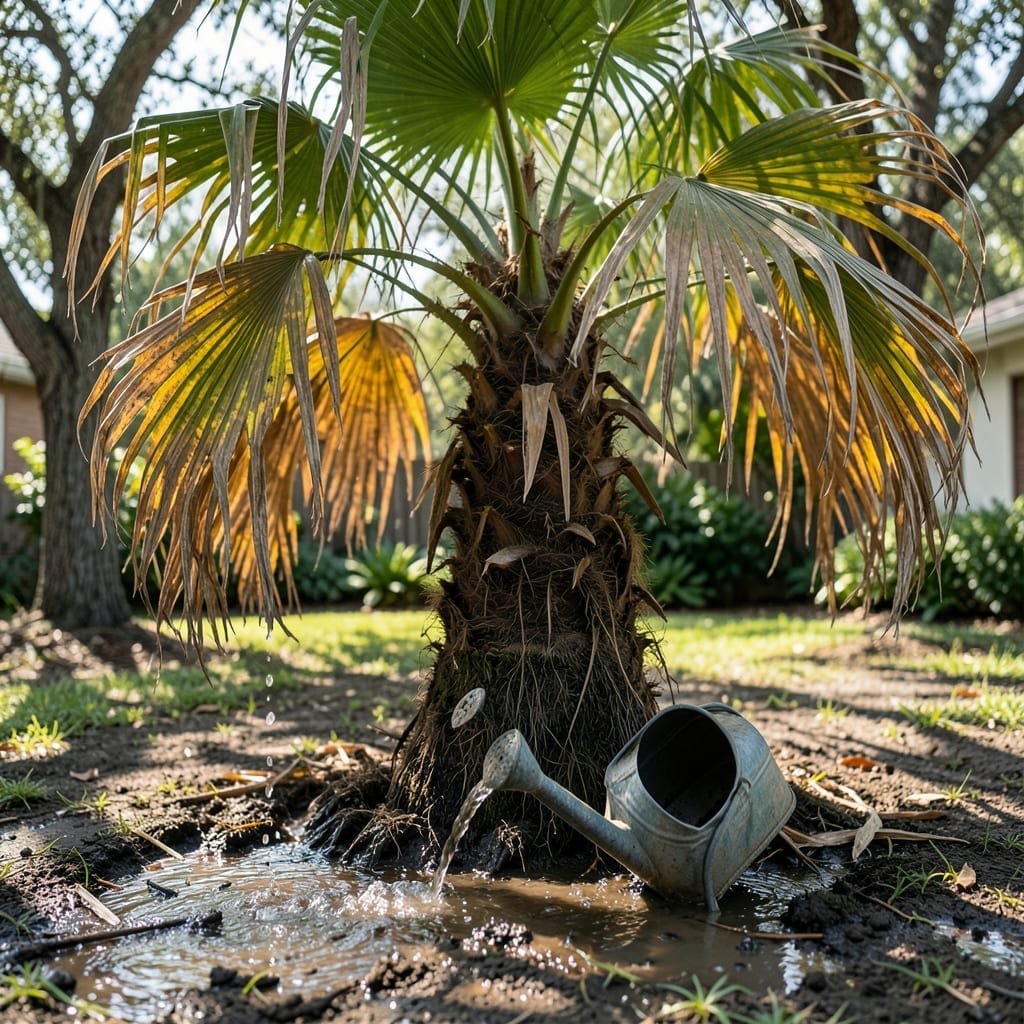
Yellow leaves on your palm tree mean trouble. I’ve saved several from overwatering, and the key is acting fast before root rot sets in completely.
Most people drown their palms with good intentions, not realizing these tropical plants hate soggy feet. The fix starts with letting the soil dry out between waterings, which most palm varieties need to thrive.
You’ll see improvement within 2-4 weeks once you adjust your routine. New growth emerges stronger, and the yellowing stops spreading to healthy fronds.
Works for indoor potted palms or outdoor specimens. Here’s how to bring yours back to life.
Overwatering a palm tree often stems from well-intentioned but misguided care. Understanding the root causes can help you prevent damage and restore your tree’s health. Below are the most common reasons this issue arises.
Many gardeners assume palm trees need frequent watering, especially in hot climates. However, palms thrive on a “soak and dry” cycle. Their roots require oxygen, and constantly soggy soil suffocates them. Overwatering disrupts the balance of air and moisture in the soil, leading to root asphyxiation and, eventually, root rot. A general rule: Water only when the top 1–2 inches of soil are dry.
Even with moderate watering, poor drainage can cause waterlogging. Palms planted in compacted or clay-heavy soil retain too much moisture. Similarly, containers without drainage holes trap water, drowning the roots. Soggy soil encourages fungal and bacterial growth, which attack the root system. To fix this, use well-draining soil mixes (e.g., sandy loam) and ensure pots have adequate drainage.
Palms are often more drought-tolerant than people realize. Overestimating their water needs—especially for mature trees—can lead to overwatering. Young palms need more consistent moisture, but established ones can often go weeks without water. Always check soil moisture before watering, and adjust based on the species, climate, and season.
Heavy rainfall or sudden weather changes can overwhelm a palm’s root system, particularly if the soil doesn’t drain quickly. After a downpour, skip your regular watering schedule and let the soil dry out. Using a moisture meter can help you gauge whether your palm actually needs more water or if nature has already done the job.
Reviving an overwatered palm tree starts with addressing the root of the issue—literally. Below are targeted fixes for common symptoms, paired with prevention tips to keep your palm thriving.
Stop watering immediately and let the soil dry out completely. Check moisture by sticking your finger 2-3 inches into the soil—if it feels damp, wait. Resume watering only when the top 2-3 inches are dry. Prevention tip: Use a moisture meter 🌡️ to avoid guesswork, and always ensure pots have drainage holes.
Repot the palm in fresh, well-draining soil (a mix of cactus soil and perlite works well). If planted in the ground, amend the soil with sand or compost to boost drainage. Prevention tip: Elevate potted palms to avoid water pooling at the base. 💡
Gently remove the palm from its pot and inspect the roots. Trim away any mushy, black, or foul-smelling roots with sterilized shears. Soak the remaining healthy roots in a fungicide solution (like copper-based) for 10 minutes before repotting. Prevention tip: Water in the morning to allow excess moisture to evaporate during the day. ⏰
Increase air circulation around the palm by moving it to a breezier spot or using a fan on low. Avoid misting the leaves until the plant recovers. Prevention tip: Group palms with other plants sparingly to prevent trapped humidity. ✨
Water only when the top 2-3 inches of soil are dry. Most palms prefer a “soak and dry” cycle rather than frequent light watering.
Yellowing leaves, especially on lower fronds, and soggy soil are early warnings. Wilting or drooping despite moist soil is another red flag.
Yes, if caught early. Trim affected roots, repot in fresh soil, and avoid watering for 1-2 weeks. Recovery takes 4-6 weeks.
Morning is ideal. It allows excess moisture to evaporate during the day, reducing fungal growth risk. Avoid evening watering.