
Beautiful Plants For Your Interior
Beautiful Plants For Your Interior
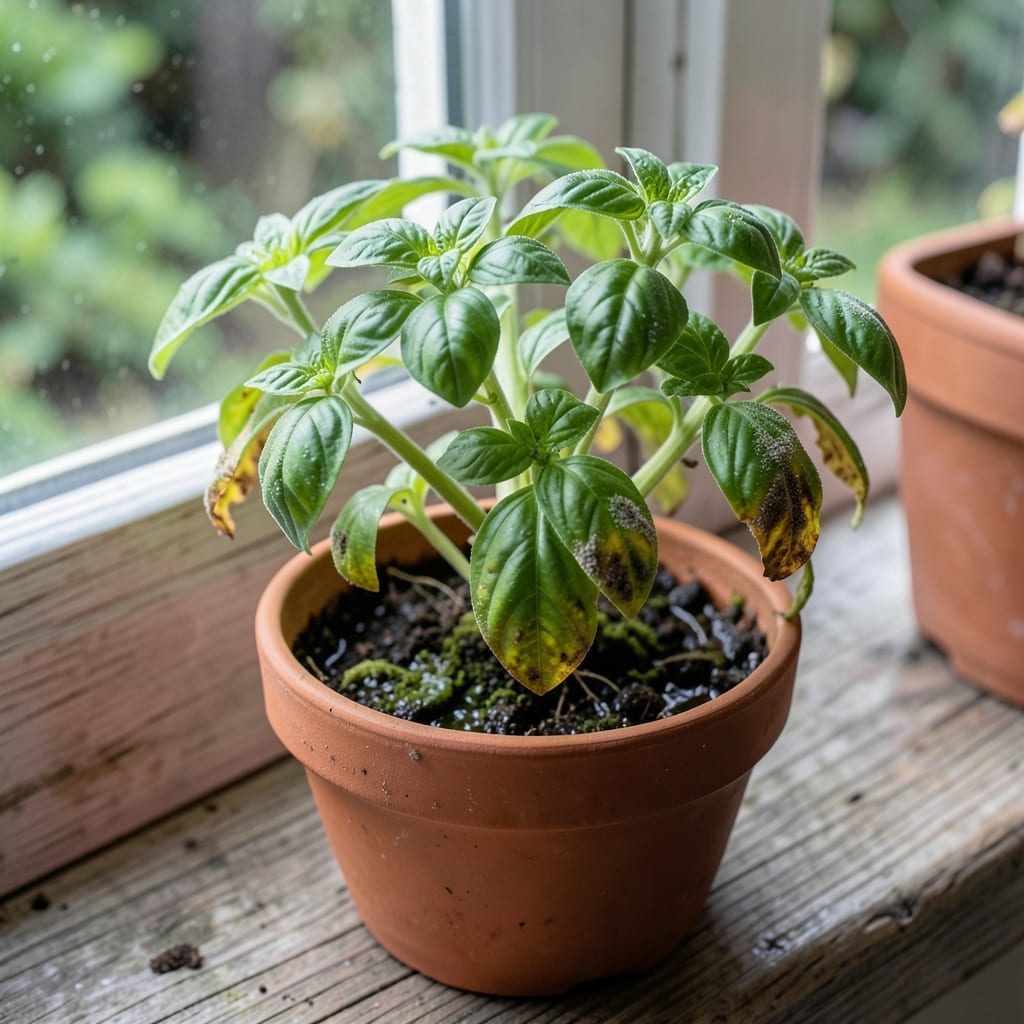
Yellow leaves and soft stems on your basil aren’t a death sentence. I’ve saved countless plants by catching this early—usually within 24-48 hours of noticing the first signs.
Overwatering suffocates the roots, but the fix is simpler than you think. Stop watering immediately, check the soil, and move the plant to brighter light. Most basil recovers fully if you act fast.
You’ll know it’s working when the stems firm up and new growth appears. The leaves that were yellow won’t turn green again, but the plant will push fresh ones.
Prevention is even easier: water only when the top inch of soil feels dry. That’s it. No more soggy stems.
Overwatering disrupts the natural balance in basil plants, leading to visible distress like yellowing leaves and weak stems. Here’s why it happens:
Basil thrives in well-draining soil, but too much water fills air pockets, starving roots of oxygen. This anaerobic stress halts nutrient uptake, causing leaves to turn yellow and wilt. Roots may rot, further crippling the plant’s ability to absorb water and minerals.
Soggy conditions invite pathogens like Pythium or Fusarium, which attack weakened roots. These microbes thrive in damp soil, accelerating root rot and spreading decay upward into stems and leaves. Infected plants often show blackened stems or mushy foliage.
Overwatering leaches essential nutrients (nitrogen, potassium) from the soil, leaving basil malnourished. Without these, leaves lose their vibrant green color, turning pale or yellow. Additionally, waterlogged soil prevents roots from absorbing remaining nutrients, compounding the deficiency.
Basil prefers warm, moderately humid conditions. Overwatering in cool or poorly ventilated spaces traps moisture against leaves, promoting mildew and bacterial leaf spot. High humidity slows evaporation, keeping foliage damp and vulnerable to disease.
Don’t toss those droopy basil plants just yet! With a few simple fixes, you can nurse them back to health. Below are targeted solutions for the most common issues caused by overwatering, plus prevention tips to keep your basil thriving.
If the soil feels waterlogged, halt watering immediately. Gently tip the pot to drain excess water, and place it in a sunny spot to help the soil dry out faster. For severe cases, remove the plant from its pot, shake off the soggy soil, and repot it in fresh, well-draining mix. Prevention tip: 💡 Stick your finger an inch into the soil—only water when the top layer feels dry.
Trim off yellow or mushy leaves with clean scissors to redirect energy to healthy growth. Improve airflow by spacing out basil plants or moving them to a breezier location. Prevention tip: ✨ Avoid crowding plants—give them room to breathe to prevent moisture buildup.
If roots are brown, slimy, or smell foul, your basil has root rot. Trim affected roots, repot in a clean container with fresh, well-draining soil (mix in perlite or sand), and reduce watering. Prevention tip: 🎯 Use pots with drainage holes to prevent water from pooling at the roots.
Wilting can signal both overwatering and underwatering. If the soil is damp but stems are limp, hold off on water and move the plant to bright, indirect light. Once the soil dries slightly, resume a moderate watering schedule. Prevention tip: 🌡️ Basil loves warmth—keep it in a spot with consistent temperatures (65–85°F).
Yellow leaves, soft stems, and soggy soil are the most common signs. If the leaves feel mushy or the soil smells sour, it’s a clear indication. Check the roots—if they’re brown or slimy, overwatering is the issue.
Yes, if you act quickly! Stop watering, move the plant to a sunny spot, and let the soil dry out. Prune any yellow or mushy leaves and ensure good airflow. Most basil bounces back within 1-2 weeks.
Water only when the top 1 inch of soil feels dry. In hot weather, this might mean every 2-3 days, but in cooler conditions, it could be weekly. Always check the soil first.
If the roots are rotting or the soil stays soggy, repotting is your best bet. Use fresh, well-draining soil and a pot with drainage holes. This gives the plant a fresh start and prevents further damage.