
Beautiful Plants For Your Interior
Beautiful Plants For Your Interior
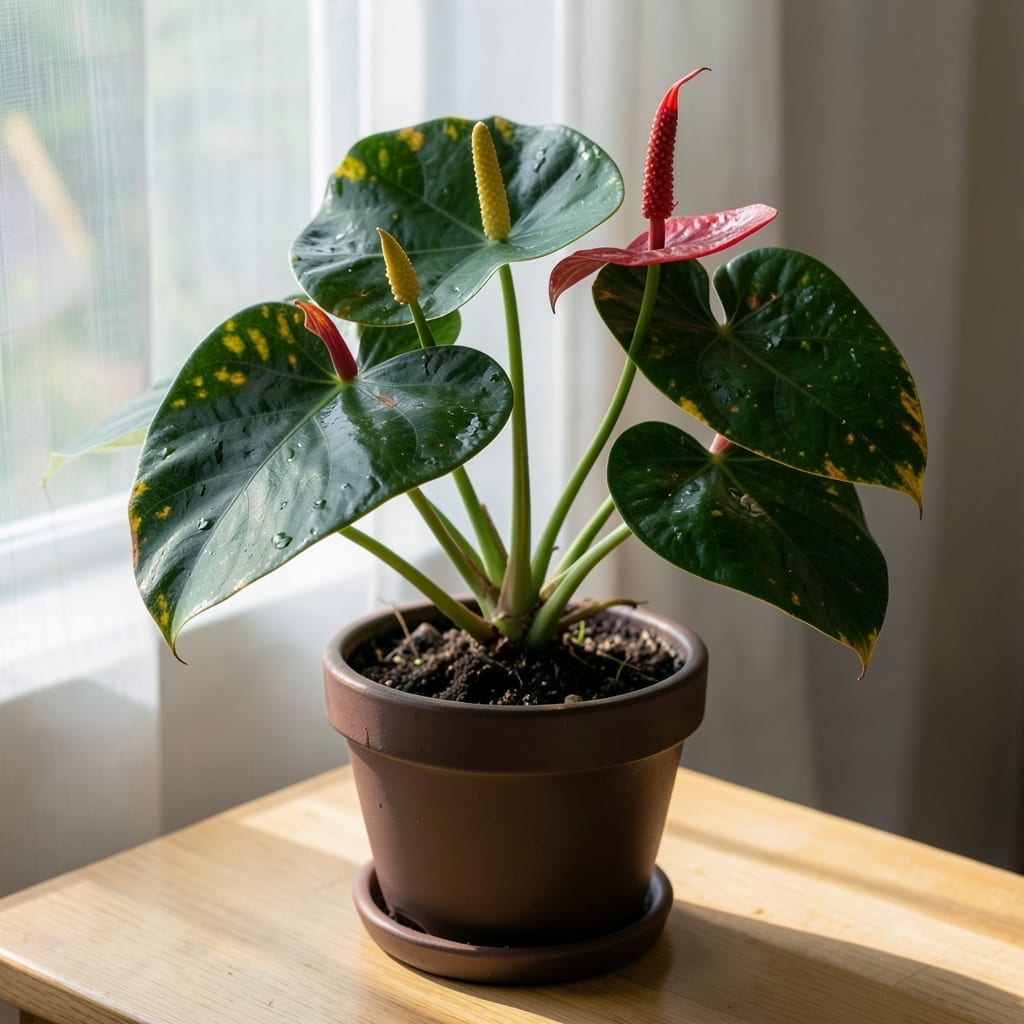
Yellow leaves on your anthurium aren’t a death sentence. I’ve nursed more of these back from the brink than I can count, and the fix is simpler than you’d think.
Overwatering suffocates roots, turning vibrant green into sad yellow. The first sign is usually droopy leaves that stay damp for days. Most people water on a schedule instead of checking soil first.
Here’s the thing—anthuriums thrive on neglect, not attention. Let the top 2 inches of soil dry completely between waterings. Your plant will bounce back faster than you expect.
Works for any anthurium variety, from heart-shaped to bird’s nest types. The revival starts with your next watering decision.
Overwatering an anthurium plant is often the result of well-intentioned but misguided care. Understanding the root causes helps prevent this common issue.
Anthuriums thrive in well-draining soil. When pots lack drainage holes or use dense, water-retentive soil mixes, excess water accumulates at the roots. This creates anaerobic conditions, suffocating the roots and promoting root rot. Always use containers with drainage holes and a chunky, aerated potting mix (e.g., 50% peat, 30% perlite, 20% orchid bark).
Many plant owners water on a fixed schedule rather than checking soil moisture. Anthuriums prefer their top 1-2 inches of soil to dry out between waterings. Overwatering disrupts the plant’s osmotic balance, leading to edema (cell bursting) and yellowing leaves. Use the finger test: only water when the topsoil feels dry.
In dim or humid environments, anthuriums use water more slowly. If watering frequency isn’t adjusted, the soil stays soggy. Low light also reduces photosynthesis, weakening the plant’s ability to recover from stress. Move your anthurium to bright, indirect light and reduce watering in such conditions.
Large containers hold more soil, which retains excess moisture longer. Anthuriums prefer slightly root-bound conditions. A pot more than 1-2 inches wider than the root ball increases the risk of overwatering. Repot only when roots emerge from drainage holes.
An overwatered anthurium can bounce back with the right care. Here’s how to tackle the most common issues and prevent them from happening again.
If your anthurium’s leaves are turning yellow, it’s likely drowning. Stop watering immediately and let the soil dry out completely before the next drink. Check the top 1-2 inches of soil—if it’s damp, hold off. Water only when it feels dry to the touch. Prevention tip: 💡 Use a well-draining potting mix and a pot with drainage holes to avoid soggy roots.
Mushy, black roots mean root rot has set in. Gently remove the plant from its pot, trim away the affected roots with clean scissors, and repot in fresh, dry soil. Choose a pot that’s just slightly larger than the root ball to prevent excess moisture buildup. Prevention tip: ✨ Water deeply but less frequently—anthuriums prefer a “soak and dry” approach.
If the soil stays wet for days and the plant wilts, poor drainage is the culprit. Switch to a chunkier mix with perlite or orchid bark to help water flow through. Elevate the pot to ensure water isn’t pooling underneath. Prevention tip: 🌡️ Use a moisture meter to monitor soil conditions and avoid guessing.
Overwatering can disrupt humidity balance. Move your anthurium to a spot with 60-70% humidity, or use a pebble tray with water to create a microclimate. Mist the leaves lightly if needed, but avoid soaking the soil further. Prevention tip: 🎯 Group plants together to naturally increase humidity levels.
With these fixes, your anthurium will be back to its vibrant self in no time!
Water only when the top 1-2 inches of soil are dry. This usually means every 7-10 days, but check first—factors like light and humidity affect drying time.
Brown tips often signal inconsistent watering. While overwatering causes yellowing, underwatering or low humidity can create crispy edges. Aim for 60-70% humidity and consistent moisture.
Yes! Remove it from the pot, trim black/mushy roots, and repot in fresh, dry soil. Skip watering for 5-7 days to let roots recover. Use a pot with drainage holes to prevent recurrence.
Misting helps with humidity but won’t fix overwatering. Focus on soil moisture first. If misting, do it in the morning to prevent fungal issues, and avoid soaking the soil.