
Beautiful Plants For Your Interior
Beautiful Plants For Your Interior
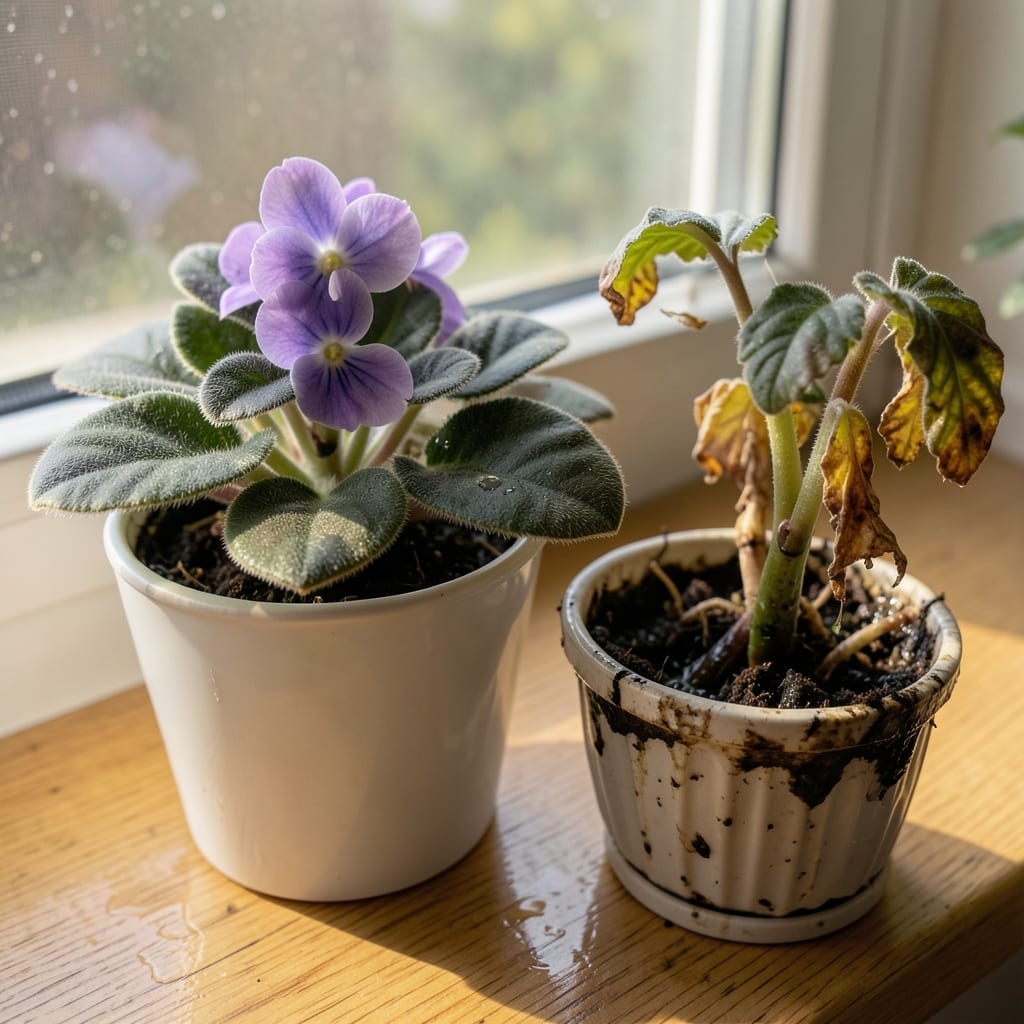
Yellowing leaves and mushy stems on your African violet mean trouble. I’ve saved dozens from the brink by catching overwatering early—before root rot sets in.
The fix starts with stopping all water immediately and checking the roots. If they’re brown and soft, you’ll need to trim the damage and repot in fresh, well-draining soil.
Within 2-3 weeks, new growth will appear if you adjust your watering routine. These plants thrive on neglect more than attention—bottom watering works best.
Prevention is simple: water only when the top inch of soil feels dry. No more soggy sadness, just healthy, blooming violets.
African violets are sensitive to excess moisture, and several factors can lead to overwatering. Understanding these causes helps prevent damage to your plant. Below are the most common reasons why this issue occurs.
African violets thrive in consistently moist but not soggy soil. Watering too often—especially before the top inch of soil dries out—saturates the roots, depriving them of oxygen. This creates an anaerobic environment, promoting root rot caused by Phytophthora or Pythium fungi, which thrive in waterlogged conditions.
Pots without drainage holes or those with compacted soil trap excess water, leading to oversaturation. Even well-intentioned watering can become harmful if the container doesn’t allow water to escape. Additionally, using dense, non-porous soil mixes (like garden soil) exacerbates the problem by retaining too much moisture.
African violets in low-light or cool environments (below 65°F/18°C) use water more slowly. If you water on a fixed schedule without adjusting for these conditions, the soil stays damp for extended periods. This stagnation encourages fungal growth and weakens the plant’s ability to absorb nutrients.
While bottom watering is often recommended for African violets, leaving the pot sitting in a saucer of water for too long can lead to overwatering. The roots absorb moisture continuously, and without proper airflow, they suffocate. Aim to remove excess water from the saucer after 30–60 minutes.
Act fast to save your soggy African violet. Below are targeted fixes for each common overwatering symptom, plus how to keep it from happening again.
Stop watering immediately and move the plant to a warm, well-ventilated spot away from direct sun. Gently tip the pot to drain excess water. Wait until the top inch of soil feels completely dry before watering again. Use a wooden skewer to test moisture deep in the pot—if it comes out damp, hold off.
Slide the plant out of its pot and inspect the roots. Healthy roots are white and firm; rotten ones are mushy and dark. Snip off all rotten roots with clean scissors. Repot in fresh, well-draining potting mix (add perlite or vermiculite for airflow). Choose a pot with drainage holes—no exceptions.
If the soil stays soggy, it’s likely too dense. Replace it with a lightweight, African violet-specific mix. Add a layer of pebbles or broken pottery at the bottom of the pot to boost drainage. Elevate the pot on a saucer with feet to prevent water from pooling underneath.
💡 Prevention Tips: Water only when the topsoil is dry to the touch. Use room-temperature water and avoid getting the leaves wet. Bottom-watering (placing the pot in a shallow tray of water for 15–20 minutes) helps prevent overwatering by letting the plant soak up only what it needs.
Look for yellowing leaves, mushy stems, or soil that stays soggy days after watering. A foul smell from the pot also signals root rot.
Only if roots are brown and mushy. For mild cases, stop watering and let the soil dry out first. Repot only after trimming damaged roots.
Water when the top 1 inch of soil feels dry. This usually means every 7-10 days, but adjust based on light and humidity.
If healthy roots remain, trim the rotten parts, repot in fresh soil, and reduce watering. Recovery takes 2-3 weeks with proper care.