
Beautiful Plants For Your Interior
Beautiful Plants For Your Interior
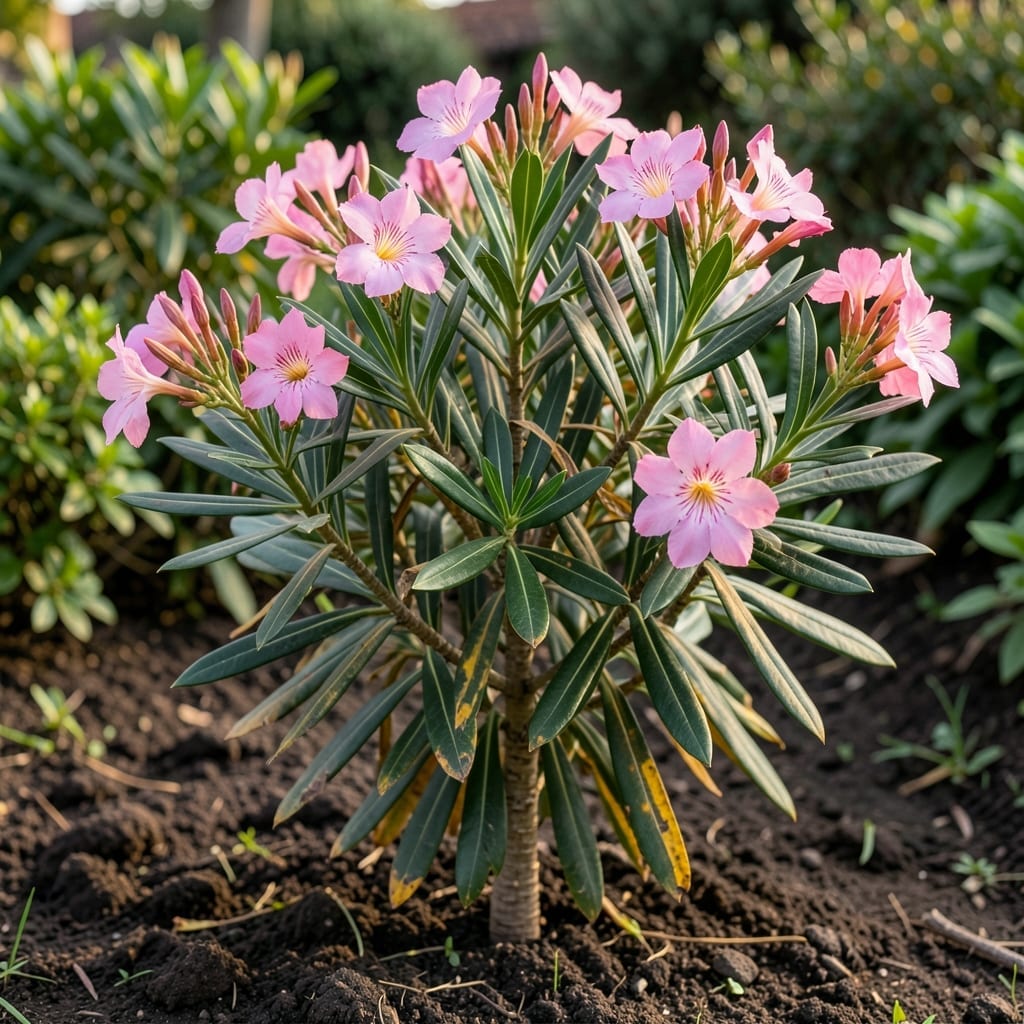
Yellow leaves on your oleander aren’t just unsightly—they’re a red flag. I’ve seen this happen to my own plants, and it always means something’s off with their care or environment.
Most times, it’s overwatering, poor drainage, or a nutrient imbalance. Oleanders are tough, but they’ll protest if their roots sit in soggy soil or if they’re starved of nitrogen. Pests and diseases can also sneak in when the plant’s already stressed.
Fix the issue fast, and your oleander can bounce back with vibrant green growth. Left unchecked, the problem spreads, and you risk losing the whole plant.
Here’s how to diagnose the cause and nurse your oleander back to health. No guesswork, just clear steps.
Oleanders (Nerium oleander) develop yellow leaves due to several environmental, nutritional, or pathological stressors. Here’s a breakdown of the most common causes:
Excess moisture suffocates the roots, preventing oxygen uptake and leading to root rot. This stress disrupts chlorophyll production, causing leaves to turn yellow. Action: Ensure pots have drainage holes and use well-draining soil. Water only when the top 1-2 inches of soil are dry.
Yellowing often signals a lack of essential nutrients like nitrogen, iron, or magnesium. Nitrogen deficiency typically yellows older leaves first, while iron deficiency causes interveinal chlorosis (yellowing between veins). Action: Test soil and amend with a balanced fertilizer or iron chelates for acidic soil.
Sap-sucking pests like aphids, scale, or spider mites drain nutrients from leaves, causing yellowing. Check undersides of leaves for sticky residue (honeydew) or webbing. Action: Treat with insecticidal soap or neem oil, and isolate affected plants.
Sudden temperature drops, frost, or excessive heat can shock oleanders, leading to yellow leaves. Oleanders thrive in USDA zones 8-10 and prefer temperatures above 50°F (10°C). Action: Move potted plants indoors during cold snaps or provide shade during heatwaves.
Pathogens like Phytophthora or leaf spot diseases disrupt leaf function, causing yellow patches or spots. Action: Improve air circulation, avoid overhead watering, and apply fungicides if needed.
Addressing yellow leaves on your oleander starts with identifying the root cause. Below are targeted fixes for common issues, along with prevention tips to keep your plant thriving.
Fix: Let the soil dry out between waterings. If the plant is in a pot, ensure it has drainage holes. For garden plants, amend heavy soil with sand or perlite to improve drainage. Trim any black, mushy roots to prevent rot.
Prevention: Use a well-draining potting mix and water only when the top 1-2 inches of soil are dry. 💡 Pro Tip: Stick your finger in the soil—if it feels damp, hold off on watering.
Fix: Apply a balanced, slow-release fertilizer (10-10-10) to address general deficiencies. For iron or magnesium shortages (common in alkaline soils), use chelated iron or Epsom salt (1 tablespoon per gallon of water) as a foliar spray.
Prevention: Fertilize oleanders lightly every 2-3 months during the growing season. Avoid over-fertilizing, which can burn roots.
Fix: Spray the plant with neem oil or insecticidal soap to eliminate aphids, scale, or spider mites. For severe cases, prune heavily infested branches and dispose of them safely (oleander is toxic—wear gloves!).
Prevention: Inspect leaves regularly, especially the undersides. Encourage natural predators like ladybugs by avoiding broad-spectrum pesticides.
Fix: Shield oleanders from extreme temperatures (below 40°F or above 100°F). If growing in containers, move them to a sheltered spot during cold snaps. For sunburn, provide afternoon shade in scorching climates.
Prevention: Plant oleanders in a location with consistent conditions—full sun (6+ hours) and protection from harsh winds.
Fix: Remove affected leaves and branches immediately to stop the spread. Apply a copper-based fungicide for fungal issues (e.g., leaf spot). Improve air circulation by spacing plants apart and avoiding overhead watering.
Prevention: Water at the base of the plant in the morning to allow foliage to dry quickly. Sterilize pruning tools with rubbing alcohol between cuts.
Water when the top 1-2 inches of soil are dry. Oleanders prefer slightly dry conditions over soggy soil. In hot climates, this may mean watering 2-3 times per week.
Once leaves turn yellow, they typically won’t recover. Focus on fixing the underlying issue to prevent new leaves from yellowing. Remove severely damaged leaves to redirect energy to healthy growth.
A balanced, slow-release fertilizer like 10-10-10 works well. For iron deficiency, use chelated iron. Apply lightly every 2-3 months during the growing season.
Repotting can shock the plant, causing temporary yellowing. Ensure the new pot has drainage holes and avoid overwatering. Most oleanders recover within 2-3 weeks if given proper care.