
Beautiful Plants For Your Interior
Beautiful Plants For Your Interior
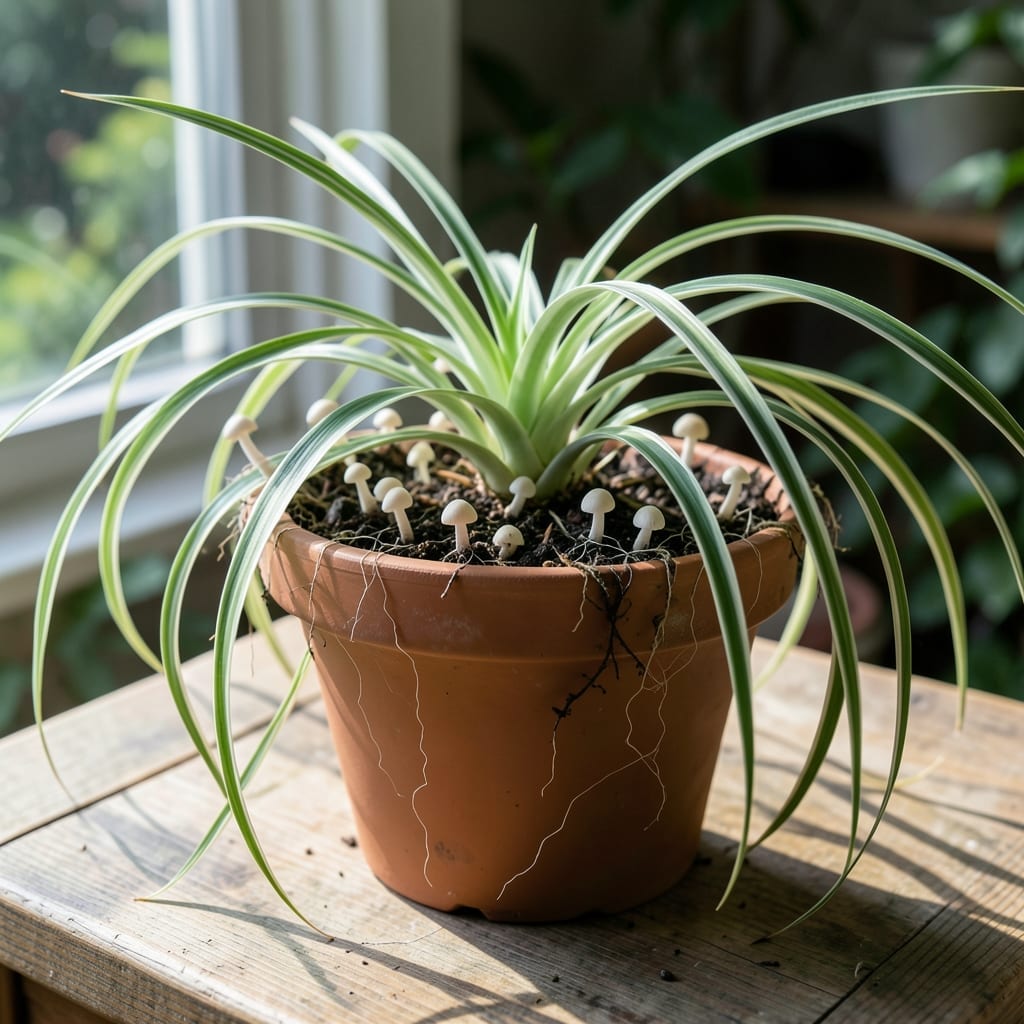
I spotted my first houseplant mushroom during a morning coffee check. 🌱 Honestly, it freaked me out—tiny white caps popping up like uninvited guests in my favorite pothos.
Turns out they’re more common than you’d think, especially with overwatering or organic-rich soil. The good news? They’re not usually harmful to your plants, just a sign your soil’s doing something right (or wrong, depending on moisture).
Removing them is simple: pluck and toss, then check your watering habits. Prevention boils down to better drainage and letting the top inch of soil dry between waterings.
Your plants will thank you, and those surprise fungi will stay gone for good. No fancy tools required—just a little observation and adjustment.
Mushrooms sprouting in your houseplants are a sign of underlying conditions in the soil or environment. Here’s why it happens:
Overwatering creates a damp, oxygen-poor environment that fungal spores love. Houseplant soil that stays soggy for prolonged periods becomes a breeding ground for mushrooms. Fungi thrive in consistently moist conditions, breaking down organic matter and sending up fruiting bodies (mushrooms) to release spores.
Potting mixes often contain organic materials like peat moss, bark, or compost. As these decompose, they release nutrients that feed fungal growth. If your soil has unprocessed wood chips, dead leaves, or old roots, fungi will colonize it, eventually producing mushrooms above the surface.
Commercial potting soils may contain dormant fungal spores. If the soil wasn’t sterilized properly, these spores can activate when exposed to warmth and moisture. Even high-quality mixes can harbor Mycena or Leucocoprinus species, common culprits in indoor plant mushrooms.
Stagnant air traps humidity around your plants, accelerating fungal growth. Houses with low airflow or densely grouped plants create microclimates where spores germinate easily. Proper ventilation helps dry the soil surface, discouraging mushroom development.
Fungi proliferate in temperatures between 60–80°F (15–27°C) with high humidity. If your home stays warm and moist (e.g., near a humidifier or in a steamy bathroom), mushrooms may emerge faster. These conditions mimic the forest floors where wild fungi naturally grow.
If you’ve spotted mushrooms in your houseplants, don’t panic—here’s how to tackle each cause and keep them from coming back.
Let the soil dry out between waterings. Stick your finger an inch into the soil—if it feels damp, wait. Use pots with drainage holes and empty saucers after watering to prevent soggy soil. Prevention tip: Water only when the top inch of soil is dry. 💡
Repot your plant in a container with drainage holes if it doesn’t have them. Add a layer of pebbles or perlite at the bottom to boost airflow. For existing pots, ensure the soil mix includes perlite or sand to enhance drainage.
Remove fallen leaves, dead plant matter, or old mulch from the soil surface. These decaying materials feed mushroom spores. Gently scrape off the top layer of soil if it’s heavily contaminated and replace it with fresh, sterile potting mix.
If mushrooms persist, the soil may be teeming with spores. Replace the soil entirely, or bake it at 200°F (93°C) for 30 minutes to kill spores (let it cool before reuse). For a quicker fix, sprinkle a thin layer of cinnamon on the soil—it’s a natural antifungal! ✨
Move your plant to a spot with better airflow, like near an open window or a fan. Grouping plants too closely can trap moisture, so space them out. A small USB fan can work wonders for indoor setups.
Pro tip: After removing mushrooms, monitor your plant for a few weeks. If they return, revisit these steps—consistency is key! 🎯
No, they’re usually harmless to your plants. They’re just a sign of excess moisture and organic matter in the soil.
Yes, pluck them as soon as you spot them to prevent spores from spreading. Be sure to address the root cause too.
Improve drainage, reduce watering, and ensure good airflow. Replace contaminated soil if needed.
Yes! A light sprinkle of cinnamon acts as a natural antifungal to deter growth.