
Beautiful Plants For Your Interior
Beautiful Plants For Your Interior
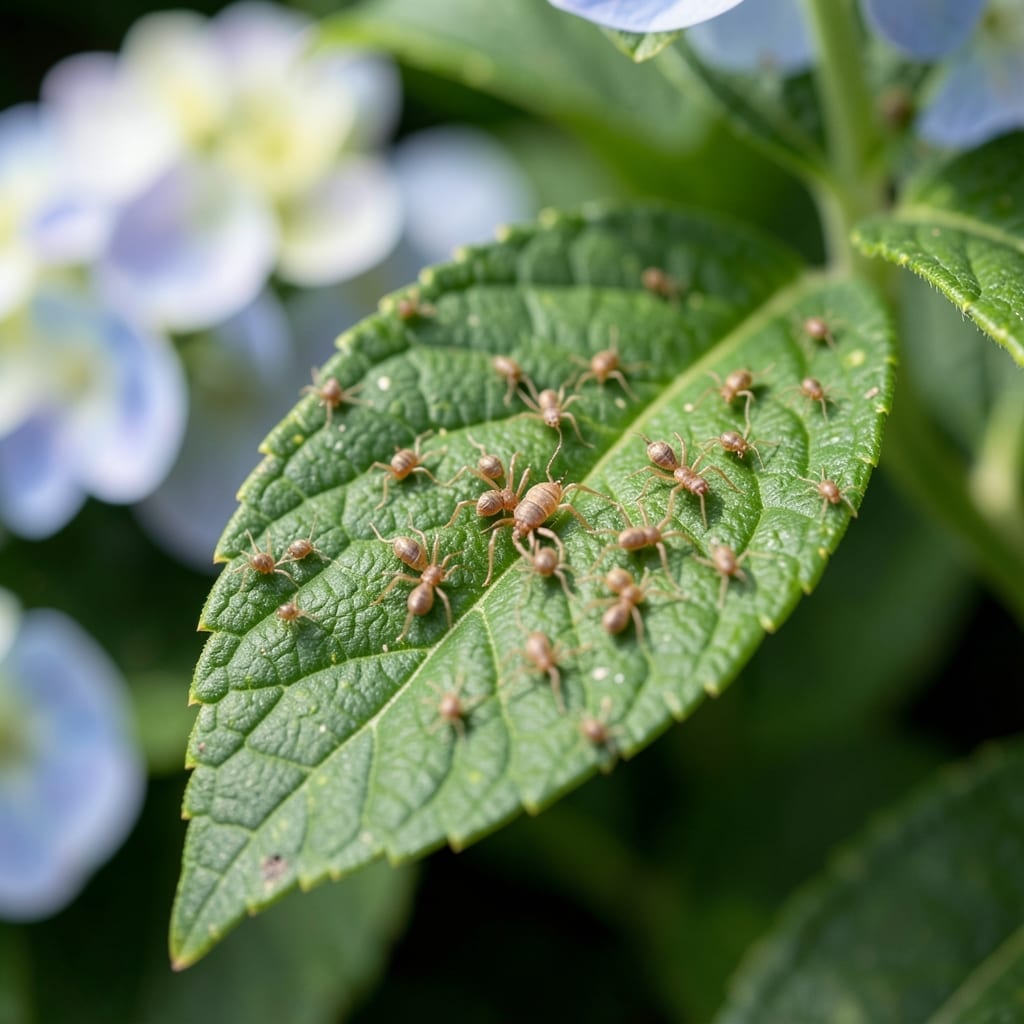
Tiny pests, big problems. I first noticed mites on my hydrangeas last summer when the leaves turned bronze and brittle, like they’d been dusted with rust.
These microscopic troublemakers multiply fast in hot, dry weather, sucking sap and weakening plants. The damage looks like fine webbing or speckled leaves, and it spreads quicker than you’d expect.
Here’s the thing—early detection is everything. A quick leaf inspection with a magnifying glass can catch them before they take over. The good news? Natural solutions work surprisingly well.
With the right approach, your hydrangeas can bounce back in 2-3 weeks. I’ll show you how to spot, treat, and prevent mites without harsh chemicals.
Mites thrive on hydrangeas due to a few key environmental and plant-health factors. Understanding these causes helps you prevent and address outbreaks effectively.
Spider mites, the most common culprits, flourish in hot, dry weather. Hydrangeas stressed by low humidity and inadequate watering become prime targets. These mites extract sap from leaves, causing stippling, yellowing, or bronzing. Drought-like conditions weaken the plant’s natural defenses, making it easier for mites to multiply rapidly.
Hydrangeas planted too closely together or surrounded by weeds and debris create a humid, sheltered environment that mites love. Lack of airflow traps moisture and heat, accelerating mite reproduction. Additionally, neglected pruning leads to dense foliage, which harbors pests and blocks sunlight—further stressing the plant.
Plants with nitrogen-heavy fertilization often produce soft, succulent growth that mites find irresistible. Conversely, deficiencies in potassium or phosphorus weaken hydrangeas, reducing their ability to resist infestations. A balanced fertilizer (e.g., 10-10-10) and regular soil testing can help maintain plant vigor.
Broad-spectrum insecticides kill beneficial predators like ladybugs and lacewings, which naturally control mite populations. Overuse can also trigger mite resistance, leading to harder-to-manage outbreaks. Opt for targeted treatments like horticultural oils or insecticidal soaps to avoid disrupting the ecosystem.
Dealing with mites on hydrangeas requires targeted action. Below are practical solutions for the most common causes, along with prevention tips to keep your plants thriving.
Spider mites thrive in dry environments. Mist your hydrangeas daily with water to increase humidity and deter mites. For a long-term fix, place a tray of water near the plant or use a humidifier in greenhouses. Prevention tip: 💡 Keep soil consistently moist but not waterlogged to discourage mite infestations.
Tightly packed plants create the perfect breeding ground for mites. Prune overgrown branches to improve air circulation. Space hydrangeas at least 3-4 feet apart to reduce humidity buildup. Prevention tip: ✨ Regularly thin out dense foliage to keep mites at bay.
Harsh pesticides can kill beneficial insects that prey on mites. Introduce ladybugs or lacewings to your garden—they’re natural mite predators. Alternatively, spray plants with neem oil or insecticidal soap (1 tbsp soap per gallon of water) every 5-7 days. Prevention tip: 🎯 Avoid broad-spectrum pesticides to preserve a balanced ecosystem.
Hydrangeas stressed by heat are more vulnerable to mites. Use shade cloth during peak afternoon hours or relocate potted plants to cooler spots. Prevention tip: 🌡️ Mulch around the base to retain moisture and regulate soil temperature.
Consistency is key—monitor plants weekly and act at the first sign of mites to prevent widespread damage.
Check the undersides of leaves with a magnifying glass for tiny moving dots or fine webbing. Early signs include yellow or bronze speckling on the upper leaf surface.
Yes, consistent watering maintains humidity levels that discourage spider mites. Mist leaves daily in dry weather to create an unfavorable environment for them.
No, natural methods often work better. Neem oil or insecticidal soap applied every 5-7 days can eliminate mites without harming beneficial insects.
Mites travel via wind, tools, or even your clothing. Isolate infested plants and clean tools between uses to prevent spreading.