
Beautiful Plants For Your Interior
Beautiful Plants For Your Interior
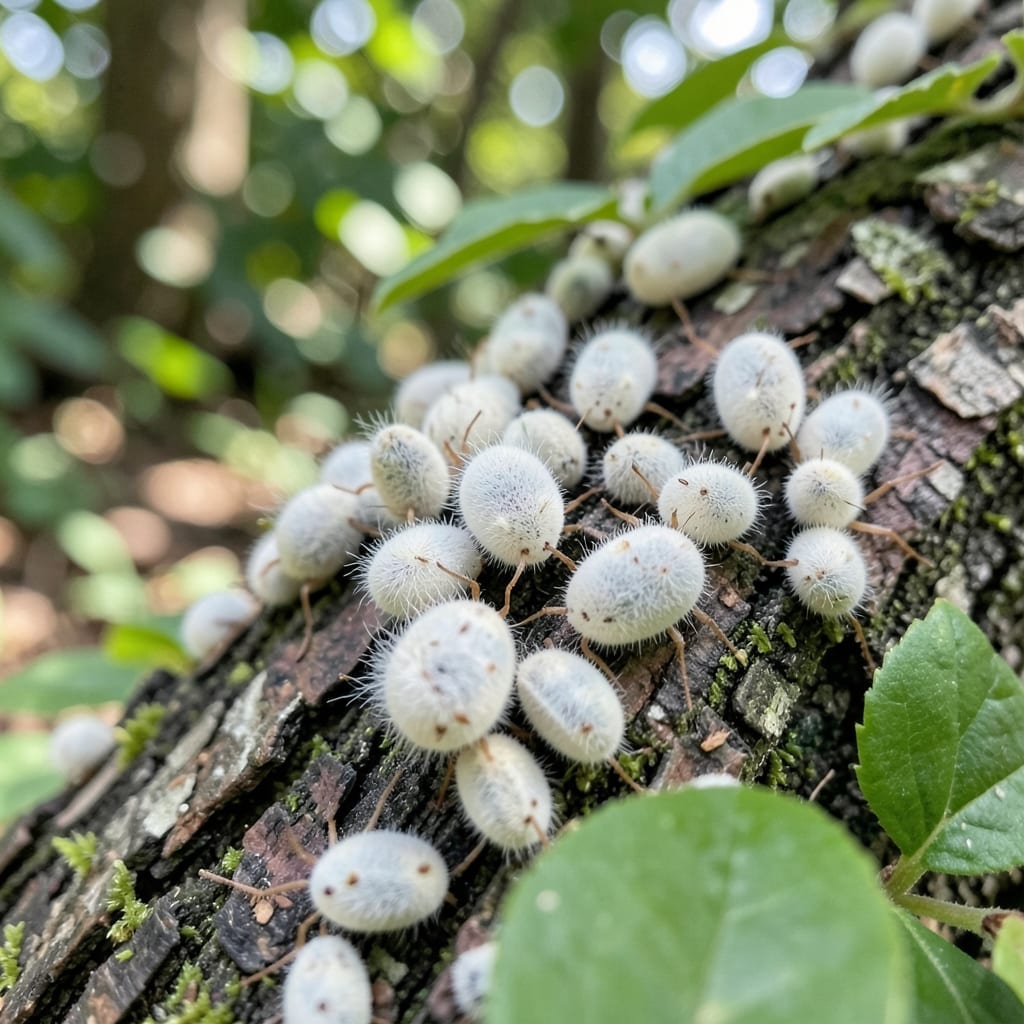
White cottony spots on your tree bark spell trouble. 🌱 I first spotted mealybugs on my maple last summer—they looked like tiny cotton balls clinging to the branches, and the leaves started yellowing within weeks.
The bugs suck sap from trees, weakening them and leaving behind sticky honeydew that attracts ants and mold. Left unchecked, they’ll spread to every branch and stall new growth. Healthy trees recover faster with quick action.
Organic removal starts with a strong blast of water to knock them off, followed by wiping branches with soapy water. Repeat every 3-4 days until they’re gone.
Prevention means inspecting new plants and keeping trees stress-free. Early intervention saves months of damage.
Mealybugs thrive on trees due to a combination of environmental and biological factors. Understanding these causes helps prevent and manage outbreaks effectively.
Trees weakened by drought, poor soil, or root damage emit stress signals that attract mealybugs. These pests target sap-rich tissues, exploiting the tree’s reduced defenses. Overcrowded canopies also limit airflow, creating a humid, sheltered environment ideal for mealybug colonies to multiply unchecked.
Mealybug populations explode when their natural enemies—like ladybugs, lacewings, or parasitic wasps—are absent. Overuse of broad-spectrum pesticides often kills these beneficial insects first, leaving mealybugs unopposed. Encouraging biodiversity (e.g., planting companion flowers) restores this balance naturally.
Mealybugs reproduce rapidly in temperatures between 70–90°F (21–32°C) with high humidity. Greenhouses, tropical regions, or trees under dense mulch trap moisture, accelerating their life cycle. Drought-stressed trees in arid areas may also become targets if irrigated inconsistently, creating microclimates they favor.
Excess nitrogen in fertilizer promotes soft, succulent growth—mealybugs’ preferred food. Conversely, deficiencies in potassium or phosphorus weaken tree resilience. A soil test can reveal imbalances, allowing targeted amendments to deter infestations.
Tackling mealybugs on your trees starts with quick action and the right methods. Below are practical solutions tailored to the severity of the infestation, along with prevention tips to keep these pests from returning.
For small outbreaks, a hands-on approach works best. Use a soft cloth or cotton swab dipped in rubbing alcohol (70% isopropyl) to gently wipe off the bugs. Focus on the bark, leaves, and branches where they cluster. Repeat every few days until they’re gone. Pro tip: 💡 Test the alcohol on a small area first to ensure it doesn’t harm the tree.
Mix 1 tablespoon of dish soap with 1 quart of water and spray it directly onto the mealybugs. The soap breaks down their protective coating, causing them to dehydrate. For a stronger option, add 1 tablespoon of neem oil to the mix. Apply in the early morning or late evening to avoid harming beneficial insects. Reapply every 5-7 days until the infestation clears.
If mealybugs have spread extensively, use a systemic insecticide labeled for trees. These are absorbed by the tree and target pests from within. Follow the product instructions carefully, and avoid using systemic treatments on trees that produce edible fruits unless the product is approved for organic use.
Look for white, cottony clusters on bark or leaves. You may also notice sticky honeydew or black sooty mold, which often accompany an infestation.
They rarely kill mature trees but can severely weaken them. Young or stressed trees are most vulnerable to stunted growth or dieback from heavy infestations.
Yes! Ladybugs, lacewings, and parasitic wasps are their top enemies. Encourage them by planting pollinator-friendly flowers nearby.
For natural sprays, reapply every 5-7 days until gone. Manual removal may need repeating every 3-4 days for stubborn clusters.