
Beautiful Plants For Your Interior
Beautiful Plants For Your Interior
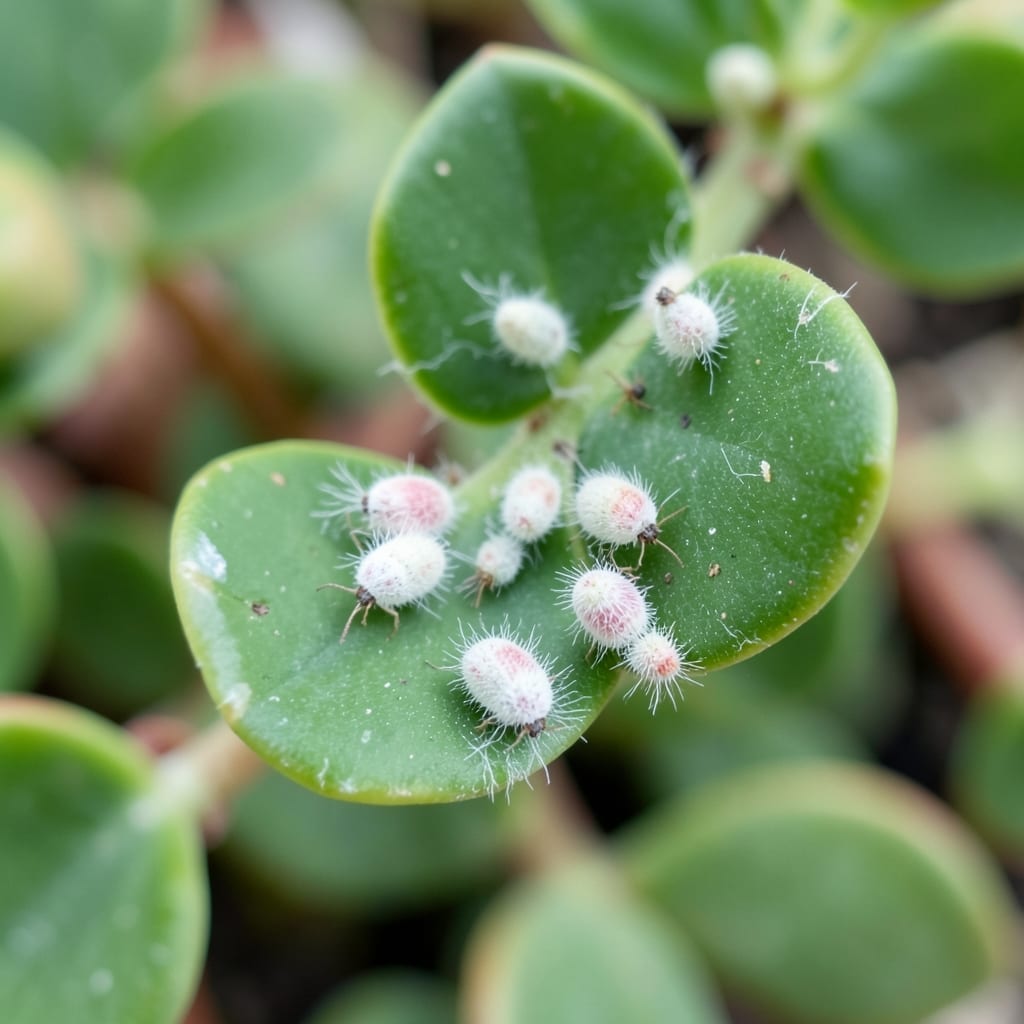
White fuzz on your string of pearls isn’t cotton candy. I’ve battled mealybugs on mine and learned they spread fast but can be stopped with simple treatment.
These pests hide in the tight bead clusters, sucking plant juices and leaving sticky residue. Left unchecked, they’ll weaken your plant and stunt new growth.
You’ll see results within 2-3 treatments using natural methods like rubbing alcohol or systemic granules. The key is consistency and checking hidden spots.
Prevention keeps them from returning: isolate new plants, inspect regularly, and avoid overwatering. Your string of pearls will bounce back healthier than before.
Mealybugs thrive on String of Pearls (Senecio rowleyanus) due to specific environmental and plant health conditions. Here’s why they appear:
Stagnant air creates a humid microclimate that mealybugs love. These pests multiply rapidly in still, damp environments, especially in densely packed foliage or indoor setups without airflow. Fix it: Use a small fan or space plants apart to improve ventilation.
Excess moisture softens plant tissues, making them easier for mealybugs to pierce and feed. Overwatered String of Pearls or high humidity (above 60%) encourages infestations. Fix it: Water only when the soil is dry, and group plants with similar needs to avoid trapped moisture.
Plants under stress—from nutrient deficiencies, root rot, or sudden light changes—produce fewer defensive compounds, attracting pests. Mealybugs target vulnerable String of Pearls first. Fix it: Maintain consistent care: bright, indirect light and well-draining soil.
Mealybugs often hitchhike on newly purchased plants or tools. A single infested plant can spread pests to your String of Pearls within days. Fix it: Isolate new plants for 2–3 weeks and inspect them thoroughly before introducing them to your collection.
Start by isolating the infected plant to prevent spreading. Use a cotton swab dipped in rubbing alcohol (70% isopropyl) to gently dab and remove visible mealybugs. Focus on leaf axils, stems, and the soil surface where they hide. Repeat every 2-3 days until no more bugs appear.
For a gentle approach, mix 1 tsp neem oil + 1 tsp dish soap + 1 quart of water. Spray the solution evenly over the plant, especially under leaves. Apply weekly until the infestation clears. Test on a small area first to avoid leaf burn.
Insecticidal soap (ready-made or homemade) also works well. Spray directly on bugs—it breaks down their protective coating, causing dehydration.
For severe cases, use a systemic insecticide labeled for succulents. Follow package instructions carefully, as overuse can harm the plant. Water the soil with the solution so the plant absorbs it, targeting hidden pests.
Look for white, cottony clusters in leaf crevices or on stems. You might also notice sticky residue or black sooty mold on the plant.
Vinegar isn’t effective and can harm your plant. Stick to rubbing alcohol, neem oil, or insecticidal soap for safe, proven results.
Inspect every 2-3 days for at least 2 weeks. Mealybugs hide well, so consistent monitoring prevents reinfestation.
Yes! With proper treatment and care, your string of pearls can fully recover. Trim heavily damaged areas to encourage new growth.