
Beautiful Plants For Your Interior
Beautiful Plants For Your Interior
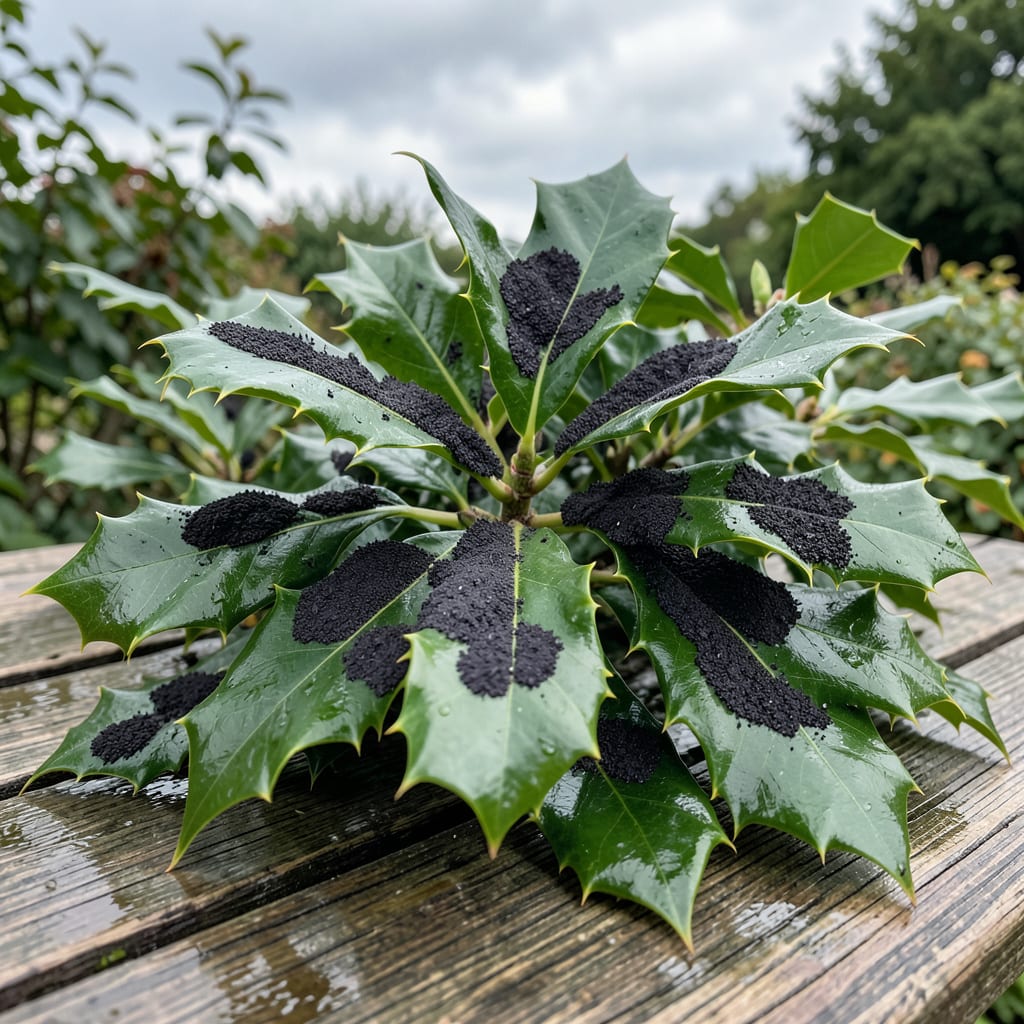
Black fungus coating your holly leaves isn’t just ugly—it’s a red flag. 🌿 Sooty mold signals a deeper problem, usually hiding in plain sight above your plants.
I spotted it first on my 20-year-old Nellie Stevens: dark, dusty patches that wiped off with a finger. The real culprit? Aphids, scale, or whiteflies dripping honeydew onto the leaves below.
Cleanup is step one, but the fix means tackling the insects first. Without that, the mold returns within weeks. A strong blast from the hose removes most of the black layer.
Your hollies can bounce back completely with the right approach. The key is breaking the insect-mold cycle for good.
Sooty mold on holly is a secondary issue triggered by underlying problems in your plant’s environment. This black, powdery fungus thrives on the honeydew excreted by sap-sucking pests, which creates the perfect breeding ground for its growth. Below are the primary causes:
The most common culprit is an infestation of aphids, scale insects, or whiteflies. These pests feed on the holly’s sap and excrete sticky honeydew, a sugar-rich substance that sooty mold colonizes. Without addressing the pest problem, the mold will persist.
Holly plants in dense, poorly ventilated areas are more prone to sooty mold. Stagnant air traps moisture and honeydew, accelerating fungal growth. Pruning for better airflow and spacing plants appropriately can reduce this risk.
Excessive moisture in the air, especially in shaded or overly watered conditions, promotes the spread of sooty mold. Holly bushes in humid climates or those with frequent overhead watering are particularly vulnerable. Adjusting watering practices and improving drainage can help.
Watering from above washes honeydew and spores across the foliage, spreading the mold. Switching to drip irrigation or watering at the base of the plant minimizes this issue while keeping the leaves dry.
Sooty mold on holly is manageable once you address the underlying cause—usually pest infestations or environmental conditions. Here’s how to tackle it step by step:
Sooty mold thrives on the honeydew secreted by pests like aphids, scale, or mealybugs. Spray your holly with insecticidal soap or neem oil to target these pests directly. For severe cases, use a systemic insecticide. Repeat applications every 7–10 days until pests are gone.
Once pests are under control, gently wash the leaves with a soft cloth or sponge dipped in a mild soap-and-water solution (1 tsp dish soap per gallon of water). Rinse thoroughly with clean water to avoid residue. Avoid harsh scrubbing to prevent leaf damage.
Sooty mold loves damp, still air. Prune overcrowded branches to improve airflow around your holly. Space plants adequately and avoid overhead watering to keep foliage dry. A small fan can also help in greenhouse settings.
With consistent care, your holly will shed the sooty mold and regain its vibrant, healthy appearance. 🌟
Yes, sooty mold is harmless to humans and won’t cause skin irritation. You can safely wipe it off leaves with a damp cloth. Just avoid inhaling large amounts of the spores.
Once you remove the mold and eliminate the pests, new growth will emerge clean. Most hollies fully recover within 4-6 weeks of proper care.
A diluted vinegar solution (1 part vinegar to 3 parts water) can help, but test it on a small area first. It may damage sensitive holly varieties if too strong.
Recurring mold means the underlying pest problem wasn’t fully resolved. Reinspect for hidden aphids or scale, especially under leaves and along stems.
