
Beautiful Plants For Your Interior
Beautiful Plants For Your Interior
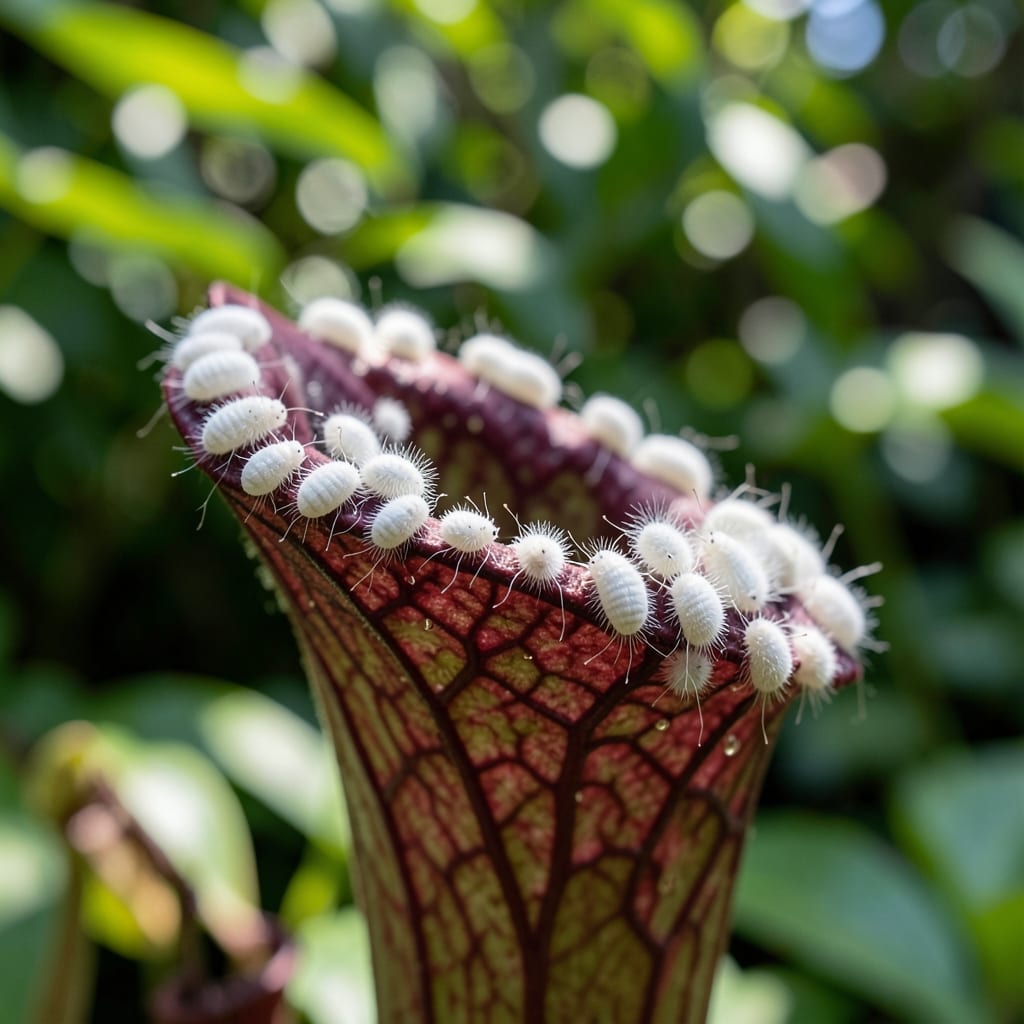
White cottony clusters on your pitcher plant leaves mean trouble. 🌱 I spotted these pests on my own collection last summer and learned the hard way that mealybugs love the moist, sheltered environment that pitcher plants provide.
They spread fast, sucking sap and leaving sticky residue that attracts mold. The good news is that with daily checks and a few organic tricks, you can stop them before they take over your entire plant.
I use a simple cotton swab dipped in rubbing alcohol to remove visible bugs, then follow up with a neem oil spray. Within 2 weeks, my pitchers were back to their vibrant, bug-free selves.
Regular monitoring and good air circulation prevent future outbreaks. Here’s how to keep your plant thriving without harsh chemicals.
Mealybugs thrive on pitcher plants due to a combination of environmental and plant health factors. Understanding these causes can help you prevent future outbreaks. Below are the most common triggers:
Pitcher plants naturally prefer humid environments, but excessive moisture—especially in stagnant air—creates the perfect breeding ground for mealybugs. These pests flourish in temperatures between 70–80°F (21–27°C) with humidity above 60%. Poor air circulation in terrariums or greenhouses can worsen the issue.
Pitcher plants are adapted to nutrient-poor soils. Over-fertilizing with nitrogen-rich products stresses the plant, making it more susceptible to pests. Additionally, weak or damaged growth (from improper light, water, or physical injury) attracts mealybugs, which target vulnerable tissue.
In outdoor settings, beneficial insects like ladybugs, lacewings, or parasitic wasps keep mealybug populations in check. However, indoor pitcher plants often lack these predators, allowing infestations to spread unchecked. Introducing natural enemies (e.g., Cryptolaemus montrouzieri) can help restore balance.
Mealybugs can hitchhike on newly purchased plants or infested potting mix. Always quarantine new additions for 2–3 weeks and sterilize soil (e.g., baking at 200°F for 30 minutes) to eliminate hidden pests or eggs.
Mealybugs can be stubborn, but these targeted solutions will help you reclaim your pitcher plant’s health. Address each issue with the right fix and prevent future outbreaks with simple habits.
If you spot a few mealybugs early, act fast. Dip a cotton swab in 70% isopropyl alcohol and gently dab each bug. For clusters, use a soft toothbrush dipped in alcohol to dislodge them. Pro tip: 💡 Isolate the plant during treatment to avoid spreading pests to nearby greenery.
For larger infestations, mix 1 teaspoon of neem oil + 1 liter of water + a few drops of dish soap. Spray the solution thoroughly on all surfaces, including under leaves and inside pitchers. Reapply every 5–7 days for 3–4 weeks to break the mealybug life cycle. Alternative: Insecticidal soap (ready-made or DIY with 2 tbsp mild soap per liter of water) works well but may need more frequent applications.
Stop mealybugs before they start with these habits:
Remember: Pitcher plants are sensitive to harsh chemicals. Always opt for organic solutions and test sprays on a small area first.
Look for white, cottony clusters in leaf axils or under leaves. Check pitchers weekly, as they love hiding in moist, sheltered spots.
Avoid vinegar—it can damage pitcher plants. Stick to 70% isopropyl alcohol or neem oil for safe, effective removal.
Hidden eggs or reinfestation from nearby plants are likely. Quarantine and treat all plants simultaneously. Reapply neem oil every 5–7 days for 3–4 weeks.
Yes! Mealybugs spread quickly. Isolate infested plants immediately and inspect others for early signs.