
Beautiful Plants For Your Interior
Beautiful Plants For Your Interior
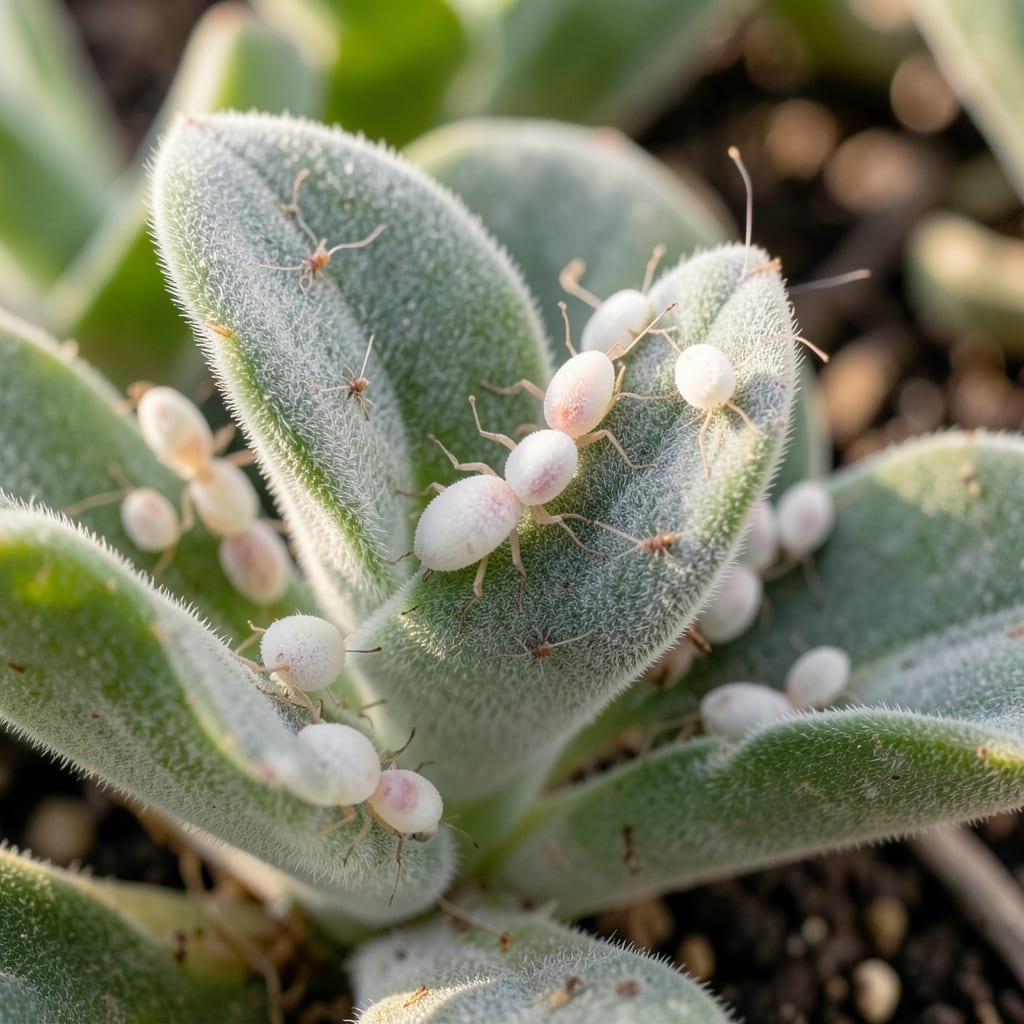
White cottony clumps on your panda plant’s leaves mean trouble. I’ve battled mealybugs enough to know they spread fast, turning healthy growth into weak, sticky messes.
These pests drain sap from stems and leaves, stunting growth and leaving behind a sugary residue that attracts ants. The longer they stay, the harder they are to remove.
Here’s the thing—early action saves your plant. A simple wipe-down with soapy water or neem oil can stop an infestation before it spirals.
Left untreated, mealybugs will move to nearby plants, turning a small issue into a full-blown crisis. Let’s tackle this now.
Mealybugs thrive on panda plants due to a mix of environmental and care-related factors. Understanding these causes helps prevent future outbreaks and keeps your plant healthy. Below are the primary reasons these pests appear.
Mealybugs flourish in warm, low-humidity environments. Panda plants (Kalanchoe tomentosa) kept indoors near heaters or in dry climates create the perfect breeding ground. These pests reproduce rapidly when temperatures exceed 70°F (21°C) and humidity drops below 40%. Poor air circulation further exacerbates the issue by limiting natural predators like ladybugs.
While panda plants are drought-tolerant, excess moisture in the soil or on foliage attracts mealybugs. Overwatering leads to root stress, weakening the plant’s natural defenses. Additionally, waterlogged soil or poor drainage in pots creates a damp environment where mealybugs lay eggs. Always use well-draining soil and pots with drainage holes to avoid this.
A stressed panda plant is more susceptible to pests. Factors like inadequate light (too little or too much), nutrient deficiencies, or sudden changes in environment (e.g., moving from outdoors to indoors) compromise the plant’s health. Mealybugs target weakened plants because their defenses—like thick, waxy cuticles—are less effective at repelling invaders.
Mealybugs spread easily through close contact. If you’ve recently introduced a new plant to your collection or grouped panda plants with infested neighbors, pests can crawl or be carried by air currents. Always quarantine new plants for 2–3 weeks and inspect them thoroughly before placing them near your panda plant.
Tackling mealybugs on your panda plants starts with quick, targeted action. Below are practical solutions for each stage of infestation, along with prevention tips to keep these pests from coming back.
If you spot a few mealybugs, start by isolating the plant to prevent spreading. Use a cotton swab dipped in 70% isopropyl alcohol to gently dab and remove the pests. Check hidden spots like leaf axils and stem joints, where mealybugs love to hide. Repeat every 2-3 days for a week to catch any stragglers.
For a larger but manageable outbreak, mix 1 teaspoon of mild liquid soap (like Castile) with 1 liter of water. Spray the solution directly onto the bugs, focusing on clusters. The soap breaks down their waxy coating, causing them to dehydrate. Apply every 4-5 days for 2 weeks. Pro tip: Test on a small leaf first to check for sensitivity.
If mealybugs have taken over, use a systemic insecticide containing imidacloprid or neem oil. Follow the product instructions carefully, as these treatments are absorbed by the plant and kill pests from within. For organic options, neem oil spray (mixed with water and a drop of dish soap) can disrupt their life cycle. Apply in the early morning or late evening to avoid leaf burn.
Consistency is key—monitor your panda plant weekly to catch any early signs of reinfestation.
Look for white, cottony clusters in leaf axils or stem joints. You may also notice a sticky residue or black sooty mold on leaves.
Use mild liquid soap like Castile. Harsh soaps can damage the plant. Mix 1 teaspoon per liter of water and test on a small area first.
Reinfestation often happens from nearby plants or untreated hiding spots. Isolate the plant and check all crevices. Quarantine new plants for 2-3 weeks.
Yes, neem oil disrupts their life cycle. Mix with water and a drop of dish soap, then spray in the early morning or late evening.