
Beautiful Plants For Your Interior
Beautiful Plants For Your Interior
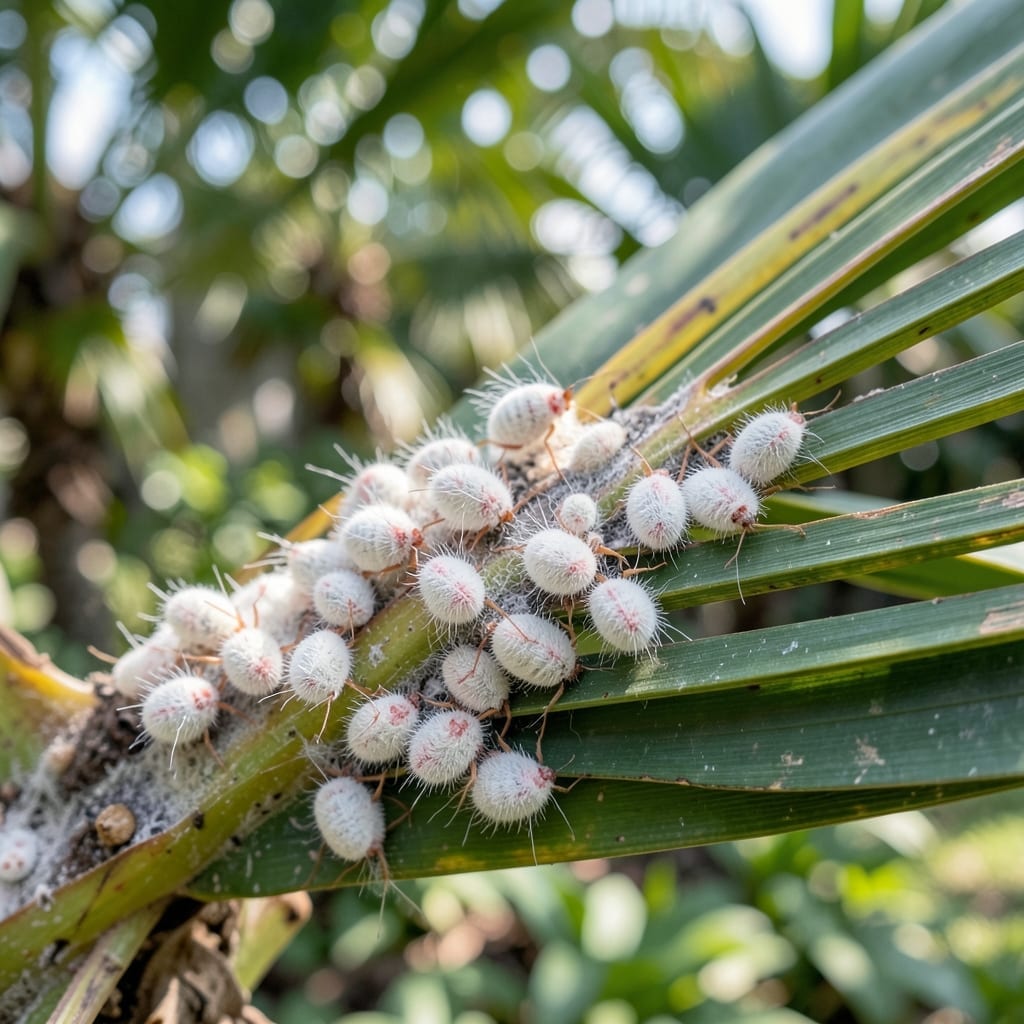
Those white cottony clusters on your palm aren’t cotton—they’re mealybugs. I first noticed them on my parlor palm last spring, and ignoring them nearly cost me the plant.
They suck sap from leaves, weakening growth and spreading sooty mold. The creepy part is how they hide in leaf axils and stem crevices, multiplying before you realize there’s a problem.
You can fight back with simple solutions: a cotton swab dipped in rubbing alcohol, insecticidal soap, or introducing ladybugs to the area. Prevention is just as easy—regular inspections and keeping humidity in check.
Your palm can recover completely with quick action. Here’s how to spot, treat, and stop mealybugs for good.
Mealybugs thrive on palm trees due to a few key environmental and cultural factors. Understanding these triggers helps prevent outbreaks before they start.
Mealybugs reproduce rapidly in warm, low-humidity environments (70–90°F). Palms in arid climates or indoor settings with dry air are especially vulnerable. The pests desiccate less in these conditions, allowing populations to explode unchecked.
Stress from overcrowding, poor soil, or improper watering weakens palms, making them more susceptible. Mealybugs target stressed plants because their natural defenses (like waxy cuticles) are compromised. Ensure adequate spacing and consistent moisture to reduce stress.
In nature, ladybugs, lacewings, and parasitic wasps keep mealybug populations in check. In gardens or greenhouses, these predators are often absent, allowing infestations to spiral. Introducing beneficial insects or avoiding broad-spectrum pesticides can restore balance.
Dense foliage or stagnant air traps moisture and heat, creating an ideal microclimate for mealybugs. Prune palms to improve airflow, and avoid placing them in still, humid corners (e.g., near walls or other plants).
If your palm is under attack by mealybugs, act fast to stop the spread. Below are targeted fixes for each common cause, plus prevention tips to keep your plant healthy long-term.
For severe cases with thick white clusters, start by dabbing the bugs with a cotton swab soaked in 70% isopropyl alcohol. This kills them on contact. Follow up with a neem oil spray (1 tbsp oil + 1 tsp dish soap + 1 quart water) every 3–4 days for 2 weeks. For stubborn infestations, use insecticidal soap or systemic granules applied to the soil.
Catch them early? A soapy water spray (1 tsp mild soap + 1 liter water) can smother nymphs and adults. Spray thoroughly, including leaf undersides and stem crevices, then rinse after 10–15 minutes. Repeat every 5–7 days until gone.
💡 Pro Tip: Test sprays on a small leaf area first to avoid burning sensitive palms.
Mealybugs target stressed palms. Improve growing conditions by ensuring bright, indirect light and well-draining soil. Avoid over- or under-watering—consistent moisture weakens pests. Fertilize lightly with a balanced palm fertilizer to strengthen resistance.
✨ Key: Consistency beats mealybugs. Repeat treatments and monitor weekly to break their life cycle.
They appear as white, cottony clusters in leaf axils, stem joints, or undersides. You might also spot sticky honeydew or black sooty mold on fronds.
Severe, untreated infestations can weaken and eventually kill palms. Early action prevents lasting damage.
Yes! Rubbing alcohol, neem oil, and soapy water sprays are effective for mild to moderate cases. Repeat applications are key.
Inspect weekly, especially under leaves and in crevices. Catching them early makes treatment much easier.