
Beautiful Plants For Your Interior
Beautiful Plants For Your Interior
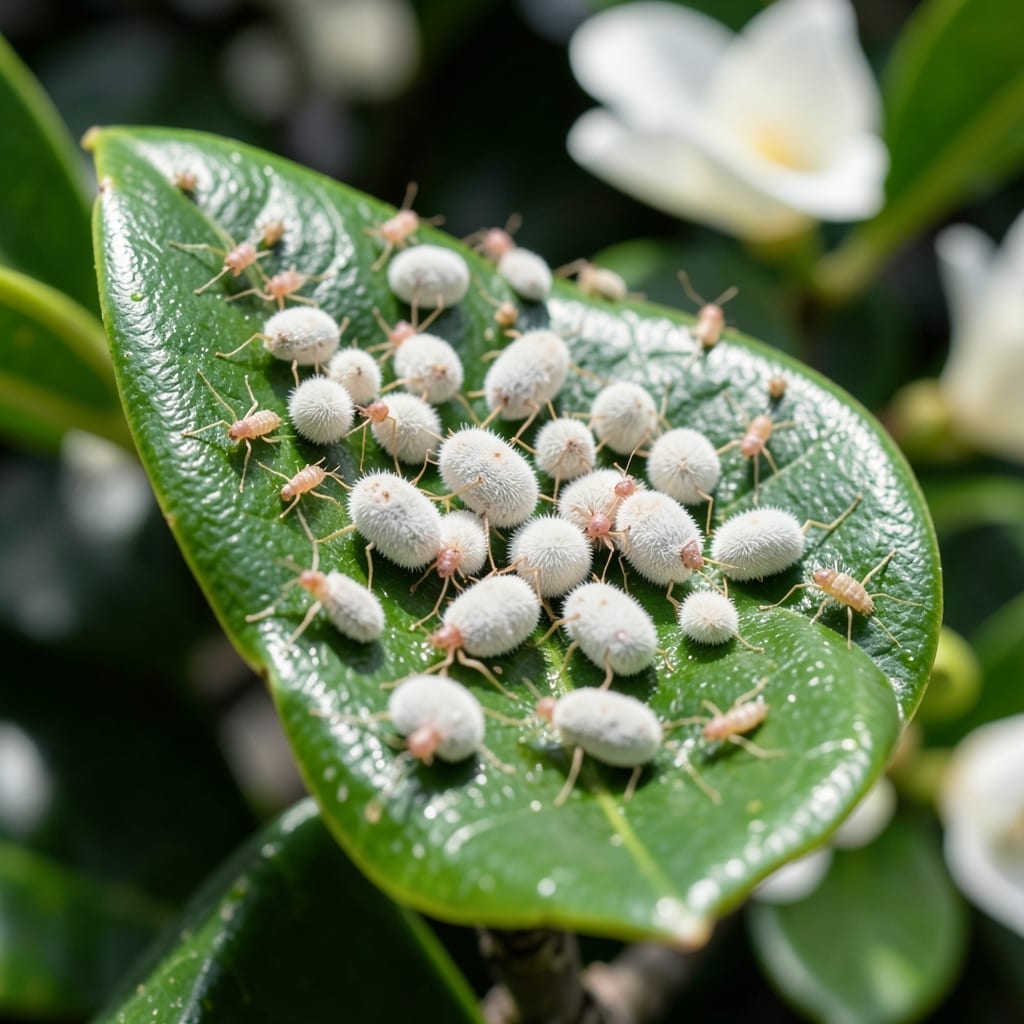
White fuzzy clusters on your gardenia leaves? That’s the calling card of mealybugs, and they’ll drain your plant’s vitality if left unchecked.
I lost a prized gardenia to these pests before learning the non-toxic approach that saves both plant and pollinators. The solution starts with early detection and a gentle but effective treatment plan.
Your gardenia will bounce back with healthier blooms once the infestation’s gone. The key is consistency—treat every 7-10 days until all signs disappear completely.
Works for potted plants, garden beds, or even indoor gardenias. Here’s the method that actually works.
Mealybugs thrive on gardenias due to a combination of environmental and cultural factors. Understanding these causes helps prevent future outbreaks and keeps your plants healthy. Below are the primary reasons these pests appear on your gardenias.
Excess moisture creates the perfect breeding ground for mealybugs. Gardenias prefer well-draining soil, and soggy conditions stress the plant, making it more susceptible to infestations. Overwatering also washes away natural predators like ladybugs, giving mealybugs free rein.
Mealybugs flourish in warm (70–80°F) and humid environments, which gardenias also love. High humidity accelerates their reproductive cycle, while stagnant air prevents beneficial insects from controlling their population. Proper airflow is key to disrupting their lifecycle.
Excess nitrogen promotes soft, new growth, which mealybugs find irresistible. Gardenias fed with high-nitrogen fertilizers often develop tender foliage that lacks the natural defenses to deter pests. Balanced fertilization (e.g., 6-6-6 or acid-loving plant formulas) strengthens the plant’s resistance.
Mealybugs multiply unchecked when beneficial insects like lacewings, parasitic wasps, or ladybugs are absent. Pesticides (even organic ones) can kill these predators, creating a vacuum that mealybugs quickly fill. Encouraging biodiversity in your garden helps maintain a natural balance.
Mealybugs spread easily via infected tools, pots, or neighboring plants. Reusing unsterilized pruners or introducing a new, infested plant to your garden can introduce these pests. Always inspect and quarantine new additions and sanitize tools with rubbing alcohol.
Tackling mealybugs on your gardenia starts with quick action and consistent care. Below are practical solutions tailored to common causes, along with prevention tips to keep your plant thriving. 🌿
For a small number of mealybugs, handpick them off using tweezers or a cotton swab dipped in rubbing alcohol (70% isopropyl). Focus on leaf axils, stems, and the undersides of leaves where they hide. Wipe down the plant afterward with a damp cloth to remove any residue.
Mix 1 tablespoon of insecticidal soap or neem oil with 1 quart of water and spray evenly over the plant, covering all surfaces. Repeat every 5-7 days until the bugs are gone. Pro tip: 💡 Test a small area first to ensure the plant isn’t sensitive to the solution.
If mealybugs are in the soil, drench the pot with a solution of 1 part hydrogen peroxide (3%) to 4 parts water. This kills larvae and eggs without harming the plant. Let the soil dry slightly between waterings to discourage reinfestation.
With these steps, your gardenia can bounce back to its lush, bloom-filled glory! 🌸
They appear as white, cottony clusters in leaf axils and stem joints. These pests are soft-bodied and often hide under leaves, making them tricky to spot at first.
Repeat treatments every 5-7 days until all signs disappear. Consistency is key, as eggs hatch in cycles and missed applications allow reinfestation.
Yes, but dilute 1 teaspoon of mild dish soap per quart of water. Avoid degreasers or antibacterial soaps, as they can harm your gardenia. Always test a small area first.
They often return due to hidden eggs or untreated soil. Always check the root zone and use a soil drench with hydrogen peroxide or neem oil to break the lifecycle.