
Beautiful Plants For Your Interior
Beautiful Plants For Your Interior
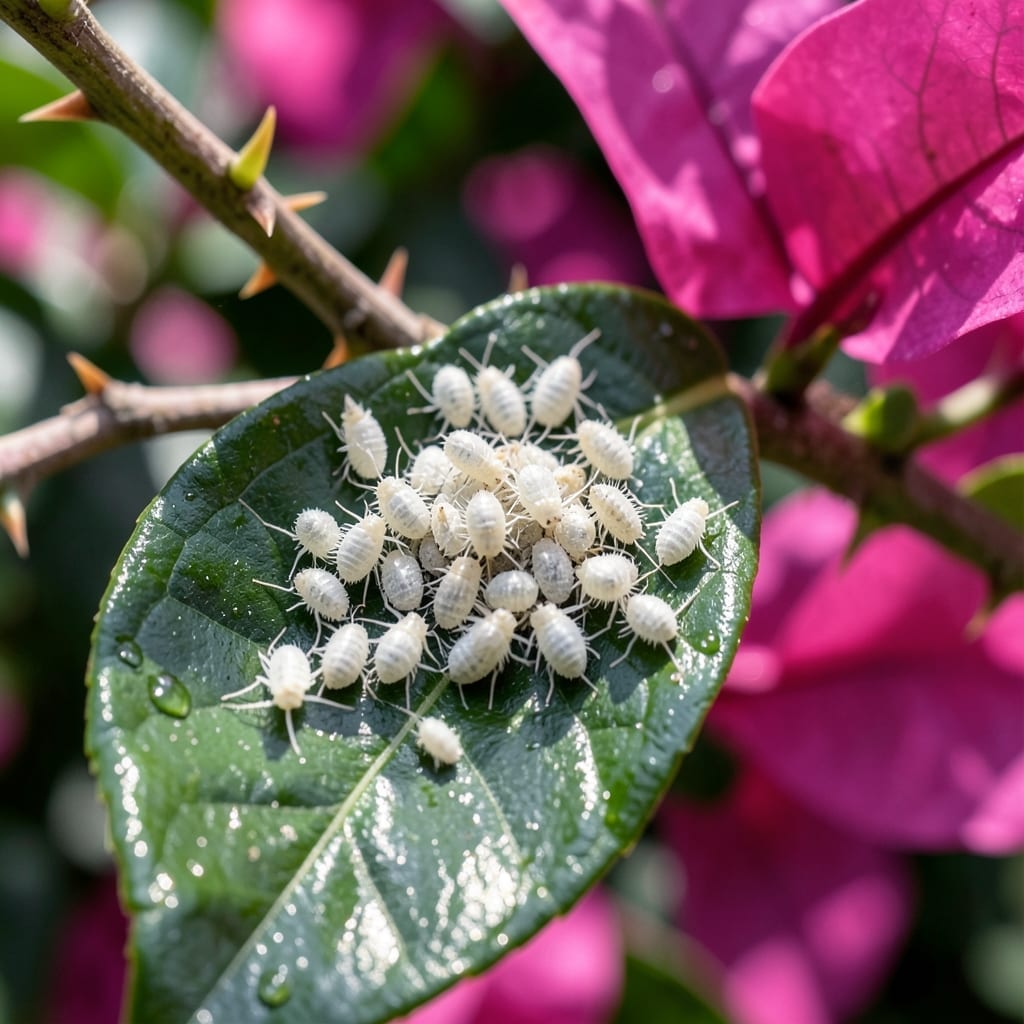
White fluff on your bougainvillea means mealybugs have moved in. I first spotted them on my favorite plant last summer—they spread fast if you ignore them.
These pests love warm, dry conditions and crowded branches. Left unchecked, they’ll weaken your plant and invite sooty mold. The good news is they’re visible to the naked eye, so early detection is easy.
You can blast them off with water, dab with alcohol, or introduce ladybugs. Natural solutions work best for me, but chemical options exist if the infestation spirals.
Prevention starts with good airflow and regular inspections. Keep your bougainvillea healthy, and it’ll fight back naturally.
Mealybugs thrive on bougainvillea due to a mix of environmental and plant-health factors. Understanding these causes helps you prevent and tackle infestations effectively.
Bougainvilleas grown in tight spaces or with poor air circulation create ideal conditions for mealybugs. Stress from overwatering, underwatering, or nutrient deficiencies weakens the plant, making it more susceptible to pests. Mealybugs are drawn to stressed plants because their natural defenses are compromised.
Mealybugs love warm, humid environments. Bougainvilleas in tropical or subtropical climates (or greenhouses) are especially at risk. High humidity slows the drying of plant surfaces, giving mealybugs a moist, protected space to feed and multiply.
Over-fertilizing with nitrogen-heavy products promotes soft, lush growth—a favorite of mealybugs. These pests target tender new shoots and leaves, which are easier to pierce and suck sap from. Balancing fertilization with phosphorus and potassium strengthens plant resistance.
In gardens or landscapes with limited biodiversity, mealybugs face no natural enemies like ladybugs, lacewings, or parasitic wasps. Without these predators, their populations grow unchecked. Encouraging beneficial insects can help keep mealybug numbers in balance.
Tackling mealybugs on your bougainvillea is easier than you think! Start by addressing the most common causes with these practical fixes:
For small outbreaks, grab a pair of tweezers or a cotton swab dipped in rubbing alcohol (70%). Gently remove visible bugs and their cottony clusters. Wipe down leaves and stems with a damp cloth afterward to ensure no residue remains. Pro tip: 💡 Do this early in the morning or late afternoon to avoid stressing the plant in peak heat.
Mix 1 teaspoon of mild dish soap or neem oil with 1 liter of water and spray the entire plant, focusing on undersides of leaves and stem joints. Reapply every 3–4 days for 2 weeks to break the mealybug life cycle. Note: Always test a small area first to check for plant sensitivity.
Encourage ladybugs, lacewings, or parasitic wasps—natural mealybug predators—by planting companion flowers like marigolds or alyssum nearby. You can also purchase these insects from garden centers. Pro tip: ✨ Avoid broad-spectrum pesticides, as they harm these helpful allies.
Consistency is key! Combine these methods for the best results and enjoy a thriving, mealybug-free bougainvillea. 🌺
They appear as small, white, cottony clusters on leaves, stems, and leaf axils. Adults are soft-bodied and slow-moving, often covered in a powdery wax.
While rarely fatal, severe infestations weaken the plant and can lead to stunted growth. They also produce honeydew, which attracts sooty mold and further stresses the plant.
For active infestations, treat every 3-4 days for at least 2 weeks to break their life cycle. Continue monitoring weekly to catch any new outbreaks early.
Reinfestations often occur from untreated hiding spots or nearby infested plants. Ensure thorough coverage during treatment and inspect all plants in the area.