
Beautiful Plants For Your Interior
Beautiful Plants For Your Interior
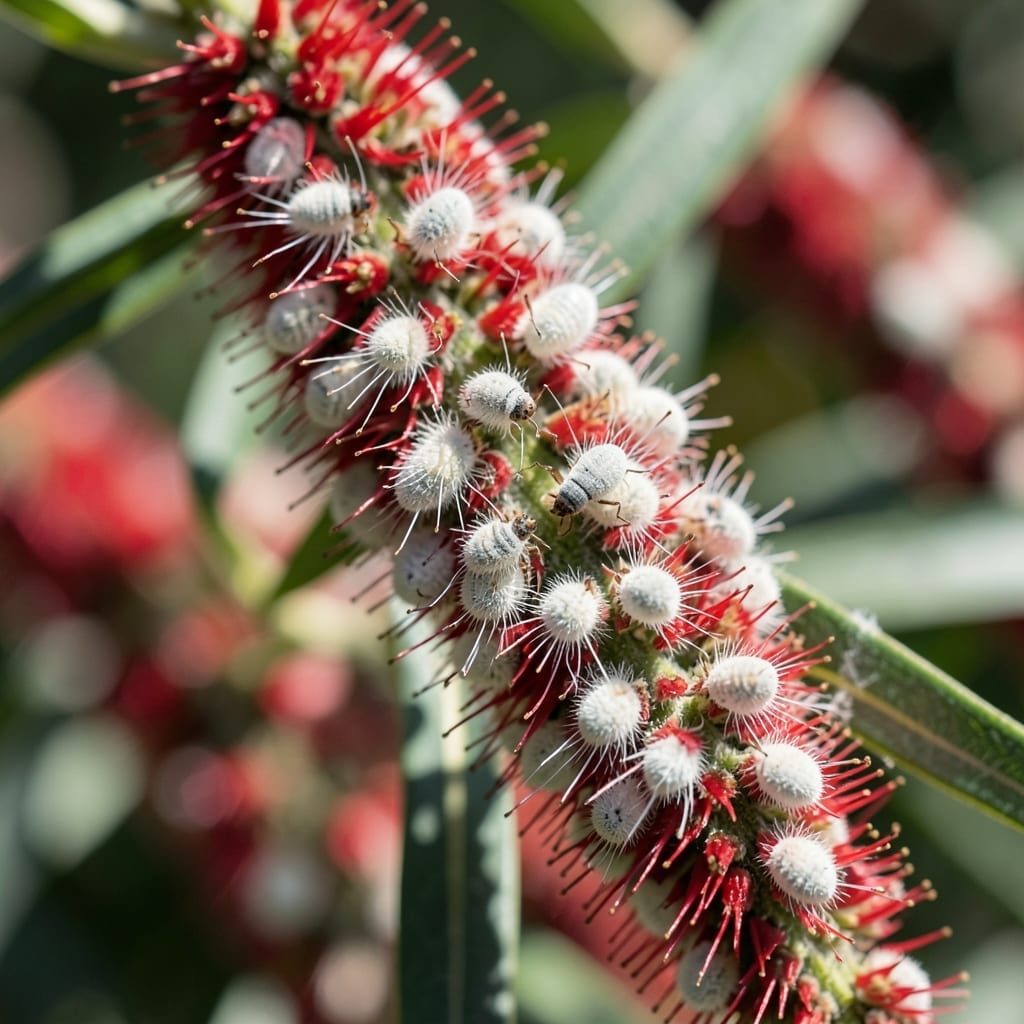
White cottony clusters on your bottlebrush mean mealybugs have moved in. I’ve battled these pests before, and they spread fast if left unchecked.
These bugs weaken plants by sucking sap, leaving sticky residue that attracts mold. The good news? A simple organic treatment can stop them without harsh chemicals.
You’ll see new growth return within 2-3 weeks once they’re gone. Regular checks prevent reinfestation, keeping your bottlebrush healthy and vibrant.
Works for potted or in-ground plants, and the same methods apply to other garden favorites. Here’s how to fight back.
Mealybugs thrive on bottlebrush plants due to a mix of environmental, cultural, and biological factors. Understanding these triggers helps you prevent infestations before they start. Below are the most common causes, explained in simple, actionable terms.
Bottlebrush plants under stress are prime targets. Drought, overwatering, or nutrient deficiencies weaken the plant’s natural defenses, making it easier for mealybugs to colonize. These pests are drawn to stressed plants because their compromised state reduces the plant’s ability to produce protective compounds. Ensure consistent watering (but avoid soggy soil) and fertilize with a balanced, low-nitrogen formula to keep your bottlebrush resilient.
Dense, unpruned foliage creates the perfect humid, shaded microclimate mealybugs love. Bottlebrush plants with excessive growth trap moisture and limit airflow, which accelerates pest reproduction. Regularly thin out branches and remove dead or overlapping leaves to improve ventilation and reduce hiding spots for mealybugs.
In a healthy ecosystem, ladybugs, lacewings, and parasitic wasps keep mealybug populations in check. However, broad-spectrum pesticides or a lack of biodiversity can wipe out these beneficial insects, leaving your bottlebrush defenseless. Avoid chemical sprays and instead introduce natural predators or plant companion species like marigolds or yarrow to attract them.
Mealybugs often hitch a ride on infected tools, pots, or newly purchased plants. If you’ve recently added a bottlebrush or used shared gardening equipment, you may have unknowingly introduced the pests. Always inspect new plants for white, cottony clusters and sterilize pruners and pots with rubbing alcohol between uses to prevent cross-contamination.
Mealybugs can be stubborn, but these targeted fixes will help restore your bottlebrush’s health without harsh chemicals. Start with the simplest solution and escalate if needed.
For a small cluster of mealybugs, dip a cotton swab in rubbing alcohol (70% isopropyl) and gently dab each bug. The alcohol dissolves their protective waxy coating, killing them on contact. Repeat every 2–3 days until gone. Pro tip: 💡 Check leaf axils and stems—these are their favorite hiding spots!
Mix 1 tablespoon of mild liquid soap (like Castile) with 1 quart of water and spray the entire plant, focusing on undersides of leaves. The soap disrupts their cell membranes. Reapply every 4–5 days for 2 weeks. Prevention: ✨ Avoid over-fertilizing—mealybugs thrive on soft, new growth.
Introduce ladybugs, lacewings, or parasitic wasps (available at garden centers). These beneficial insects feast on mealybugs. For best results, release them at dusk and keep the plant lightly misted to encourage them to stay. Prevention: 🎯 Encourage biodiversity in your garden to attract these helpers naturally.
For persistent cases, use neem oil (mix 2 tablespoons with 1 gallon of water and a teaspoon of soap as an emulsifier). Spray weekly, as it disrupts their life cycle. Prevention: 🌡️ Prune heavily infested branches to reduce hiding spots and improve airflow.
Always isolate heavily infested plants to prevent spreading, and inspect new plants before bringing them near your bottlebrush. Consistency is key—mealybugs can rebound if treatments aren’t repeated!
Look for white, cottony clusters in leaf axils or undersides. These resemble tiny cotton balls and often leave a sticky residue called honeydew.
Yes, mealybugs spread quickly through direct contact or wind. Isolate infested plants immediately and inspect nearby ones every 2-3 days for early signs.
It’s not recommended, as they kill beneficial insects too. Stick to organic methods like neem oil or insecticidal soap for safer, effective control.
With consistent treatment, you’ll see improvement in 1-2 weeks. Full elimination may take 3-4 weeks, depending on infestation severity.