
Beautiful Plants For Your Interior
Beautiful Plants For Your Interior
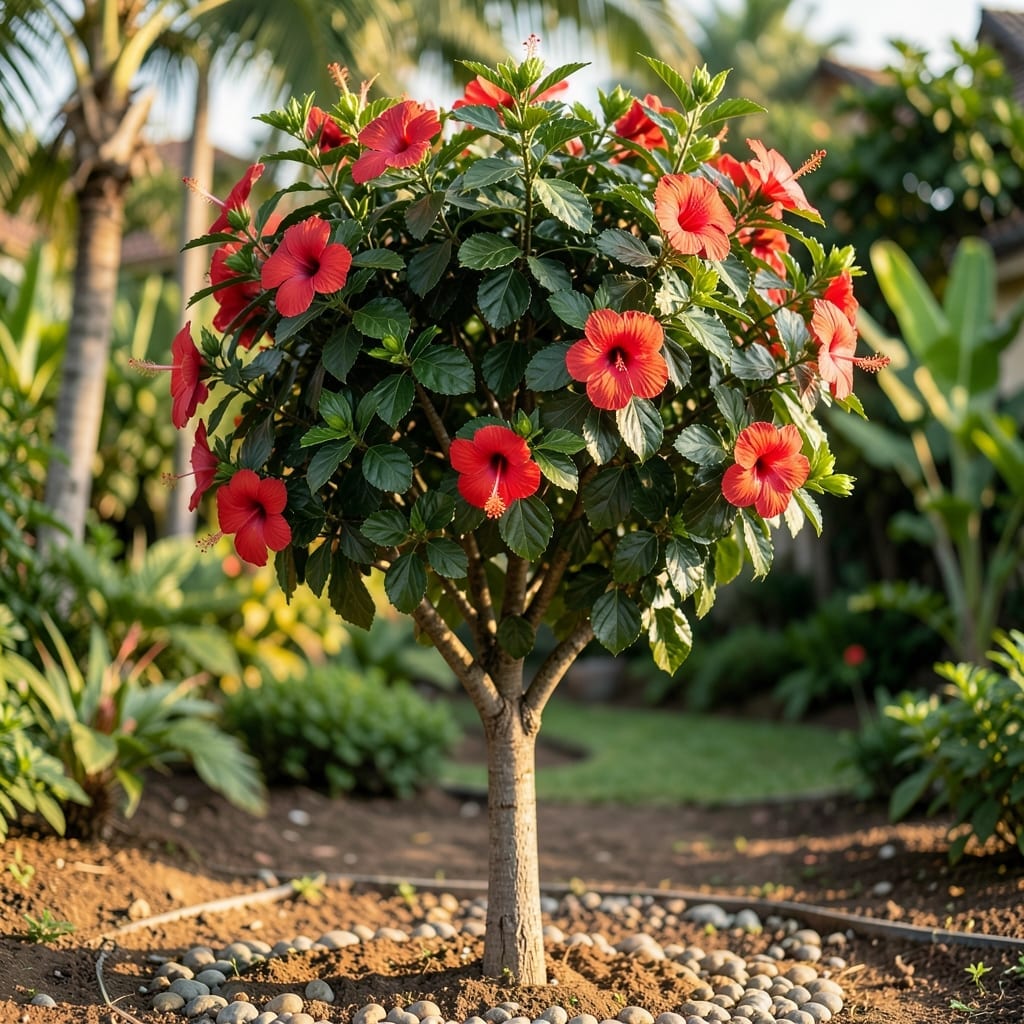
Imagine stepping into your garden and being greeted by a towering 🌺 Hibiscus Tree bursting with vibrant blooms. That dream can be your reality, but mature hibiscus trees need care that’s different from their younger counterparts.
These established beauties have unique demands to keep thriving year after year. With the right approach, you’ll enjoy those stunning flowers from summer to fall without the guesswork.
I’ve learned through experience that the key lies in understanding their specific needs. From pruning techniques to seasonal adjustments, every detail matters for your Hibiscus Tree’s longevity.
Discover how to transform your garden into that tropical paradise you’ve always wanted, with blooms that stop neighbors in their tracks.


A mature hibiscus tree thrives with consistent, tailored care. Unlike younger plants, established trees need deep watering and balanced fertilization to sustain their vibrant blooms and robust growth.
I’ve found that pruning at the right time is key to encouraging new growth and maintaining shape. A well-maintained hibiscus can live for decades with proper attention. 🌺
| Care Task | Frequency | Notes |
|---|---|---|
| Watering | Weekly | Deep soak, morning preferred |
| Fertilizing | Every 4-6 weeks | 10-10-10 NPK, balanced feed |
| Pruning | Early spring | Remove dead wood and shape |
| Soil Check | Seasonally | Well-draining, pH 6.0-7.0 |
For watering, I recommend a deep soak once a week during growing season. This encourages strong root development and prevents shallow rooting, which is common in younger plants.
A balanced fertilizer with a 10-10-10 NPK ratio works wonders. Apply every 4-6 weeks from spring to fall, but ease off in winter when the tree is dormant.
Pruning should be done in early spring before new growth starts. Remove any dead or diseased branches first, then shape the tree to promote air circulation and sunlight penetration.
Soil conditions are critical. Mature hibiscus trees prefer well-draining soil with a slightly acidic to neutral pH. I test my soil annually and amend with compost as needed.
Unlike younger hibiscus, mature trees can tolerate short droughts but perform best with consistent moisture. Mulching helps retain soil moisture and regulate temperature around the roots. ✂️
Watch for signs of nutrient deficiency, like yellowing leaves, which often indicates a need for more nitrogen. Adjust your fertilizer accordingly, but avoid over-feeding, which can lead to leaf burn.
Finally, ensure your hibiscus gets at least 6 hours of direct sunlight daily. In hotter climates, afternoon shade can prevent heat stress while still allowing for abundant blooms.
With these practices, your mature hibiscus tree will reward you with stunning, long-lasting flowers and a healthy, lush appearance. 🌿
Even with proper care, mature hibiscus trees can face challenges like yellowing leaves or pest infestations. These issues often stem from environmental stress or improper maintenance practices.
I’ve found that early detection and organic remedies work best to keep your tree healthy. Addressing problems quickly ensures your hibiscus continues to thrive and bloom beautifully.
| Problem | Solution |
| Yellow leaves | Check iron levels in soil |
| Aphid infestation | Spray with neem oil |
| Poor flowering | Adjust phosphorus fertilizer |
For yellowing leaves, a soil test can reveal if your hibiscus lacks essential nutrients like iron or nitrogen. This is especially common in alkaline soils where iron uptake is limited.
When it comes to pests, I always recommend neem oil or insecticidal soap as safe, effective options. These treatments target pests like aphids and whiteflies without harming beneficial insects.
If your tree isn’t flowering well, it might need more phosphorus in its fertilizer. Switching to a bloom-boosting formula can make a noticeable difference in just a few weeks.
Finally, remember that consistent watering and proper pruning go a long way in preventing most issues. A healthy tree is always better equipped to resist problems.
☀️