
Beautiful Plants For Your Interior
Beautiful Plants For Your Interior
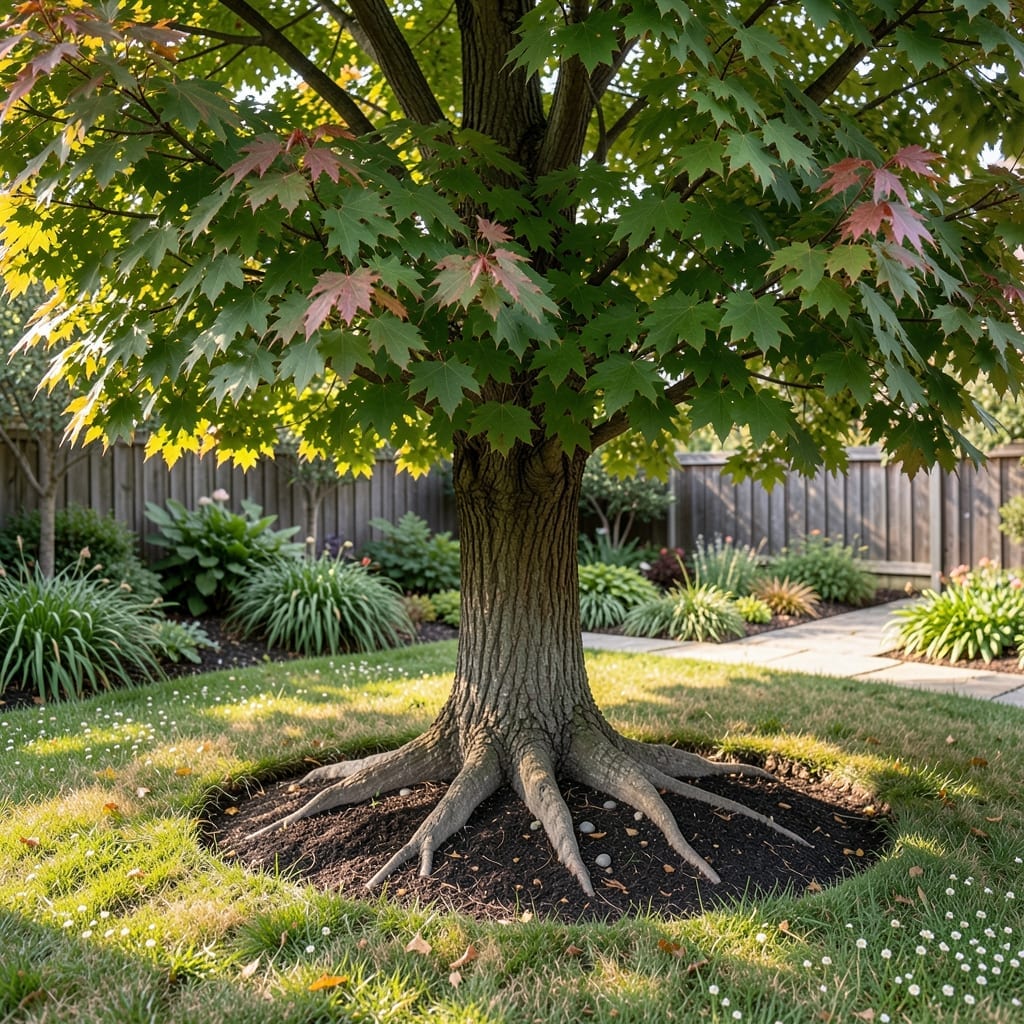
That first maple I planted too close to my house taught me everything about roots. Their underground network spreads wider than you’d expect, often 2-3 times the tree’s height, creating a foundation for decades of growth.
Knowing this pattern helps you space them properly, avoid foundation damage, and give them the room they need to thrive. Healthy roots mean a healthy tree that stands tall through storms and seasons.
📚 In This Guide
Understanding a maple’s underground network is key to growing a strong, resilient tree for years to come.
Maples develop two primary root systems: a deep taproot and an extensive network of lateral roots. The taproot anchors the tree and accesses deep water sources, while lateral roots spread horizontally just beneath the soil surface, often extending 2-3 times wider than the tree’s canopy.
Young maples rely heavily on the taproot for stability, but as they mature, the lateral roots become dominant. You’ll notice this shift as the tree grows taller—the surface roots become more visible, radiating outward like spokes on a wheel. This adaptation helps the tree access water and nutrients efficiently across a broad area.
Most maple roots occupy the top 12-18 inches of soil, where oxygen, organic matter, and moisture are most abundant. This shallow depth means the tree is highly responsive to surface conditions. Compacted soil or heavy clay can restrict root growth, leading to stunted development or poor health.
I’ve found that maples thrive when the soil is well-aerated and loosely packed—this allows roots to expand freely. If you’re planting in an urban environment, consider loosening the soil in a wide radius around the trunk to encourage outward growth. Avoid digging too deeply near the base, as this can sever critical lateral roots.
Different maple species exhibit unique root behaviors. For instance, sugar maples develop a dense, fibrous network that can lift sidewalks if planted too close to pavement. In contrast, red maples tend to have a more adaptable spread, making them slightly better for urban landscapes.
Observe the tree’s canopy to estimate its root zone—the drip line (outer edge of the branches) is typically where the most active roots are concentrated. This is why proper spacing at planting is essential. Crowding maples too closely together leads to competition for resources, which compromises their long-term health.
To support a maple’s underground system, focus on consistent moisture without waterlogging. A deep, infrequent watering schedule encourages roots to grow downward rather than spreading too shallowly. I water established trees at the drip line, not at the trunk, to direct growth where it’s most beneficial.
Mulching is another critical practice. Apply a 2-4 inch layer of organic mulch (like wood chips) around the base, keeping it a few inches away from the trunk to prevent rot. This insulates the soil, retains moisture, and protects surface roots from temperature extremes. Avoid piling mulch too high—it can suffocate the roots and invite pests.
Here’s how to avoid common pitfalls and ensure your maple thrives for years to come.
Root Structure Awareness: Remember that lateral roots can extend 2-3 times wider than the tree’s canopy. When planting near structures or sidewalks, account for this spread to prevent future damage. I always mark the planting area with a wide buffer to accommodate mature growth.
Soil Depth Insight: Since most maple roots occupy the top 12-18 inches of soil, focus on improving this zone with loose, well-aerated soil. Compacted soil here can suffocate roots, so I recommend tilling or amending the area before planting. Avoid deep digging near the trunk to protect those critical lateral roots.
Species-Specific Care: Sugar maples, with their dense, fibrous roots, need extra space from pavement to prevent sidewalk lifting. Red maples are more adaptable, but even they benefit from proper spacing. I’ve seen too many trees struggle because their root zones were crowded—always plant with the mature canopy size in mind.
Mulching Technique: When applying that 2-4 inch layer of organic mulch, keep it a few inches away from the trunk. Piling mulch too high can trap moisture against the bark, leading to rot. I use wood chips and spread them evenly to the drip line, where the most active roots are concentrated.
Maple roots typically grow 12–24 inches deep, but they can extend much wider than the tree’s canopy. Most roots stay shallow to absorb water and nutrients efficiently. Depth varies by soil type and moisture levels.
Yes, aggressive maple roots (like silver maples) can lift sidewalks or crack foundations over time. Plant trees at least 20–30 feet from structures to prevent damage. Opt for less invasive species if space is limited.
Early spring or fall is ideal! Cooler temperatures and moderate rainfall help roots establish before extreme heat or cold. Avoid planting in summer or winter for best results.
Keep the soil moist (but not soggy), mulch to retain water, and avoid compacting soil around the base. Regularly check for pests or diseases that may weaken the root system.