
Beautiful Plants For Your Interior
Beautiful Plants For Your Interior
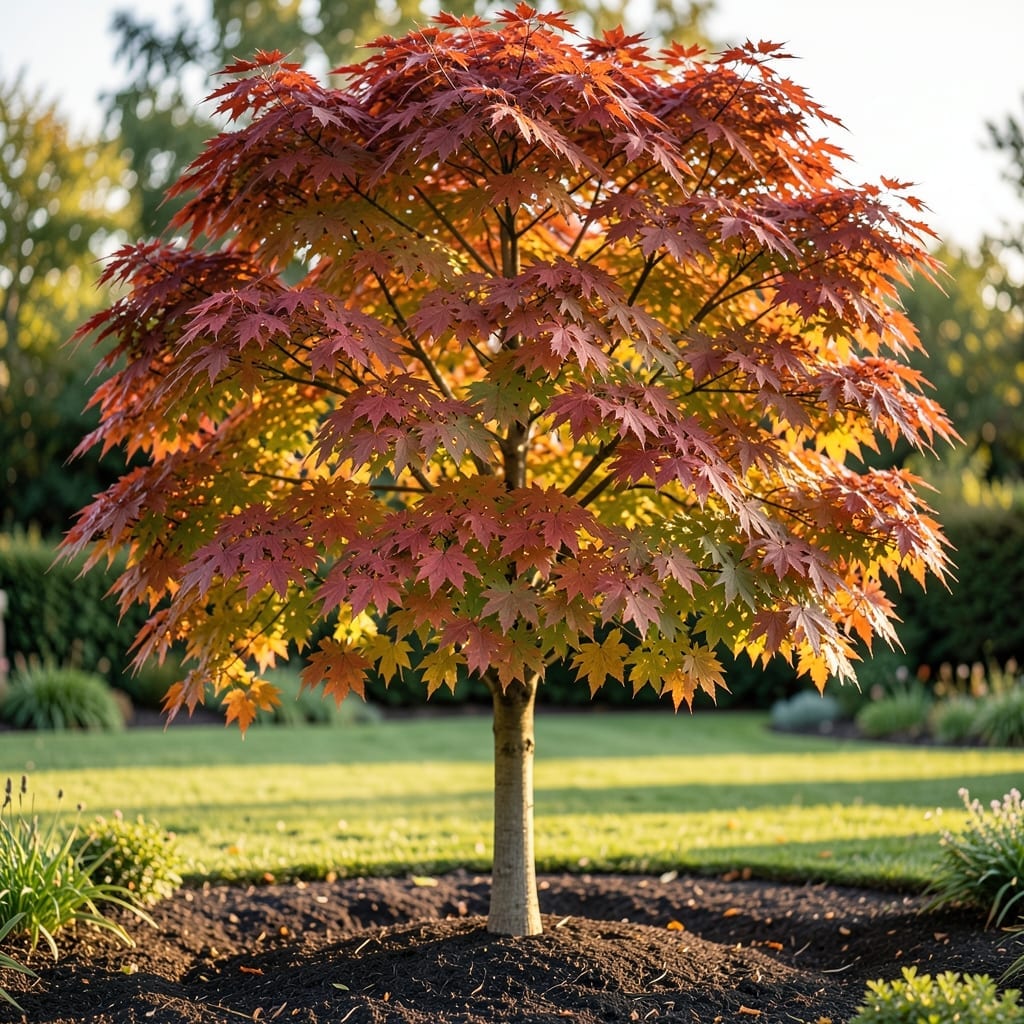
Maple leaves turn vibrant red, orange, and yellow in fall due to chlorophyll breakdown, revealing hidden pigments like carotenoids and anthocyanins that were masked during summer growth.
This stunning transformation happens as trees prepare for winter dormancy. 🌟 The shorter days and cooler temperatures trigger chemical changes, with carotenoids producing yellows and oranges while anthocyanins create the brilliant reds. I’ve noticed maples in full sun often develop the most intense colors.
Healthy trees with proper care show the most vivid displays. ✨
💡 In This Article
As daylight shortens in autumn, maples sense the seasonal shift and begin breaking down chlorophyll—the green pigment dominating summer foliage. This reveals pre-existing carotenoids, which produce golden yellows and oranges that were masked all year. The process accelerates as temperatures drop below 50°F. 🌟
Meanwhile, trees produce new anthocyanin pigments in response to bright light and excess sugars trapped in leaves. These create the vivid reds and purples maples are famous for. Sugar maples often turn scarlet, while red maples may display fiery crimson—both containing up to 5x more anthocyanins than other species. ⚡
Sunlight intensity directly affects color vibrancy. Leaves exposed to full sun develop deeper reds because more sugars accumulate, triggering greater anthocyanin production. Cooler nights (40-50°F) combined with sunny days create ideal conditions for the most spectacular displays. 💫
Soil moisture also plays a role. Drought-stressed trees may drop leaves prematurely, while consistently moist (but not waterlogged) soil supports maximum pigment development. This is why maples in well-drained locations often show the most brilliant colors each autumn. ✨
The timing varies by species—sugar maples typically peak in early October, while red maples may color up 2-3 weeks earlier. This staggered display creates the prolonged fall color season that makes maples so beloved in northern forests. 🔥
Red color comes from anthocyanins produced in response to bright light and cool temperatures. Sugar maples often turn scarlet, while others like silver maples may stay yellow due to lower anthocyanin levels.
Timing varies by species and location. Sugar maples typically peak in early October, while red maples may color up 2-3 weeks earlier. Cooler climates see colors 1-2 weeks before warmer areas.
A combination of sunny days and cool nights (40-50°F) produces the most vibrant displays. Drought or early frosts may cause leaves to drop prematurely, muting the colors.
Ensure proper watering, maintain soil pH between 6.0-7.0, and avoid late-summer nitrogen fertilizers. Healthy trees with good sunlight exposure develop the most brilliant hues.