
Beautiful Plants For Your Interior
Beautiful Plants For Your Interior
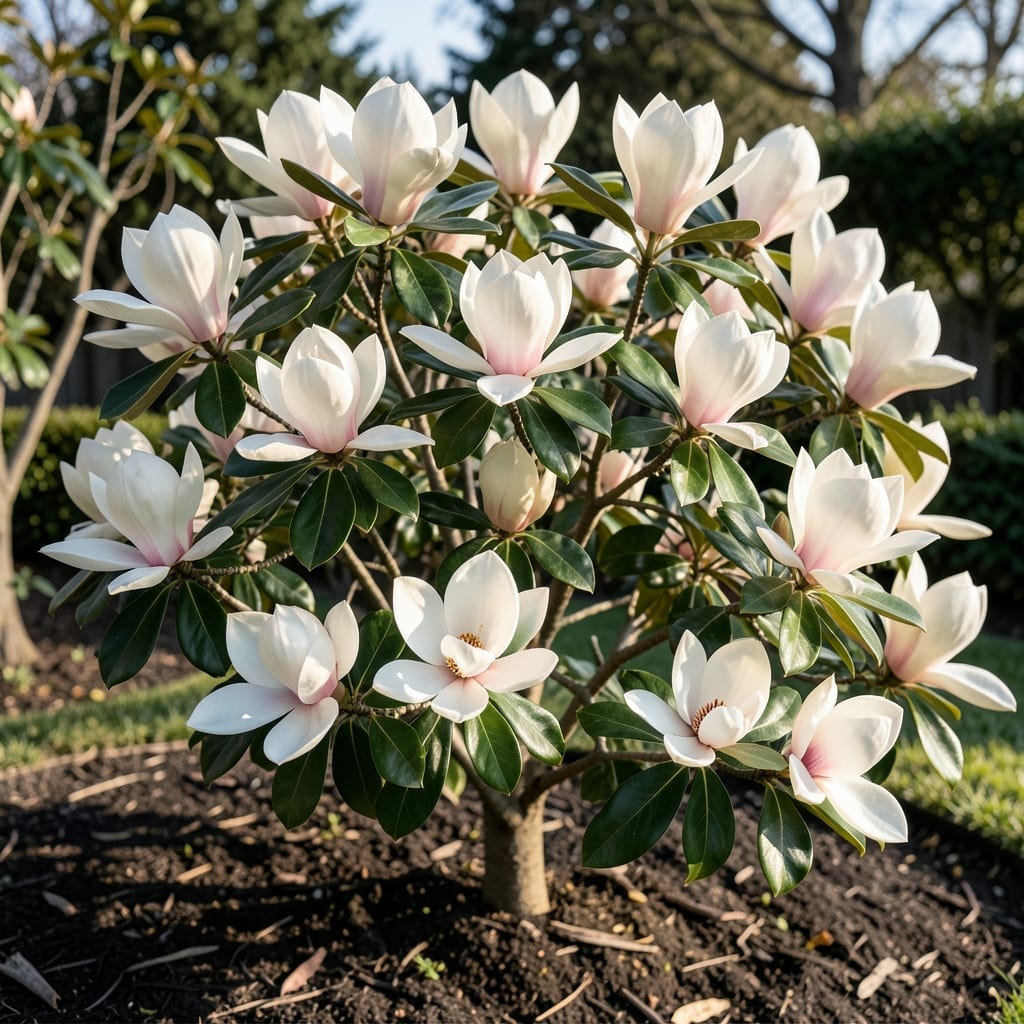
White magnolia bushes light up shady spots with their glossy leaves and stunning blooms. I’ve grown these in my own garden for years, and they’re surprisingly low-maintenance once established.
They thrive with morning sun and afternoon shade, needing well-draining soil and moderate watering. The fragrant flowers appear in early spring, making them a standout in any landscape.
📚 In This Guide
Here’s my proven approach to cultivating healthy white magnolias where sunlight is limited.
Choose a spot with 4-6 hours of dappled sunlight daily—morning light is ideal. Avoid deep shade under dense canopies, as this will limit flowering. I look for areas with filtered light, like the edge of a tree line or near a lattice structure.
The soil should drain well but retain moisture. Magnolias despise soggy roots, so test drainage by digging a 12-inch hole and filling it with water. If it drains within 1-2 hours, the location is suitable. If water lingers, amend the soil or pick a new spot.
Magnolias thrive in slightly acidic to neutral soil (pH 5.5-7.0). Test your soil and adjust if needed—lime raises pH, sulfur lowers it. Work in 2-3 inches of organic matter like compost or well-rotted leaf mold to improve fertility and structure.
Loosen the soil to a depth of 18-24 inches, removing rocks and breaking up clumps. This encourages deep root penetration, which is critical for long-term stability. I always mix in a handful of mycorrhizal fungi to boost root development and nutrient uptake.
Dig a hole twice as wide as the root ball but no deeper. Place the bush in the hole, ensuring the top of the root ball sits 1-2 inches above the surrounding soil level—this prevents settling and water pooling. Backfill with native soil, tamping gently to eliminate air pockets.
Water thoroughly after planting to settle the soil. Create a 3-4 inch tall watering ring around the base to direct moisture to the roots. Mulch with 2-3 inches of organic material, keeping it 6 inches away from the trunk to prevent rot.
Water deeply once or twice weekly for the first year, ensuring the soil stays evenly moist but not waterlogged. Established magnolias are moderately drought-tolerant but perform best with regular moisture. I check soil by sticking my finger 2 inches deep—if it feels dry, it’s time to water.
Fertilize in early spring with a balanced, slow-release formula designed for acid-loving plants. Avoid high-nitrogen fertilizers, which can promote leafy growth at the expense of flowers. Prune only to remove dead, damaged, or crossing branches—do this immediately after flowering to avoid cutting off next year’s buds.
Magnolias are relatively pest-resistant, but keep an eye out for scale insects, aphids, and magnolia borers. I inspect the leaves and stems weekly, especially the undersides. A strong blast of water can dislodge aphids, while horticultural oil treats scale effectively.
Prevent fungal issues by ensuring good air circulation. Thin out dense growth if needed, and always water at the base to keep foliage dry. If you notice yellowing leaves (a sign of chlorosis), it’s often due to iron deficiency—apply a chelated iron supplement to correct it.
The details that separate thriving plants from struggling ones start with these insights.
Sunlight Strategy: That 4-6 hours of morning sunlight in Step 1 is non-negotiable for vibrant blooms. Afternoon shade prevents leaf scorch, which I learned the hard way after losing two plants to midday sun. Morning light is gentler and more beneficial for photosynthesis in magnolias.
The Drainage Test: In Step 1, when testing with a 12-inch-deep hole, don’t rush the 1 hour drain time. If water sits longer, amend with compost—root rot sets in fast in soggy soil. I’ve seen plants decline within weeks when this step was skipped.
Planting Height: Positioning the root ball 1-2 inches above ground level in Step 3 accounts for settling. I once planted level with the soil and watched the base rot after heavy rains. This small elevation makes a world of difference.
Watering Wisdom: The 10-15 minutes of slow trickling in Step 3 ensures deep root penetration. Shallow watering leads to weak root systems. Trust me, your magnolia will thank you for the patience.
Water deeply 1-2 times per week, allowing the soil to dry slightly between waterings. Partial shade reduces evaporation, so avoid overwatering to prevent root rot.
While it tolerates partial shade, full shade may reduce blooming. For best results, provide at least 3-4 hours of dappled sunlight daily.
Watch for scale insects, aphids, or fungal issues like powdery mildew. Prune for airflow and treat with horticultural oil or fungicide if needed.
Prune after flowering in late spring or early summer. Avoid fall pruning, as it may encourage new growth vulnerable to frost damage.
Yes! Consider hydrangeas, camellias, or azaleas for similar beauty with higher shade tolerance.