
Beautiful Plants For Your Interior
Beautiful Plants For Your Interior
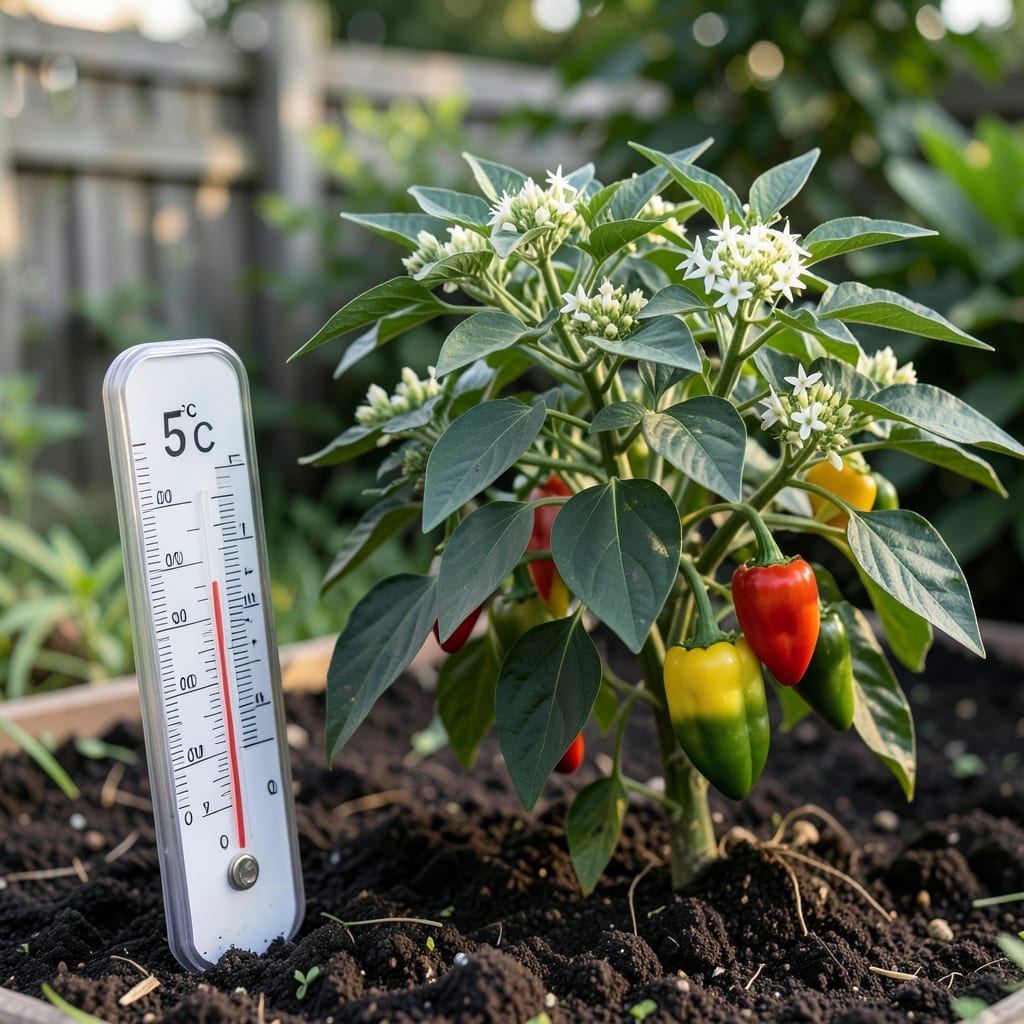
Pepper plants thrive in warmth, but knowing their exact low temperature limits can mean the difference between a bountiful harvest and a failed crop. Even experienced gardeners often misjudge how cold is too cold for these heat-loving 🌶️ plants.
I’ve seen countless pepper crops struggle when temperatures dip below their comfort zone. The line between thriving and merely surviving is thinner than you might think.
Let me walk you through the critical temperature thresholds your peppers need, and how to spot the warning signs before it’s too late.
Understanding the low temperature limits for pepper plants is crucial for success. These heat-loving plants have specific thresholds that vary by growth stage and variety.
Most peppers stop growing below 55°F, while temperatures at or below 32°F can cause severe damage or death. However, some varieties handle cold better than others.
| Variety | Minimum Temp (°F) | Germination Temp (°F) | Frost Tolerance |
|---|---|---|---|
| Bell Peppers | 50-55°F | 70-85°F | None |
| Jalapeños | 55°F | 70-80°F | None |
| Habaneros | 60°F | 75-85°F | None |
| Banana Peppers | 50°F | 70-80°F | None |
I always recommend checking soil temperature with a thermometer before planting. Even if air temps seem warm, cold soil can stunt growth or prevent germination.
Bell peppers are among the most cold-sensitive, while habaneros need consistent warmth. This is why I start seeds indoors 8-10 weeks before the last frost.
For outdoor planting, wait until nighttime temperatures stay above 55°F. In my zone 6 garden, this usually means mid-May is the earliest safe time.
Remember that container-grown peppers can be moved inside when cold snaps threaten. I’ve saved many plants this way during unexpected late frosts.
Even mature plants can suffer if exposed to prolonged cold. The fruit production stage is particularly sensitive to temperature drops.
I’ve found that mulching heavily with straw helps maintain soil warmth. This simple step can make a big difference in cooler climates.
Watch for purple stems or yellowing leaves as early signs of cold stress. These visual cues often appear before more serious damage occurs.
☀️When temperatures dip below 55°F, pepper plants start showing signs of stress. I’ve learned that proactive protection is key to keeping them thriving in unpredictable weather. Even a light frost can devastate a crop.
One of my go-to methods is using row covers or frost blankets. These lightweight fabrics trap heat while allowing light and water to pass through, creating a mini greenhouse effect.
I always mulch heavily around my pepper plants with straw or wood chips. This keeps the soil temperature stable and prevents roots from getting too cold overnight.
For gardeners in cooler climates, container gardening offers flexibility. When a cold snap is forecast, I simply move my potted peppers to a garage or porch. This has saved my jalapeños more times than I can count.
Another trick I use is planting near heat-absorbing surfaces, like south-facing walls or pavement. These areas retain warmth longer, creating a microclimate that’s a few degrees warmer.
Remember, consistent watering helps plants recover from stress. But always water early in the day so foliage dries before evening. Wet leaves in cold weather invite fungal diseases.
☀️