
Beautiful Plants For Your Interior
Beautiful Plants For Your Interior
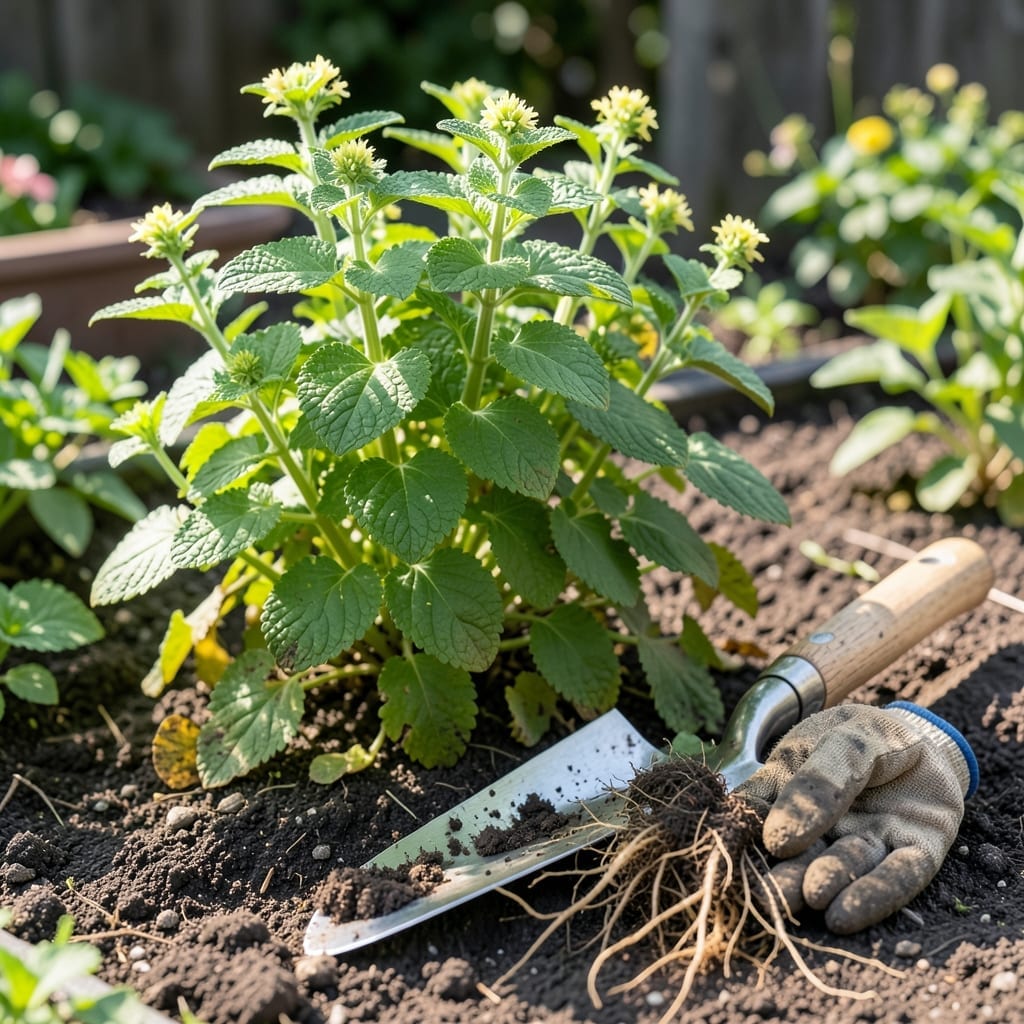
I’ve killed my share of lemon balm by overlooking its roots. This plant’s underground system holds the key to its vigorous growth and easy propagation.
With the right care, those roots will spread fast, reward you with lush foliage, and bounce back from even my clumsiest mistakes. Here’s how to work with them, not against them.
📚 In This Guide
Here’s the organic method I’ve used for years to establish healthy lemon balm from root cuttings.
Choose healthy pencil-thick roots from an established lemon balm plant in early spring or fall when the plant is dormant. I look for roots that are firm and white with visible nodes—these will sprout new growth most reliably. Use clean pruners to cut 2-3 inch sections at a slight angle to maximize surface area for rooting.
Remove any fibrous side roots but leave the main root intact. This ensures the cutting focuses its energy on producing new shoots rather than maintaining existing growth. Soak the cuttings in lukewarm water for 1-2 hours to rehydrate them before planting.
Fill 4-inch pots with a mix of 50% potting soil and 50% perlite to ensure excellent drainage—lemon balm roots rot easily in soggy conditions. Plant each cutting horizontally, 1 inch deep, with the top slightly exposed. This orientation encourages multiple shoots to emerge along the length.
Firm the soil gently around the cutting so it makes good contact but isn’t compacted. Water lightly until the mix feels evenly moist but not waterlogged. I place my pots on a saucer to catch excess water, which I empty after 30 minutes to prevent standing water.
Place the pots in a location with bright, indirect light and maintain temperatures between 60-75°F. A north or east-facing windowsill works perfectly. Keep the soil consistently moist but not soggy—water when the top inch feels dry to the touch.
You’ll see the first signs of life in 2-3 weeks when small green shoots emerge from the nodes. This is when the cutting is establishing its own root system. Once shoots reach 2-3 inches tall, you can gradually introduce more direct sunlight to harden off the new plants.
When the new plants have 3-4 sets of leaves and roots are visible at the drainage holes, they’re ready to transplant. In the garden, space plants 18-24 inches apart in well-draining soil. For containers, use pots at least 8-12 inches deep to accommodate the spreading root system.
Water thoroughly after transplanting and keep the soil consistently moist for the first 1-2 weeks while the plants adjust. Lemon balm is drought-tolerant once established, but consistent moisture during this transition period prevents shock. Mulch around the base with 1-2 inches of organic matter to retain moisture and suppress weeds.
These simple adjustments will help your cuttings thrive and avoid common pitfalls.
Root Selection: In Step 1, always choose pencil-thick roots with visible nodes. Confession: I skipped this step once and ended up with weak sprouts. The nodes are where new growth emerges, so they’re non-negotiable for successful rooting.
Soaking Time: The 1-2 hour soak in lukewarm water rehydrates the cuttings after cutting. Here’s what nobody tells you—this step prevents the roots from drying out while they’re establishing, which can make or break your success. Don’t rush it.
Soil Mix: For Step 2, the 50% potting soil and 50% perlite mix isn’t just a suggestion. Lemon balm roots rot easily, and this combination provides the perfect drainage. I learned this the hard way after losing several cuttings to soggy soil.
Watering Technique: Emptying that saucer after 30 minutes in Step 2 prevents root rot. It’s tempting to leave the water, but standing water is the enemy. Trust me, your cuttings will thank you for this small but crucial step.
Yes! Lemon balm roots easily from cuttings. Take a 4-6 inch root section with growth nodes, plant in moist soil, and keep it shaded. Roots should establish in 2-3 weeks.
Plant roots about 1-2 inches deep in well-draining soil. Ensure the crown (where roots meet stems) sits just above the soil line to prevent rot.
Root rot from overwatering is the biggest issue. Yellowing leaves or wilting may signal poor drainage. Use sandy loam soil and avoid soggy conditions.
While the root is edible, it’s less flavorful than the leaves. It’s mostly used for propagation or medicinal teas, but leaves are preferred for culinary uses.
Harvest roots in early spring or fall when the plant is dormant. This minimizes stress and ensures the strongest regrowth for the next season.