
Beautiful Plants For Your Interior
Beautiful Plants For Your Interior
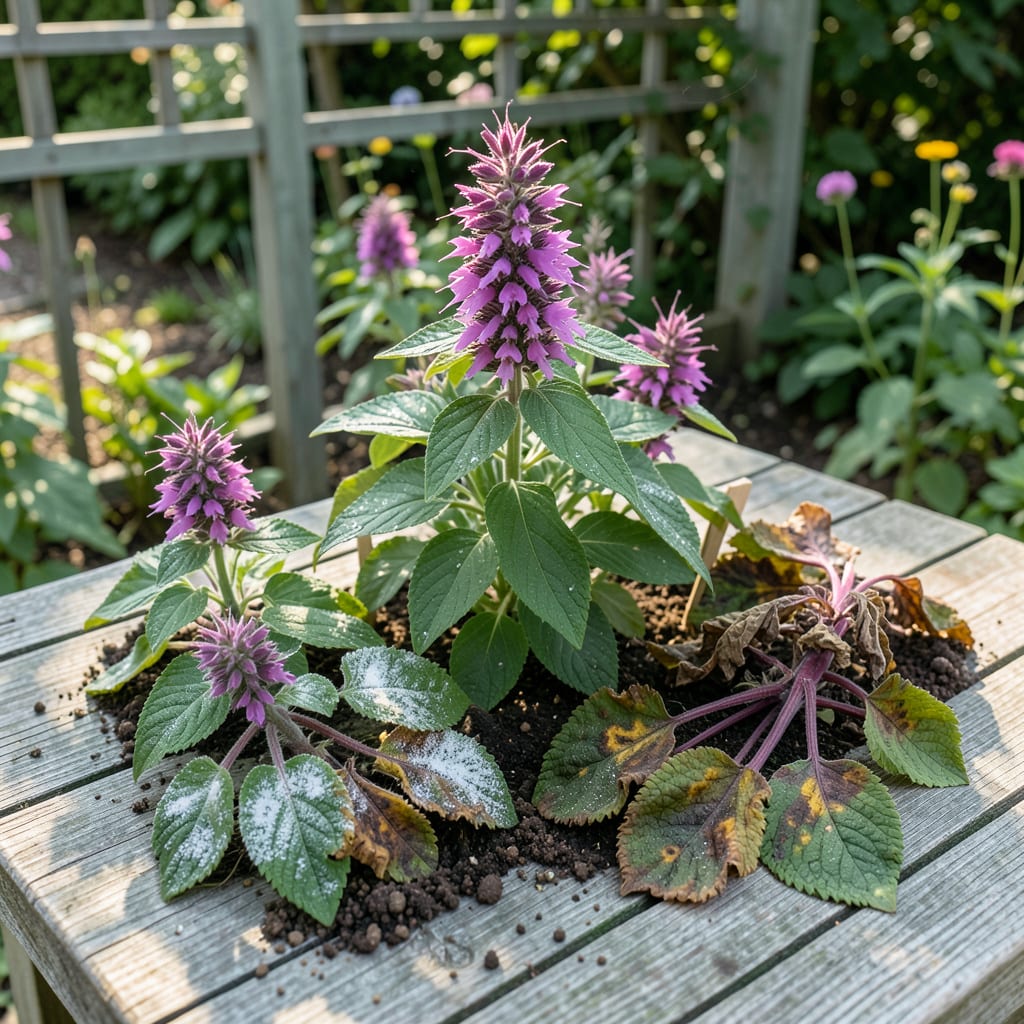
Bee balm brightens gardens with its vibrant blooms, but diseases can quickly dim that beauty. I’ve lost entire patches to powdery mildew before learning how to spot early signs.
Prevention starts with airflow and proper spacing, while treatment often requires just a few simple adjustments. Healthy plants resist most issues—here’s how to keep yours thriving.
📚 In This Guide
Here’s the method I use to keep bee balm thriving and disease-free throughout the growing season.
I start by examining leaves, stems, and flowers weekly for any discoloration or unusual spots. Bee balm is particularly susceptible to powdery mildew, which first appears as white, powdery spots on upper leaf surfaces. Catching this early prevents it from spreading to the entire plant.
Also watch for rust, which shows as orange-brown pustules on the undersides of leaves. I use a hand lens to check for these subtle signs. Early detection means you can remove affected foliage before the problem becomes widespread and harder to control.
Proper spacing is critical for preventing fungal diseases. I plant bee balm with at least 18-24 inches between each clump to allow air to flow freely. This reduces humidity around the foliage, which fungal spores need to germinate and spread.
If your plants are already in the ground, thin out crowded stems by cutting back about one-third of the growth at the center. This opens up the plant and improves airflow. I’ve found that doing this in early summer prevents many issues before they start.
Water at the base of the plant rather than overhead to keep foliage dry. A soaker hose or drip irrigation works best for this. If you must use a sprinkler, water in the early morning so leaves dry quickly in the sun.
At the first sign of disease, I remove and destroy affected leaves or stems immediately. Do not compost this material, as many fungal spores can survive the composting process and reinfect your garden later. Instead, seal it in a plastic bag and dispose of it with household trash.
For powdery mildew, I also prune back any nearby plants that might be touching the infected bee balm. This prevents the disease from jumping to healthy specimens. After pruning, I disinfect my pruners with a solution of 1 part bleach to 9 parts water to avoid spreading pathogens to other plants.
For mild cases of powdery mildew, I spray the plants with a mixture of 1 tablespoon baking soda and 1 gallon of water, adding a drop of dish soap to help it stick. This works well as a preventive measure if applied every 7-10 days during humid weather.
For more severe infections, I use a fungicide labeled for powdery mildew and rust. Follow the product instructions carefully, and apply in the early morning or late evening to avoid harming pollinators. Neem oil is another effective option, but I avoid using it when bees are actively foraging on the flowers.
At the end of the growing season, I cut back all bee balm stems to the ground and remove the debris. This eliminates overwintering spores that could reinfect the plants next year. I also rotate planting locations every 3-4 years to prevent soil-borne diseases from building up.
Clean up fallen leaves and other plant debris around the garden regularly. I’ve learned that a tidy garden is a healthier garden. Additionally, avoid working with plants when they’re wet, as this can spread fungal spores from one plant to another.
Small adjustments in your routine can make a big difference in keeping your plants healthy.
Inspection Frequency: I can’t stress enough how critical that weekly inspection in Step 1 is. Powdery mildew can spread rapidly, and what starts as a few white spots on Monday can become a full-blown infection by Friday. I’ve found that using a hand lens, as mentioned, catches rust pustules before they become visible to the naked eye.
Spacing Strategy: Confession: I skipped proper spacing my first year and paid the price. The 18-24 inches between plants in Step 2 isn’t just a suggestion—it’s your first line of defense against fungal diseases. If your garden is already planted, don’t hesitate to thin those crowded centers by one-third, as described. It feels drastic, but your plants will thank you.
Disposal Discipline: Here’s what nobody tells you—composting infected material is like inviting disease back for next season. That Step 3 rule about sealing and trashing affected foliage is non-negotiable. I learned this the hard way after reinfecting an entire bed from my “harmless” compost pile.
Timing Matters: The early morning timing for watering and fungicide application in Steps 2 and 4 isn’t arbitrary. It gives foliage time to dry in the sun and avoids harming pollinators during their active foraging hours. I’ve ruined more than one batch of plants by watering in the evening, creating perfect conditions for fungal growth overnight.
Ensure good air circulation by spacing plants properly and watering at the base in the morning. Remove affected leaves promptly, and consider fungicidal sprays like neem oil if the issue persists.
Rust is typically caused by fungal spores thriving in wet, humid conditions. Avoid overhead watering, keep the garden clean of debris, and treat with a copper-based fungicide if needed.
Yes, fungal diseases like powdery mildew and rust can spread to nearby susceptible plants. Isolate infected plants and practice good sanitation, such as sterilizing tools and removing fallen leaves.
Early intervention is key! Treat at the first sign of disease, preferably in the morning. For prevention, apply fungicides or organic treatments like baking soda spray before the growing season begins.
Yes! Look for resistant varieties like Monarda ‘Jacob Cline’ or ‘Marshall’s Delight’, which are less prone to powdery mildew and other common issues.
