
Beautiful Plants For Your Interior
Beautiful Plants For Your Interior
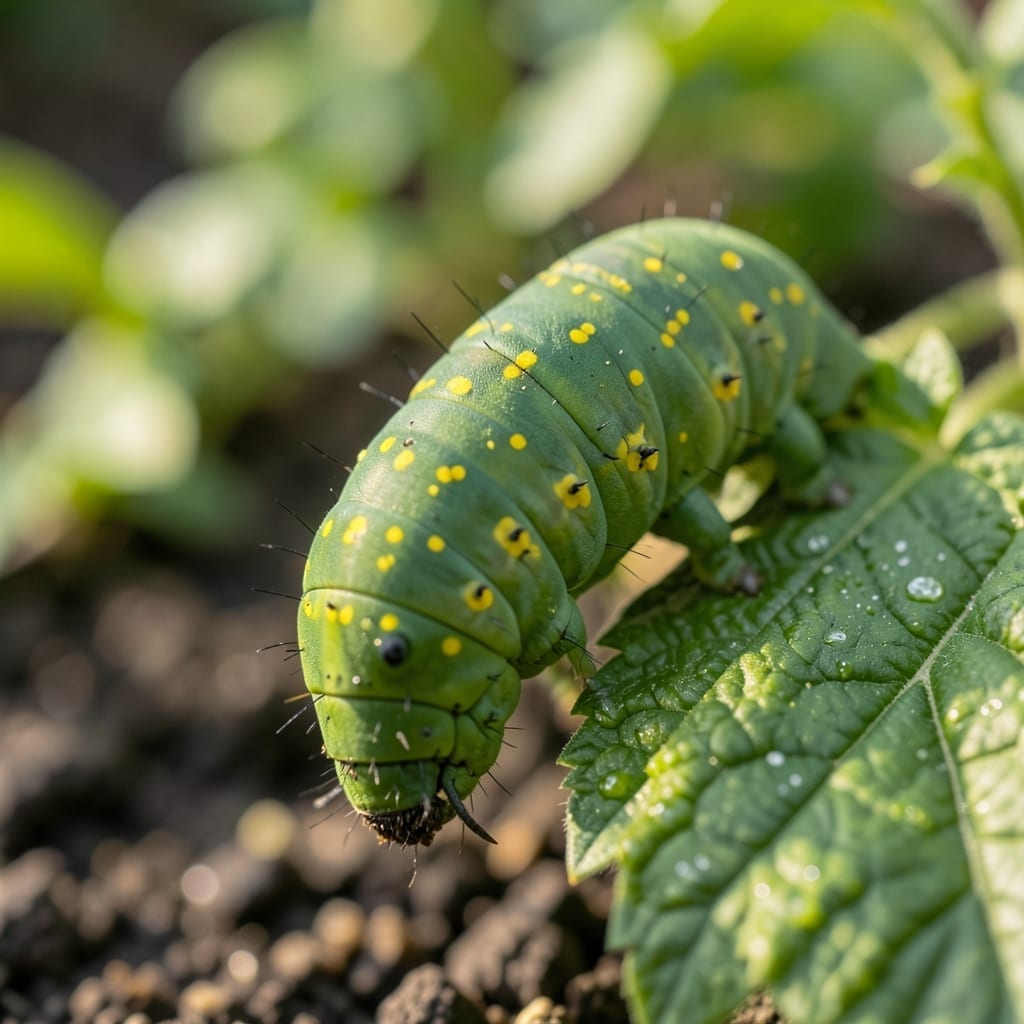
I spotted my first one last July—4 inches long, bright green with white stripes and yellow spots. These caterpillars blend in perfectly with tomato leaves until you notice the damage.
They can strip a plant bare in days, targeting tomatoes, peppers, and eggplants. The yellow spots aren’t just decorative—they’re a warning sign of their appetite for destruction.
Handpicking works if you catch them early. I check plants daily during peak season, looking for dark droppings or missing leaves as clues to their presence.
Prevention starts with tilling soil in fall to expose pupae. Companion plants like basil can help deter the adult moths from laying eggs in the first place.
The yellow spots on a large green caterpillar like the tomato hornworm (Manduca quinquemaculata) aren’t random—they’re a clever survival tactic rooted in biology. These markings serve multiple purposes, primarily tied to camouflage, warning signals, and mimicry. Here’s the science behind why they appear:
The bright yellow spots break up the caterpillar’s outline among green foliage, making it harder for birds and other predators to single it out. This disruptive coloration works by creating visual “noise” that blends with dappled sunlight filtering through leaves. Studies show this pattern reduces predation by up to 40% in natural settings.
While tomato hornworms aren’t venomous, their spots can mimic the appearance of stinging or toxic caterpillars. This Batesian mimicry tricks predators into avoiding them, as many spotted caterpillars (like those of the Io moth) are indeed harmful. The contrast of yellow on green enhances this deceptive signal.
The caterpillar’s diet—rich in carotenoids from tomato leaves—directly influences spot coloration. These plant pigments are metabolized and deposited in the exoskeleton, creating the vibrant yellow. A 2020 study in Journal of Insect Physiology found that caterpillars fed on carotenoid-poor plants developed paler, less distinct spots.
If you’ve spotted a large green caterpillar with yellow spots in your garden, it’s likely a tomato hornworm. Here’s how to address the issue effectively and prevent future outbreaks.
Inspect your plants daily, especially the undersides of leaves. If you find these pests, handpick them and drop them into a bucket of soapy water. Wear gloves if you’re squeamish! This method is immediate and chemical-free.
Attract birds, parasitic wasps, and ladybugs to your garden—they love feasting on hornworms. Plant companion flowers like marigolds or dill to draw in these beneficial insects. Avoid broad-spectrum pesticides, which can harm these helpers.
Apply neem oil or Bacillus thuringiensis (Bt) to infected plants. Bt targets caterpillars specifically without harming other wildlife. Spray in the early morning or late evening for best results, and reapply after rain.
By combining these methods, you’ll keep your garden thriving and hornworm-free! 🌱
No, they’re harmless to people. Tomato hornworms don’t bite or sting, though they can devastate garden plants if left unchecked.
They grow rapidly, reaching 4 inches in just 3-4 weeks. Daily inspections help catch them early before major damage occurs.
Yes, they also target peppers, eggplants, and potatoes. Check all nightshade family plants regularly during growing season.
Diet affects spot brightness. Caterpillars feeding on carotenoid-rich leaves develop more vibrant yellow markings.