
Beautiful Plants For Your Interior
Beautiful Plants For Your Interior
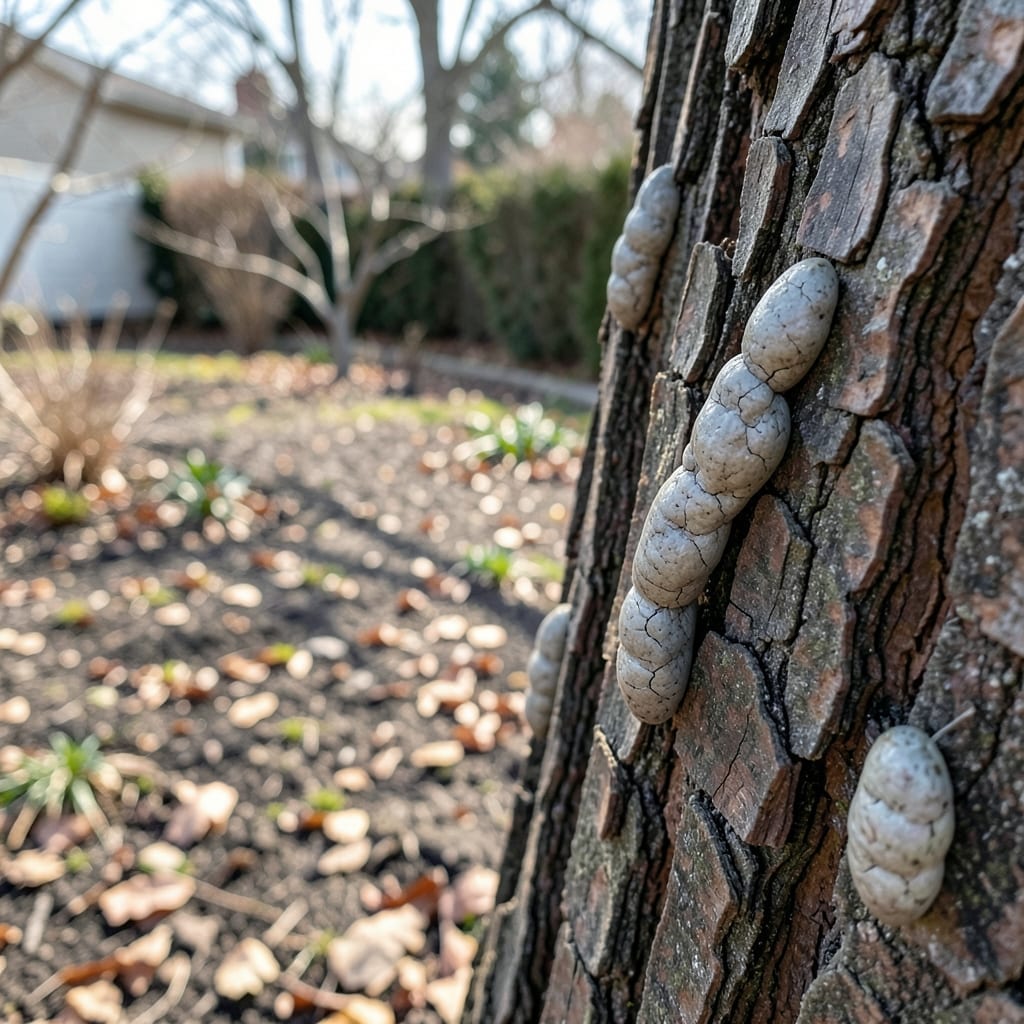
Last fall, I found my first lanternfly egg mass on a maple in my backyard. Gray, mud-like patches that looked like smeared clay—but they were 50-60 tiny eggs waiting to hatch.
These pests are spreading fast, and their eggs are easy to miss if you don’t know what to look for. I’ve learned to scan tree trunks, fence posts, and even patio furniture from September through April.
Removing them is simple: scrape into a bag with alcohol or soapy water. One afternoon of checking can save your entire garden from next season’s infestation.
Early detection is everything. Spot them before they hatch, and you’ll stop the cycle before it starts.
The spotted lanternfly (Lycorma delicatula) lays egg masses as part of its natural reproductive cycle. Understanding why these masses appear helps in targeting their removal effectively. Below are the key biological and environmental factors behind their formation.
Spotted lanternflies reach adulthood in late summer. Females begin laying eggs in September through November, just before winter. Each female can deposit 30–50 eggs in a single mass, and she may create 1–2 masses per day until she dies. This timing ensures eggs survive the cold months and hatch in spring when host plants are abundant.
Females choose egg-laying sites near preferred host plants, such as Ailanthus altissima (tree of heaven), grapevines, and hardwood trees. The proximity to food sources for emerging nymphs increases survival rates. Egg masses are often found on tree bark, rocks, outdoor furniture, and even vehicles—any smooth, vertical surface near these plants.
The egg masses are coated with a wax-like, muddy-gray substance that hardens upon exposure to air. This protective layer shields the eggs from predators, desiccation, and freezing temperatures. Without this adaptation, the eggs would be vulnerable to harsh winter conditions, reducing the species’ ability to spread.
While natural dispersion occurs, human activity accelerates the lanternfly’s spread. Egg masses can inadvertently hitch rides on firewood, nursery stock, or shipping materials. This is why inspecting outdoor items and vehicles for egg masses during fall and winter is critical to preventing new infestations.
Spotted lanternflies lay their eggs in the fall, and removing their egg masses is key to controlling their spread. Here’s how to tackle the problem effectively:
Use a plastic card, putty knife, or credit card to gently scrape egg masses off trees, rocks, or outdoor furniture. Drop them into a plastic bag sealed with rubbing alcohol to ensure they don’t hatch. Never crush them bare-handed—eggs can stick to skin!
For egg masses in crevices or high places, use a handheld vacuum. Empty the vacuum bag into a sealed container with soap and water to kill the eggs. Avoid using a regular broom—it may just spread the eggs further.
In late winter or early spring, spray dormant horticultural oil on trees where egg masses were found. This smothers overwintering eggs before they hatch. Always follow product instructions for safe use.
Pro Tip 💡: Check your property regularly, especially on tree of heaven (Ailanthus), a lanternfly favorite. Early removal prevents hundreds of nymphs from emerging in spring!
Consistency is key—inspect and remove egg masses weekly from September to May to stay ahead of infestations.
They appear as gray, mud-like patches about 1 inch long on trees, rocks, or outdoor surfaces. Fresh masses are smooth and wet-looking, while older ones harden into a cracked, dry coating.
Check tree trunks, fence posts, patio furniture, and even vehicles. Focus on tree of heaven and other host plants, especially from September to April.
Scrape into a bag with rubbing alcohol or soapy water using a plastic card. For hard-to-reach spots, a vacuum works—just dispose of the bag carefully.
No, each mass contains 30-50 eggs. If left, they’ll hatch in spring and spread rapidly, damaging plants. Removal is the most effective control method.