
Beautiful Plants For Your Interior
Beautiful Plants For Your Interior
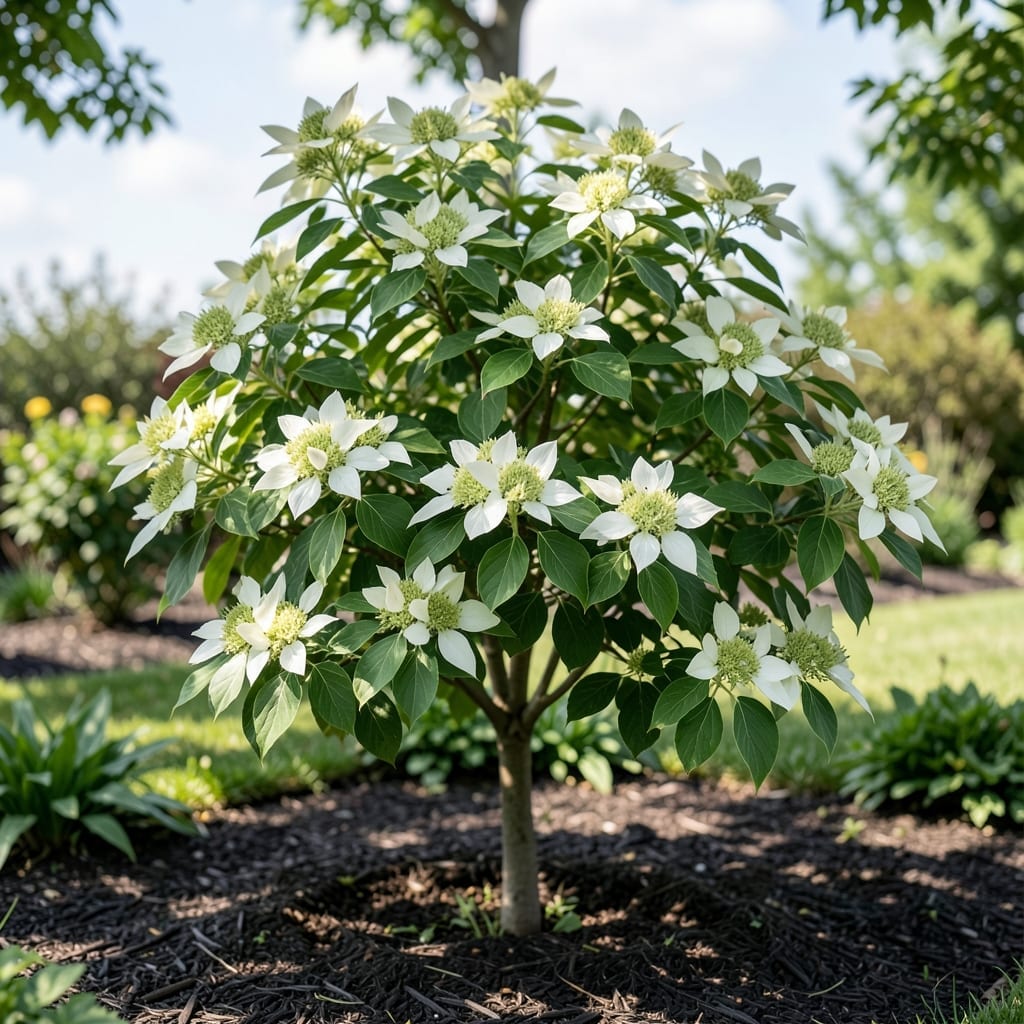
Kousa dogwood leaves tell you everything about your tree’s health. I’ve learned to read their deep green summer hue and the fiery fall colors that signal a thriving plant.
These leathery leaves resist pests better than most ornamentals, but they still need the right light, water, and soil to stay vibrant. Get it right and the foliage practically glows.
📚 In This Guide
Here’s the method I trust to keep these trees thriving with vibrant leaves season after season.
Choose a location with partial sun to partial shade—morning sun and afternoon shade work perfectly. Kousa dogwoods prefer well-draining, acidic soil with a pH between 5.5 and 6.5. If your soil is heavy clay, amend it with organic matter like compost to improve drainage.
Dig a hole twice as wide as the root ball but no deeper. Plant the tree so the root flare (where roots meet the trunk) sits slightly above ground level. Backfill with native soil and water deeply to settle the roots. This prevents sinking, which can suffocate the tree.
Water newly planted trees 2-3 times per week for the first 4-6 weeks, keeping the soil consistently moist but not soggy. Use a slow trickle from a hose to ensure deep penetration—shallow watering encourages weak root systems.
Once established, water during dry spells, aiming for 1-2 inches per week. Check soil moisture by sticking your finger 2 inches deep—if it feels dry, it’s time to water. Overwatering leads to yellowing leaves and root rot, so let the soil dry slightly between sessions.
In early spring, apply a 2-3 inch layer of mulch around the base, keeping it 3-4 inches away from the trunk to prevent rot. Mulch retains moisture, regulates soil temperature, and suppresses weeds that compete for nutrients.
Fertilize lightly in spring with a balanced, slow-release product designed for acid-loving plants. Avoid high-nitrogen fertilizers, which can cause excessive leafy growth at the expense of flowers and overall vigor.
Prune in late winter or early spring before new growth starts. Remove dead, damaged, or crossing branches first—this improves air circulation, which is critical for preventing fungal diseases that can harm the leaves.
Avoid heavy pruning, as Kousa dogwoods bloom on old wood. If you need to shape the tree, do so gradually over several years. Sterilize pruning tools with rubbing alcohol between cuts to prevent disease spread.
Inspect leaves regularly for signs of stress, such as browning edges (often a sign of underwatering or salt buildup) or yellowing between veins (a classic symptom of iron deficiency in acidic soil). Address issues quickly—adjust watering, test soil pH, or apply chelated iron as needed.
If you notice powdery mildew or leaf spot, improve air circulation by thinning out crowded branches. In severe cases, apply a fungicide labeled for ornamental trees, but always follow the product instructions carefully to avoid damaging the foliage.
Here’s how to avoid common pitfalls and keep your tree’s leaves vibrant year-round.
Soil pH Precision: The pH range of 5.5 to 6.5 isn’t just a suggestion—it’s critical for nutrient uptake. Test your soil before planting, and amend with sulfur or lime if needed. I’ve seen leaves turn yellow overnight when planted in neutral soil, so don’t skip this step.
Watering Depth Matters: During the first 4-6 weeks, watering 2-3 times per week with a slow trickle ensures roots grow deep. Shallow watering keeps roots near the surface, making the tree more vulnerable to drought. Stick your finger 2 inches deep to check moisture—if it’s dry, it’s time to water.
Mulch Placement: That 3-4 inch gap between mulch and the trunk isn’t optional. Piling mulch against the bark traps moisture, leading to rot. Spread your 2-3 inch layer of mulch like a donut around the base, and you’ll prevent both rot and weed competition.
Pruning Timing: Late winter or early spring is the only time to prune. Cutting at the wrong time removes flower buds (since Kousa dogwoods bloom on old wood) and leaves the tree vulnerable to disease. Sterilize those tools between cuts—I learned this the hard way after losing a tree to fungal infection.
Brown leaves often signal underwatering, fungal diseases like anthracnose, or poor drainage. Check soil moisture and ensure proper air circulation. Treat with fungicide if needed.
Leaves typically turn vibrant red, orange, or purple in fall, around October to November, depending on your climate and growing conditions.
Water deeply 1-2 times per week, especially during dry spells. Young trees need consistent moisture, while established trees are more drought-tolerant.
Yes! Apply a 2-3 inch layer of organic mulch around the base (avoiding the trunk) to retain moisture, regulate temperature, and reduce fungal spores.
Consider disease-resistant varieties like Cornus kousa ‘Satomi’ or switch to native dogwoods like Cornus florida, which may adapt better to your region.