
Beautiful Plants For Your Interior
Beautiful Plants For Your Interior
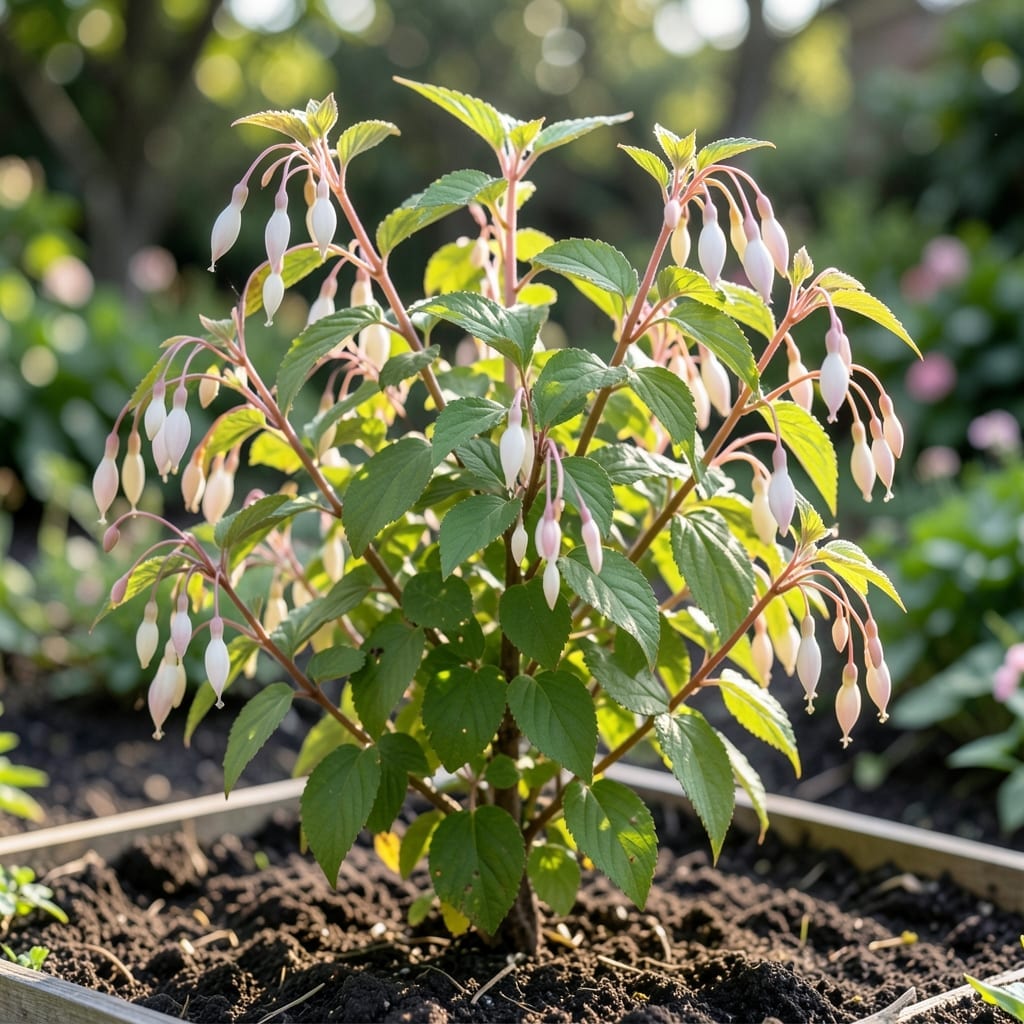
I fell for this plant the first time I saw its delicate white blooms cascading from a hanging basket. June Bride Fuchsia brings elegant beauty to shady spots where most flowers struggle, and it asks so little in return.
With the right conditions—partial shade, consistent moisture, and occasional pruning—you’ll get months of pendulous blooms that attract hummingbirds. It thrives in containers or garden beds with minimal fuss, perfect for busy gardeners.
📚 In This Guide
Here’s the method I use to keep these elegant blooms flourishing with minimal effort.
Choose a spot with bright, indirect light—this variety thrives in partial shade and will scorch in harsh afternoon sun. I look for locations that receive morning sun and afternoon shade, like the east side of a building or under a high canopy of deciduous trees.
Ensure the area has well-draining soil. Fuchsias despise soggy roots, so avoid low-lying spots where water pools. A slightly elevated bed or container with drainage holes works perfectly. Test drainage by digging a 1-foot-deep hole, filling it with water, and checking if it drains within 1-2 hours.
Amend the planting area with rich, organic matter to improve both drainage and fertility. I work in 2-3 inches of compost or well-rotted manure into the top 6-8 inches of soil. This creates the loose, fertile environment June Bride fuchsias adore.
The ideal pH is slightly acidic to neutral, between 6.0 and 7.0. If your soil is heavily alkaline, mix in peats moss or sulfur to lower the pH. Avoid heavy clay soils unless amended heavily—they retain too much moisture and suffocate the roots.
Dig a hole twice as wide as the root ball but no deeper. Place the plant in the hole so the top of the root ball sits ½ inch above the surrounding soil—this prevents crown rot. Backfill with amended soil and press lightly to remove air pockets.
Water deeply immediately after planting until the soil is moist to a depth of 6 inches. Avoid wetting the foliage, as this can invite fungal diseases. I use a watering can with a long spout to direct water to the base. After the initial watering, let the top 1 inch of soil dry between waterings to encourage strong root development.
Once established, June Bride fuchsias require minimal care. Water when the top 1-2 inches of soil feel dry, typically every 5-7 days in moderate weather. During heatwaves, check daily—container-grown plants may need water twice daily.
Fertilize lightly every 2-3 weeks with a balanced, water-soluble fertilizer (10-10-10 or 20-20-20) to promote steady blooming. I dilute the fertilizer to half strength to avoid salt buildup in the soil. Deadhead spent blooms regularly to encourage continuous flowering throughout the growing season.
Watch for aphids, whiteflies, and spider mites, which are attracted to fuchsias. I inspect the undersides of leaves weekly for early signs of infestation. A strong blast of water can dislodge aphids, while neem oil or insecticidal soap applied every 7-10 days controls more persistent pests.
Prevent fungal issues by ensuring good air circulation around the plants. Space them 18-24 inches apart and avoid overhead watering. If you notice powdery mildew (a white, powdery coating on leaves), remove affected foliage immediately and treat with a baking soda solution (1 teaspoon baking soda, 1 quart water, and a drop of dish soap).
Taking a few extra moments with these details will ensure your plants thrive with minimal fuss.
Light Placement: In Step 1, choosing locations with morning sun and afternoon shade is non-negotiable. Fuchsias will scorch in harsh afternoon light, so the east side of buildings or under deciduous trees offers ideal protection. I’ve lost plants by ignoring this—don’t make my mistake.
Drainage Test: The 1-2 hour drainage test in Step 1 is critical. If water doesn’t drain within that timeframe, your soil is too dense. Amend with compost or use containers with drainage holes to prevent root rot. Between us, this is the most common reason fuchsias fail.
Soil pH Matters: For Step 2, aim for that 6.0 to 7.0 pH range. If your soil is alkaline, mix in peat moss or sulfur as directed. Heavy clay soils need significant amendment—skipping this leads to waterlogged roots, and your plants will suffer for it.
Watering Technique: When watering in Step 3, direct water to the base and avoid wetting foliage to prevent fungal issues. After planting, let the top 1 inch of soil dry between waterings—this encourages strong root development. Trust me, overwatering is the fastest way to lose these plants.
Plant June Bride fuchsia in late spring after the last frost, when temperatures stay above 50°F (10°C). This ensures healthy growth and vibrant blooms by summer.
While it tolerates full shade, June Bride fuchsia thrives in partial shade with 3-4 hours of morning sun. Too much shade may reduce flowering.
Water when the top inch of soil feels dry, about 2-3 times a week in warm weather. Avoid soggy soil to prevent root rot.
Watch for aphids, whiteflies, and spider mites. Use neem oil or insecticidal soap for treatment. Regularly inspect leaves for early signs.
Yellow leaves often signal overwatering or poor drainage. Check soil moisture and ensure pots have drainage holes. Adjust care as needed.