
Beautiful Plants For Your Interior
Beautiful Plants For Your Interior
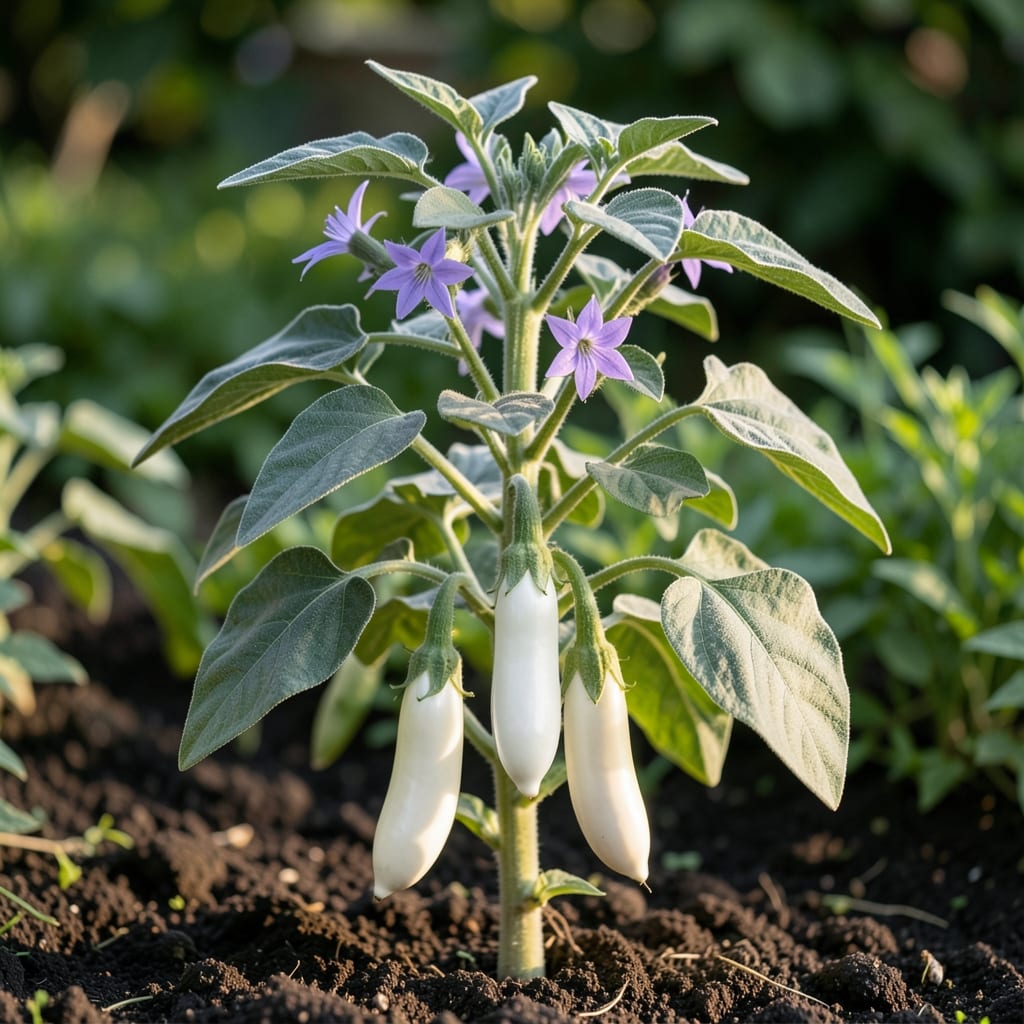
White eggplants changed my garden game. These delicate ivory fruits grow faster than the purple kinds and taste sweeter too.
They thrive in warm soil with consistent watering, producing tender skin that doesn’t need peeling. Plant them after the last frost and you’ll harvest in 60-70 days.
📚 In This Guide
This method ensures healthy plants with minimal effort, perfect for home gardeners.
Choose a spot with full sun exposure, as Japanese white eggplants thrive with at least 6-8 hours of direct sunlight daily. The soil should be well-draining and rich in organic matter. I recommend amending the area with compost to improve fertility and structure.
Test your soil’s pH—eggplants prefer a slightly acidic to neutral range of 6.0-7.0. If needed, add lime to raise the pH or sulfur to lower it. Proper soil preparation prevents common issues like poor growth or nutrient deficiencies.
If starting from seeds, sow them indoors 8-10 weeks before the last frost date. Harden off seedlings over 7-10 days before transplanting. For transplants, dig a hole slightly larger than the root ball and set the plant so the top of the root ball is level with the soil surface.
Space plants 18-24 inches apart to allow for proper air circulation and growth. Water deeply immediately after planting to settle the soil around the roots. This ensures the plants establish quickly and reduces transplant shock.
Keep the soil consistently moist but not waterlogged. Water at the base of the plant to avoid wetting the foliage, which can lead to disease. I water my eggplants 2-3 times per week, depending on weather conditions, ensuring the top 1-2 inches of soil are dry before watering again.
A layer of mulch around the base helps retain moisture and suppress weeds. Use organic mulch like straw or shredded leaves, applying a 2-3 inch layer but keeping it a few inches away from the stem to prevent rot.
Eggplants are heavy feeders, so fertilize them every 3-4 weeks with a balanced, water-soluble fertilizer. I prefer a 10-10-10 or 5-10-10 formula, which provides the necessary nitrogen, phosphorus, and potassium for robust growth and fruit production.
Apply the fertilizer according to the package instructions, and always water the plants thoroughly afterward to distribute the nutrients evenly. Over-fertilizing can lead to excessive foliage growth at the expense of fruit, so stick to the recommended schedule.
Japanese white eggplants are ready to harvest when they reach 6-8 inches in length and have a glossy, firm skin. The fruit should feel slightly soft when gently pressed. I check my plants every 2-3 days during the peak of the growing season, as the eggplants can mature quickly.
Use a sharp knife or pruning shears to cut the fruit from the plant, leaving a small portion of the stem attached. Regular harvesting encourages the plant to produce more fruit, extending your harvest season.
These practical insights will help you avoid the most common gardening pitfalls with this plant.
Sunlight Priority: The 6-8 hours of direct sunlight daily in Step 1 isn’t just a suggestion—it’s essential for fruit production. I’ve found that plants getting less than 6 hours produce significantly smaller yields. If your garden has partial shade, consider container gardening so you can move pots to follow the sun.
Soil Preparation: Don’t skip testing your soil pH as mentioned in Step 1. Eggplants in soil outside the 6.0-7.0 range often struggle with nutrient uptake, even if you’re fertilizing regularly. A simple pH test kit from any garden center costs pennies and can save your entire crop.
Transplant Timing: The 8-10 weeks before last frost guideline for indoor seed starting in Step 2 is precise for a reason. Starting too early leads to leggy seedlings, while starting too late results in a shortened growing season. I mark my calendar 10 weeks out to ensure I don’t miss the window.
Watering Wisdom: The 2-3 times per week watering schedule in Step 3 works perfectly when combined with the 1-2 inches of dry soil check. I use my finger to test moisture depth—if it comes out clean at the 2-inch mark, it’s time to water. Morning watering is ideal as it allows foliage to dry before evening, reducing disease risk.
Look for glossy, firm skin and a length of 6-8 inches. Harvest while young for the best flavor—overripe eggplants become bitter and seedy. Use pruning shears to avoid damaging the plant.
Yes! Choose a container at least 12 inches deep with good drainage. Use well-draining soil and place it in full sun. Dwarf varieties work best for smaller spaces.
Watch for flea beetles, aphids, and spider mites. Use row covers early on and spray with neem oil if needed. Regularly inspect leaves for signs of damage.
Yellowing can signal overwatering, nutrient deficiencies, or pests. Check soil moisture, fertilize with compost, and treat for pests if necessary. Remove affected leaves promptly.