
Beautiful Plants For Your Interior
Beautiful Plants For Your Interior
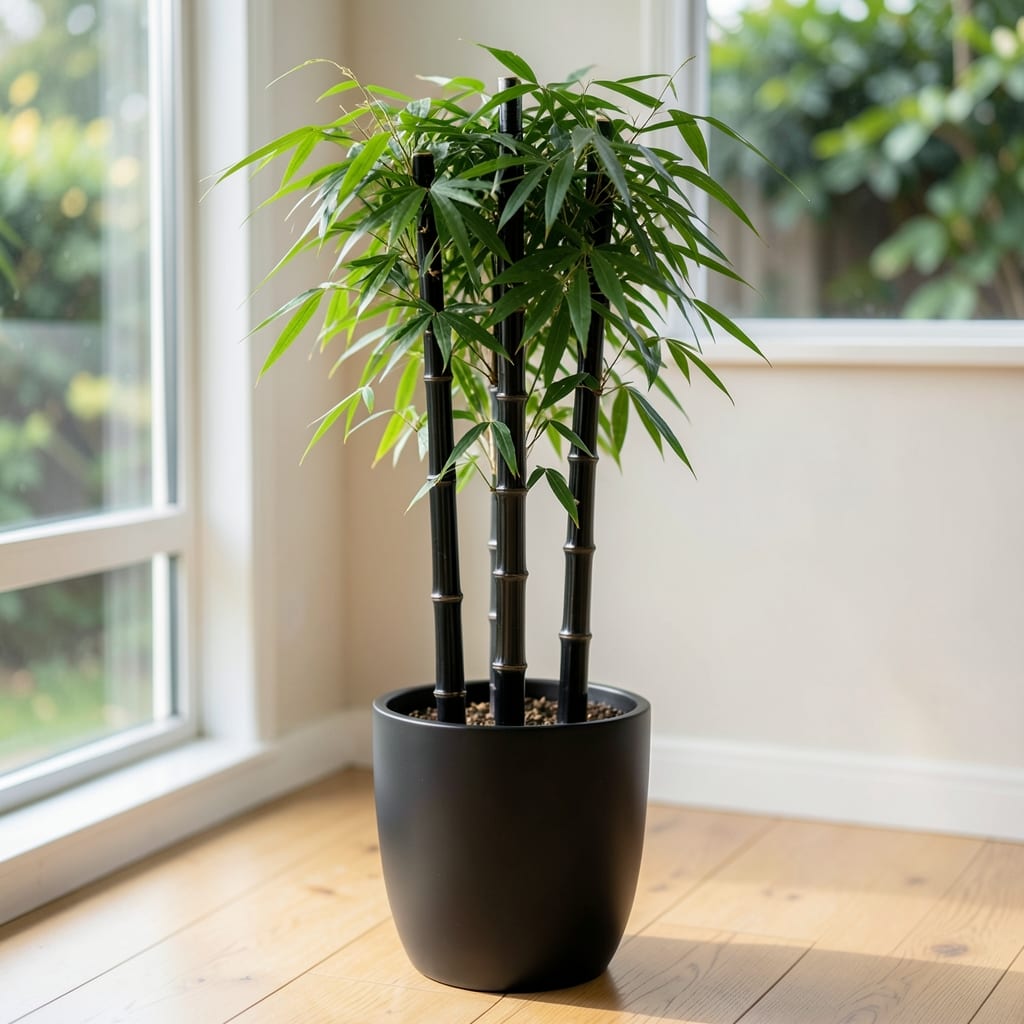
Black bamboo can be invasive due to its rapid spreading via underground rhizomes, often outcompeting native plants if not properly contained.
I’ve seen this plant take over entire yards because its running rhizomes can stretch 10-15 feet in a single season. Without barriers, it crowds out local vegetation and disrupts ecosystems. The real challenge is its persistence—even small root fragments left in the soil can regrow into new shoots. 🌱
What surprises many gardeners is how quickly it adapts to different soil types and climates, making containment a constant effort.
💡 In This Article
Black bamboo’s aggressive nature stems from its running rhizome system. Unlike clumping bamboos that expand slowly, this variety sends out horizontal underground stems that can stretch 10-20 feet annually. These rhizomes produce new culms (shoots) at nodes along their length, creating dense thickets that crowd out other vegetation. 🔥
Ideal conditions accelerate this spread. Black bamboo thrives in warm climates (USDA zones 7-11) with consistent moisture. In these environments, its rhizomes grow faster, often doubling their reach each growing season. The plant’s energy focuses on expansion rather than height, leading to wide, low-growing patches that can overtake entire sections of a garden.
What makes it particularly invasive is its ability to exploit disturbed soils. After construction or landscaping projects, black bamboo’s rhizomes can quickly colonize bare patches. Each new shoot produces its own root system, making the plant increasingly difficult to remove as it establishes multiple independent growth points across an area. ✨
The plant’s competitive advantage comes from its dense root network. This underground matrix effectively blocks sunlight and nutrients from reaching other plants’ roots. Native species often can’t compete with this level of resource monopolization, leading to reduced biodiversity in affected areas. 🌟
In urban settings, black bamboo’s spread isn’t limited to garden beds. Its rhizomes can grow under sidewalks, driveways, and even building foundations. I’ve seen cases where unchecked growth has lifted patio stones and cracked concrete as the expanding rhizomes exerted upward pressure.
The plant’s resilience means it can survive and continue spreading even when regularly cut back above ground.
Its running rhizomes can extend 10-20 feet annually in ideal conditions. This rapid expansion is why it often overtakes gardens quickly, especially in warm, moist climates like USDA zones 7-11.
Install HDPE rhizome barriers at least 30 inches deep around the planting area. For existing plantings, perform rhizome pruning twice yearly to sever spreading roots.
Yes! Use large containers at least 24 inches deep with drainage holes. This naturally restricts root growth while allowing the plant to thrive.
Its dense underground root network blocks sunlight and nutrients from reaching other plants. This monopolization of resources makes it difficult for native species to survive nearby.