
Beautiful Plants For Your Interior
Beautiful Plants For Your Interior
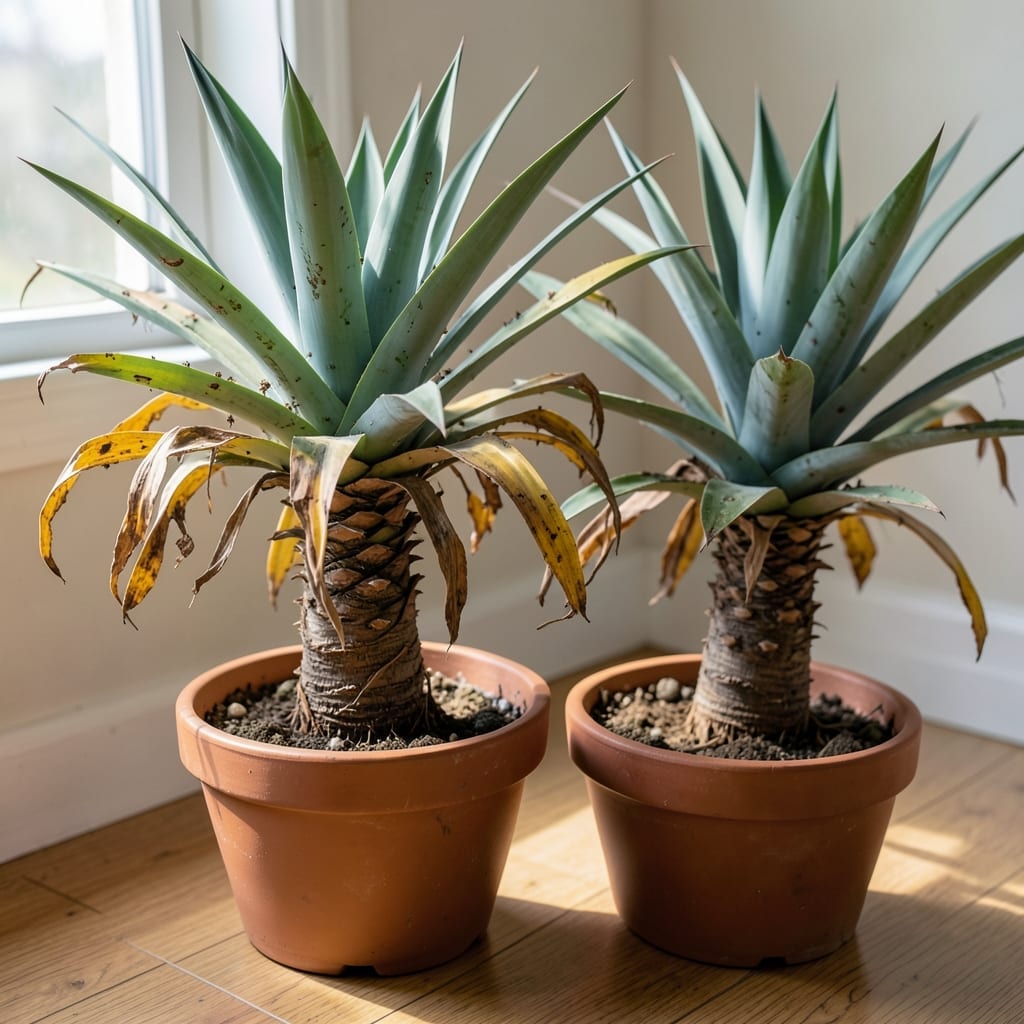
Yellowing leaves, drooping stems, or mysterious spots on your yucca can turn a low-maintenance favorite into a head-scratcher. I’ve seen it happen—even to plants that seemed indestructible.
Most issues boil down to 3 common culprits: too much water, not enough light, or uninvited pests. The good news? Each has a simple fix once you know what to look for.
I learned the hard way that yuccas prefer to run dry between waterings. Now I check soil with my finger first—every time. That one habit saved my collection.
This guide will help you spot trouble early and keep your plant thriving with minimal fuss. No guesswork, just clear solutions for healthy growth.
Indoor yucca plants are hardy, but they can still run into trouble when their basic needs aren’t met. Here’s a breakdown of the most common causes behind their problems, explained simply with science-backed clarity.
Yuccas are desert natives, adapted to arid conditions with minimal water. Overwatering leads to root rot because stagnant moisture suffocates the roots, preventing oxygen uptake. The soil becomes anaerobic, fostering harmful fungi and bacteria like Phytophthora or Pythium. Always use well-draining soil and pots with drainage holes to mimic their natural habitat.
Yuccas thrive in bright, indirect light. Low light weakens the plant, causing etiolation—where stems stretch unnaturally toward light sources—and reduces chlorophyll production (chlorosis), leading to pale or yellowing leaves. Conversely, direct, harsh sunlight can scorch leaves, causing brown tips or patches due to photooxidative stress.
While yuccas tolerate dry air, extremely low humidity (below 30%) can stress the plant, leading to brown leaf tips or edges. This happens because the plant loses moisture faster than it can absorb it, a condition called transpirational stress. Grouping plants or using a humidity tray can help maintain a balanced environment.
A lack of essential nutrients like nitrogen (N), magnesium (Mg), or iron (Fe) can manifest as discolored or weak growth. For example, nitrogen deficiency causes uniform yellowing (chlorosis), while magnesium deficiency leads to interveinal yellowing (leaves turn yellow between veins). Use a balanced, diluted fertilizer during the growing season to prevent deficiencies.
Even the hardiest indoor yucca can run into trouble, but most problems are easy to fix once you know the cause. Below are clear, actionable solutions mapped to the most common issues, plus tips to keep your plant thriving long-term.
If your yucca’s leaves are turning yellow, overwatering is the likely culprit. Stop watering immediately and let the soil dry out completely. Check the roots—if they’re mushy, trim the affected parts and repot in fresh, well-draining soil. Water only when the top 2–3 inches of soil are dry.
Prevention tip: 💡 Use a pot with drainage holes and a cactus/succulent mix to avoid soggy roots.
Brown, crispy tips often signal low humidity or chemical buildup from tap water. Mist the leaves lightly or place a tray of water near the plant to boost humidity. Switch to filtered or distilled water if your tap water is hard.
Prevention tip: ✨ Wipe leaves occasionally with a damp cloth to remove dust and prevent tip burn.
Tiny webs or speckled leaves? Spider mites love dry conditions. Isolate the plant and spray with neem oil or insecticidal soap, focusing on the undersides of leaves. Repeat every 5–7 days until the pests are gone.
Prevention tip: 🌡️ Increase humidity and keep the plant away from heat sources to deter mites.
If the base of the stem is soft or black, root rot has set in. Remove the plant from its pot, trim all rotten roots, and repot in fresh, dry soil. Avoid watering for at least a week to let the roots recover.
Prevention tip: 🎯 Always use a pot with drainage and avoid letting the plant sit in saucers of water.
A stretching, sparse yucca is starved for light. Move it to a brighter spot with indirect sunlight (south- or west-facing windows are ideal). If it’s severely leggy, prune the top and propagate the cuttings.
Prevention tip: 🔥 Rotate the plant every few months to ensure even growth.
Yellow leaves usually mean overwatering. Stop watering and let the soil dry completely. Check for mushy roots and repot if needed in fresh, well-draining soil.
Brown tips often signal low humidity or chemicals in tap water. Mist leaves or use a humidity tray. Switch to filtered water to prevent buildup.
Isolate the plant and spray with neem oil or insecticidal soap every 5-7 days. Increase humidity and keep it away from heat sources.
Move it to a spot with bright, indirect light. If it’s very leggy, prune the top and propagate the cuttings. Rotate the plant for even growth.