
Beautiful Plants For Your Interior
Beautiful Plants For Your Interior
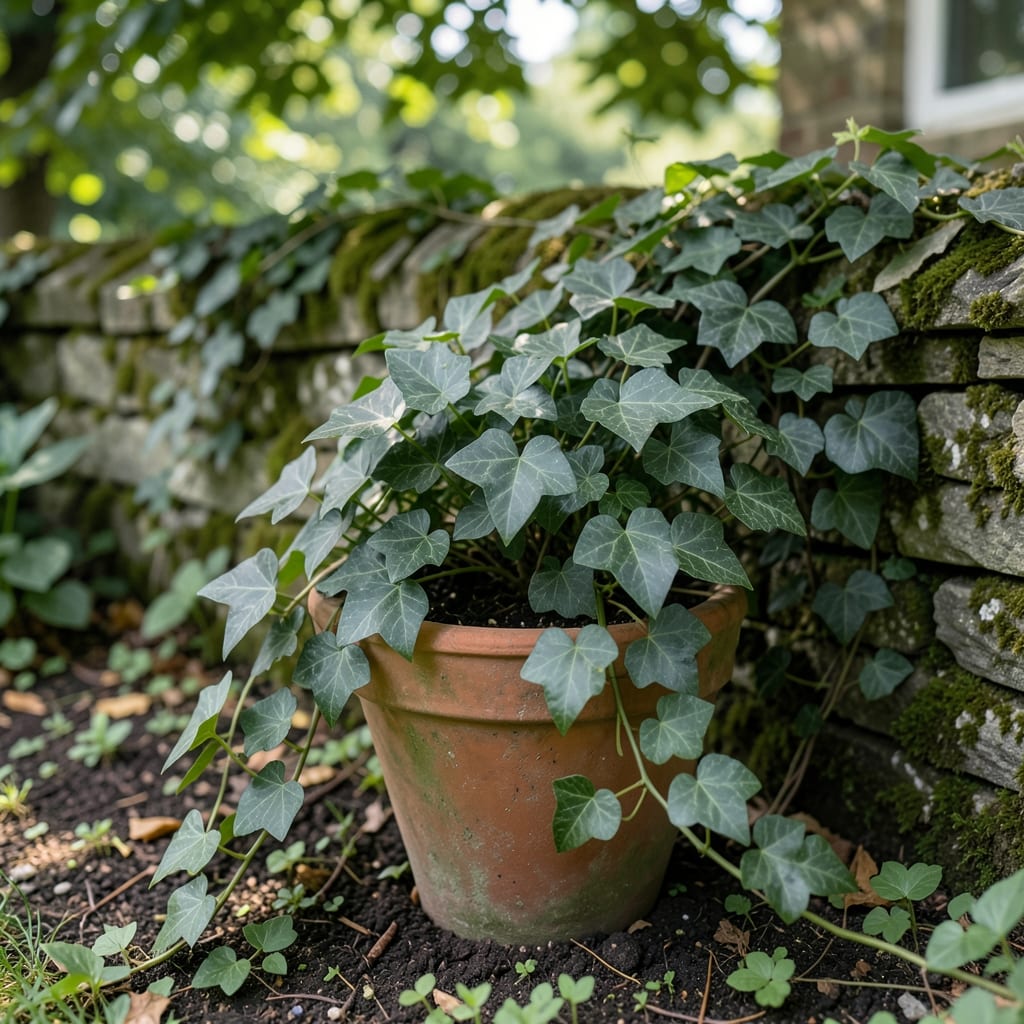
I used to confuse ivy with every three-lobed plant I saw. Simple observation changed everything—note the leaf shape, vein patterns, and how they attach to stems.
This method helps distinguish English ivy from Boston ivy or poison ivy in seconds. No guesswork, just clear visual cues that work in any garden or wild setting.
📚 In This Guide
Here’s the method I use to distinguish ivy leaves with confidence, even in dense foliage.
I always start by looking at the overall shape. English ivy leaves are typically 3-5 lobes with a broad, heart-shaped base. The margins can be entire or slightly toothed, but they’re never deeply serrated like some other vining plants.
Real talk: the lobes are often more pronounced on mature plants. Young ivy or shoots in deep shade might have nearly smooth edges, so don’t rely on this alone. The key is the general lobed appearance combined with the plant’s growth habit.
Ivy leaves grow in an alternate arrangement along the stem, meaning they emerge at different heights rather than in pairs. This is different from plants like boxwood that have opposite leaf arrangements.
The venation pattern is also distinctive. You’ll see 3-5 main veins radiating from the base of the leaf, with smaller veins creating a net-like pattern between them. Hold the leaf up to the light to see this clearly.
Run your fingers across the leaf surface. English ivy leaves are typically glossy and smooth on the upper side, with a slightly paler, matte underside. Some varieties have variegation, but the glossy texture is consistent.
Here’s the thing—older leaves develop a leathery texture that’s quite distinctive. If you’re examining a plant in late summer or fall, this textural clue can be particularly helpful for identification.
Ivy’s growth habit is a dead giveaway. The plant produces aerial roots along its stems that cling to surfaces. These look like fine, hair-like structures emerging from the nodes where leaves attach.
The stems themselves are woody at the base of established plants, becoming more flexible toward the tips. Young shoots are green and herbaceous. This combination of woody base with climbing habit and aerial roots is unique to ivy among common garden plants.
Don’t be fooled by seasonal changes. In deep shade, ivy leaves may appear more uniformly green and less lobed. In full sun, they develop more pronounced lobes and may take on a darker, more leathery appearance.
New growth in spring is often a brighter green and more tender. As the season progresses, the leaves darken and toughen. These variations are normal and shouldn’t confuse your identification if you’re looking at multiple leaves from the same plant.
This method becomes more reliable when you know what details to focus on.
The Shape Factor: In Step 1, pay special attention to the 3-5 lobes with a heart-shaped base. Mature plants often have more pronounced lobes, while young shoots in shade may appear nearly smooth. Don’t rely solely on this feature—combine it with the plant’s growth habit for a confident identification.
Venation Insight: As mentioned in Step 2, the 3-5 main veins radiating from the leaf base create a distinctive net-like pattern. Hold the leaf up to the light for the clearest view. This venation is consistent even when other characteristics vary with the plant’s age or environment.
Texture Clues: Step 3 highlights the glossy, smooth upper surface and matte underside. What’s particularly telling is how older leaves develop a leathery texture—this is most noticeable in late summer or fall. The glossy sheen remains a reliable identifier regardless of the plant’s age.
Seasonal Awareness: Step 5 reminds us that ivy leaves change with the seasons. In deep shade, they may appear uniformly green and less lobed, while full sun brings out pronounced lobes and a darker color. Always examine multiple leaves to account for these natural variations.
Look for clusters of three pointed leaflets with smooth or slightly toothed edges. The middle leaflet often has a longer stem. Remember: “Leaves of three, let it be!”
Virginia creeper has five leaflets arranged in a palmate shape, while poison ivy always has three. Virginia creeper’s leaves also turn vibrant red in fall, unlike poison ivy’s duller hues.
Yes! Even dormant poison ivy contains urushiol oil, which causes rashes. Avoid contact year-round, as the oil remains active on dead plants and surfaces.
Yes! Boxelder and fragrant sumac have similar leaflet groupings but are harmless. Boxelder leaves are opposite, and sumac has a central stem with paired leaflets.
Wash the area immediately with soap and cold water. Use rubbing alcohol or specialized cleansers to remove urushiol oil. Avoid scratching to prevent spreading.