
Beautiful Plants For Your Interior
Beautiful Plants For Your Interior
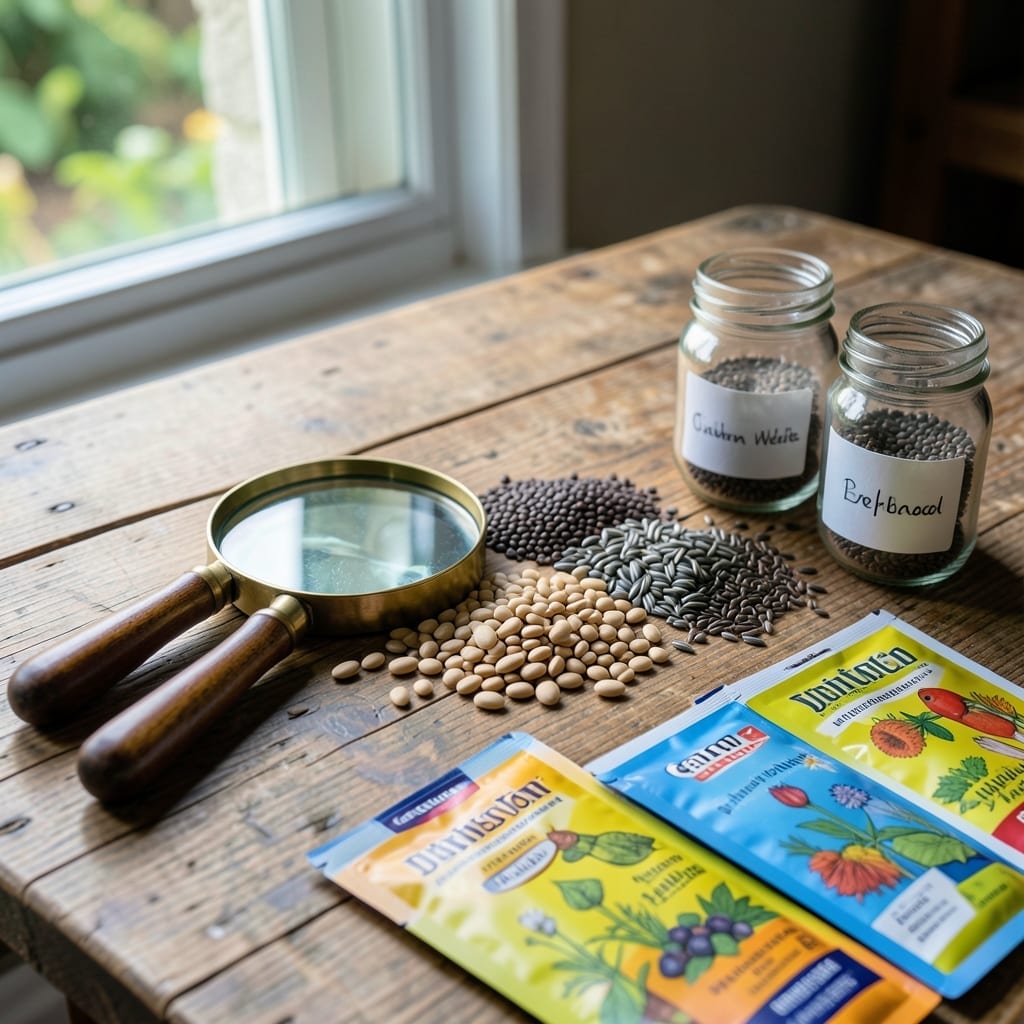
I spent years staring at seed packets wondering what I was actually planting. 🌱 Identifying seeds before planting saves you from mystery plants and wasted space.
The differences are often subtle—a ridge here, a color there—but once you know what to look for, it becomes second nature. Size, shape, and surface texture tell you more than any label ever could.
You’ll start recognizing tomato seeds by their fuzzy coating, bean seeds by their smooth curves, and herb seeds by their tiny, irregular shapes. It’s like learning a new language, only way more useful.
Works for saved seeds, mystery packets, or those random seeds a gardening friend gave you last season. Here’s how to tell them apart.
Understanding the causes behind seed identification challenges helps gardeners and botanists classify plants accurately. Here are the primary reasons why proper seed recognition is essential:
Seeds from the same plant species can exhibit slight differences due to genetic mutations or cross-pollination. These variations affect shape, size, and color, making identification tricky. For example, heirloom tomato seeds may differ from hybrid varieties, requiring close examination of subtle traits like surface texture or hilum (seed scar) shape.
Growing conditions—such as soil type, climate, and water availability—can alter seed appearance. Drought-stressed plants may produce smaller or discolored seeds, while nutrient-rich soil yields robust, uniform seeds. These environmental factors can mask true species characteristics, complicating classification.
Immature seeds often lack defining features like full coloration or hardness. Collecting seeds too early can lead to misidentification, as their traits may not yet match reference guides. Always harvest seeds at full maturity for accurate comparison.
When plants cross-pollinate, their offspring seeds may inherit mixed traits from parent species. This hybridization creates intermediate seed forms, blending characteristics of both. For instance, a squash seed from a cross between two cultivars might not perfectly match either parent, requiring expert analysis.
By recognizing these causes, you can refine your approach to seed identification and improve accuracy in classification.
Struggling to tell one seed from another? Here’s how to solve common identification problems with simple, actionable steps.
Fix: Use a magnifying glass or a macro lens on your phone to examine seed shape, texture, and color patterns. Compare them to a seed identification chart or app like PictureThis or Seed to Plant. Group seeds by size first, then narrow down by unique markings.
Prevention tip: 💡 Label seeds immediately after harvest or purchase. Store them in clear, sealed containers with their names written in bold.
Fix: Perform a germination test. Place a few seeds from the batch on a damp paper towel in a sealed bag. After 3–7 days, the sprouts’ leaf shapes (cotyledons) can reveal their identity. For example, bean sprouts have two large, oval leaves, while carrot sprouts are feathery.
Prevention tip: ✨ Always keep a gardening journal with notes on seed sources, dates, and expected plant traits.
Fix: Soak seeds in water for 10–15 minutes to restore their natural color and texture. Dry them on a paper towel before inspection. If color doesn’t return, check for other clues like smell (e.g., cucumber seeds have a mild, fresh scent) or weight (heavier seeds often indicate larger plants like squash).
Prevention tip: 🌡️ Store seeds in a cool, dark place (like a fridge) in airtight containers to prevent fading. Add a silica gel packet to absorb moisture.
Fix: Consult a local field guide or botanist. Take clear photos of the seed, its pod (if available), and the plant it fell from. Apps like iNaturalist can help crowdsource IDs from experts. Avoid handling seeds from toxic plants (e.g., castor beans) — wear gloves if unsure.
Prevention tip: 🎯 When foraging, collect seeds only from plants you’ve positively identified in their mature form.
Use a magnifying glass or phone macro lens to inspect details. Apps like PictureThis or Seed to Plant can compare seeds to their database. A seed chart is also handy for quick visual reference.
Perform a float test: place seeds in water. If they sink, they’re likely viable. You can also do a germination test on a damp paper towel. Most viable seeds sprout within 3-7 days.
Genetic variation or environmental factors can cause differences. Cross-pollination may also create hybrid seeds with mixed traits. Always check maturity, as immature seeds lack full characteristics.
No, some wild seeds can be toxic or invasive. Consult a field guide or expert first. Apps like iNaturalist can help, but avoid planting until you’re certain it’s safe.