
Beautiful Plants For Your Interior
Beautiful Plants For Your Interior
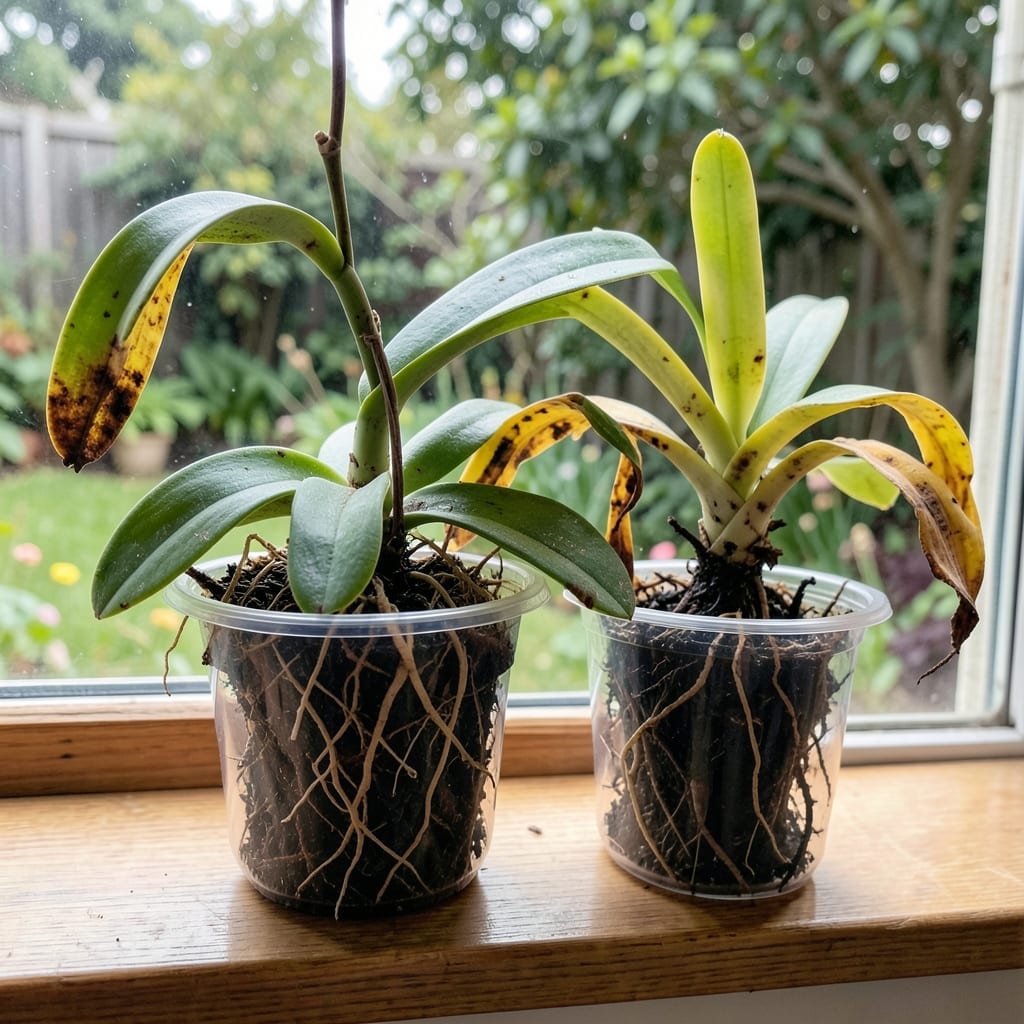
Yellow leaves and mushy roots mean trouble for your orchid. I learned this the hard way after losing two plants to overwatering before realizing the signs were right in front of me.
Overwatered orchids don’t just look sad—they develop soft, brown roots and leaves that turn yellow from the bottom up. The pot might feel heavy even days after watering, and the growing medium stays soggy.
Here’s the thing—orchids hate wet feet. They need a dry-out period between waterings, and proper drainage is non-negotiable. Once you spot these signs, you can still save your plant with quick action.
Catch it early, and your orchid can bounce back stronger. I’ll show you exactly what to look for and how to fix it.
Overwatering orchids often stems from well-intentioned but misguided care. Here’s why it happens:
Orchids hate soggy roots. When pots lack drainage holes or use dense, water-retentive media (like regular potting soil), water pools around the roots. This suffocates them by blocking oxygen uptake, a process critical for aerobic respiration. Without air, root cells drown, leading to root rot.
Many growers stick to rigid routines (e.g., “water every Monday”) instead of checking moisture levels. Orchids—especially Phalaenopsis or Cattleya—thrive on a dry-rest cycle. Their roots need periods of near-dryness to absorb oxygen. Frequent watering disrupts this balance, creating a waterlogged environment where fungi and bacteria (e.g., Phytophthora) proliferate.
In dim environments, orchids photosynthesize slowly, reducing water uptake. If humidity is also high (e.g., terrariums without airflow), evaporation slows further. The result? Stagnant moisture in the pot. Combine this with cool temperatures (<60°F/15°C), and metabolic activity in roots grinds to a halt—perfect conditions for rot.
Orchids require chunky, airy mixes (bark, sphagnum moss, or perlite). Fine particles compact over time, trapping water. Even “orchid-specific” mixes can degrade into a dense sludge if not replaced every 1–2 years. Always repot when the medium breaks down to maintain porosity.
If your orchid is showing signs of overwatering, act quickly to revive it. Below are targeted fixes for common symptoms, along with prevention tips to keep your plant thriving.
Stop watering immediately and let the potting mix dry out completely. Remove the orchid from its pot and inspect the roots. If the roots are firm and white, simply repot in fresh, well-draining mix (like bark or sphagnum moss) and water only when the top inch feels dry. Prevention tip: 💡 Use a moisture meter or stick your finger in the mix to check dryness before watering.
If roots are mushy, dark, or smell foul, they’re rotting. Use sterilized scissors to trim away all affected roots. Soak the remaining healthy roots in a 1:10 hydrogen peroxide-to-water solution for 10 minutes to disinfect. Repot in a clean container with fresh mix. Prevention tip: 🌡️ Ensure pots have drainage holes and avoid letting orchids sit in saucers of water.
Move your orchid to a spot with better air circulation, like near an open window (but avoid direct sunlight). If the potting medium is compacted, loosen it gently or switch to a chunkier mix. Prevention tip: ✨ Use a small fan on low to keep air moving around your plant, but avoid direct drafts.
Cut back on misting and ensure humidity levels stay between 40-70%. If your orchid is in a terrarium or enclosed space, move it to a more open area. Prevention tip: 🎯 Group plants together to naturally regulate humidity without overdoing it.
With these steps, your orchid can recover and grow stronger. Consistency and observation are key—always tailor care to your plant’s needs!
Healthy roots are firm, plump, and silver-green when dry, turning green when watered. They should never feel soft or look brown/black. If roots are mushy or discolored, overwatering is likely the culprit.
Yes, if caught early! Trim rotted roots, repot in fresh bark mix, and pause watering for 5-7 days. Ensure the pot has drainage holes and place in bright, indirect light. Recovery takes 4-6 weeks with proper care.
Water only when the top 1-2 inches of mix feel dry—usually every 7-10 days. Frequency depends on humidity, pot size, and light. Always check moisture before watering, not the calendar.
A heavy pot often means waterlogged mix. Lift the pot to gauge weight—if it feels surprisingly heavy days after watering, it’s retaining too much moisture. Switch to a chunkier medium and add drainage holes.