
Beautiful Plants For Your Interior
Beautiful Plants For Your Interior
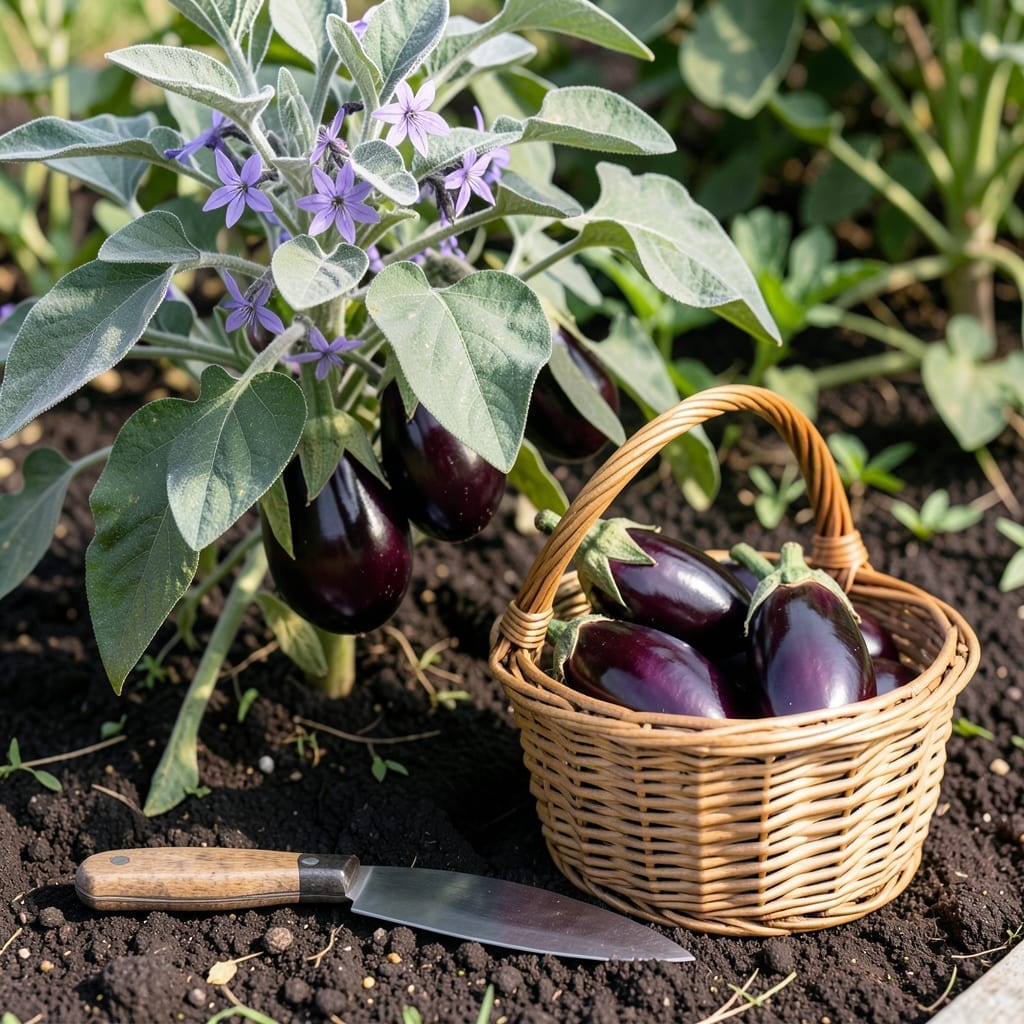
Nothing beats the satisfaction of harvesting perfectly ripe 🍆 Eggplant from your garden. But knowing the exact moment to pick can be tricky for even experienced growers.
Unlike some fruits, Eggplant won’t continue ripening after harvest, so timing is everything. Miss the window, and you risk bitterness or tough texture.
Learn how to spot the subtle signs of ripeness with these simple visual and tactile tests. Your taste buds will thank you.
I always start by examining the eggplant’s skin color first. A ripe eggplant typically has a glossy, deep purple hue for classic varieties, but white or green types should look vibrant too. Dull or pale skin means it’s not ready yet.
Next, I check the size and shape. Most varieties reach 6-8 inches long when mature, but smaller types like Fairy Tale are ripe at 3-4 inches. Uniform shape is another good sign of proper development.
| Visual Sign | Ripe Condition | Unripe Condition |
|---|---|---|
| Color | Glossy, deep | Dull, pale |
| Size | Full for variety | Undersized |
| Skin Texture | Smooth, taut | Wrinkled, loose |
| Stem | Green, firm | Brown, dry |
The stem and calyx (the green cap) offer clues too. A fresh green stem indicates the eggplant is still actively growing, while a brown, woody stem might mean it’s past its prime.
I pay special attention to the skin’s tautness. A ripe eggplant has smooth, tight skin that springs back when lightly pressed. Wrinkles or loose skin are red flags.
For white eggplant varieties like Ghostbuster, I look for a creamy white color with a slight sheen. These often mature faster than purple types, so I check them frequently.
The calyx (the leafy part at the top) should still be fresh and green. If it’s turning brown or brittle, the eggplant may be overripe and developing a bitter taste.
I also consider the eggplant’s weight. A ripe one feels heavy for its size, indicating dense, developed flesh inside. Lightweight eggplants are usually underdeveloped.
Remember that variety matters. Italian eggplants are often smaller, while Japanese varieties are long and slender. Always check the expected size for your specific type.
Finally, I look at the overall plant health. A thriving eggplant plant with vibrant leaves and steady fruit production is more likely to produce ripe, high-quality eggplants. 🌱
While visual cues are helpful, I rely on tactile tests to confirm ripeness. The gentle pressure test is my go-to method for eggplants. I press my thumb lightly into the skin—it should give slightly but bounce back quickly.
A ripe eggplant feels firm but not hard. If it doesn’t spring back or feels mushy, it’s likely overripe. For extra confirmation, I use the tap test: a hollow sound means it’s ready, while a dull thud suggests it’s past its prime.
The weight test is another reliable method. I compare similar-sized eggplants—the heavier one is usually riper. This works because the flesh densifies as it matures, adding weight without changing size.
For long, slender varieties like Japanese eggplants, I check the entire length for uniform firmness. Any soft spots along the body mean it’s starting to deteriorate and should be harvested immediately.
I always test multiple eggplants on the same plant. If most pass these tests, it’s time for a full harvest.
These tactile methods work for all eggplant varieties, from small Fairy Tale to large Black Beauty. Combining touch with visual checks gives me confidence I’m picking at the peak of ripeness. 🌱