
Beautiful Plants For Your Interior
Beautiful Plants For Your Interior
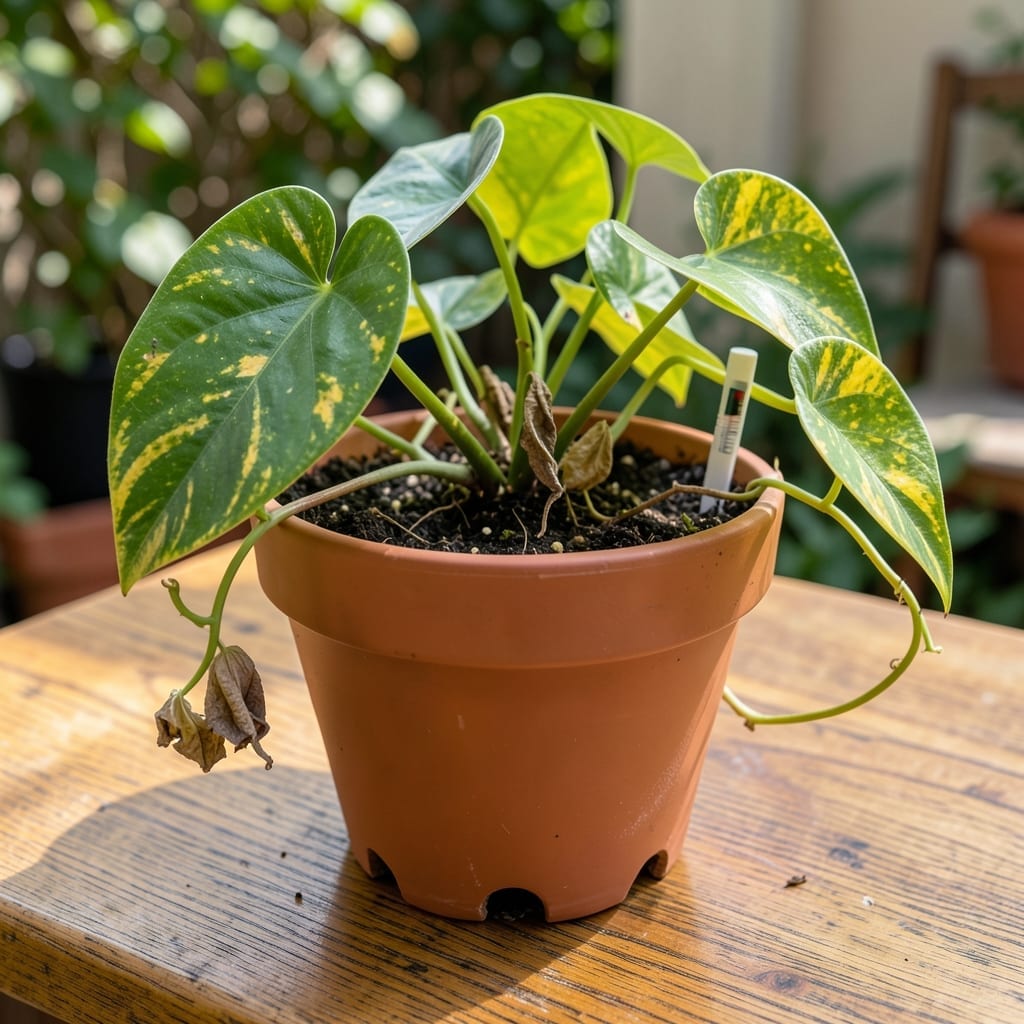
Yellow leaves and mushy stems on your pothos aren’t the end. I’ve rescued dozens from overwatering, and the turnaround can be surprisingly fast with the right approach.
This always starts with soggy soil and root rot, but the fix is simpler than you’d think. Stop watering immediately, check the roots, and trim anything black or squishy. Your plant’s already telling you what it needs.
Within 2-3 weeks, you’ll see new growth if you’ve caught it in time. The key is patience—let that soil dry out completely between waterings from now on.
Works for any pothos variety, from golden to marble queen. Here’s the step-by-step rescue plan.
Overwatering your pothos can feel like giving it a little too much love, but the science behind the problem is clear. Here’s why it happens:
Pothos roots need oxygen to thrive, but waterlogged soil displaces air pockets, cutting off their supply. Without oxygen, root cells can’t respire, leading to root rot—a fungal or bacterial infection that turns roots mushy and black.
If your pot lacks drainage holes or uses dense soil, water sits stagnant. Pothos prefer well-draining mixes (like perlite or bark) to let excess moisture escape. Without this, roots drown in a soggy, anaerobic environment.
Pothos in dim settings use less water, so soil stays wet longer. Bright, indirect light helps the plant transpire (release water vapor), balancing moisture levels naturally.
Watering on a rigid schedule (e.g., “every Monday”) ignores the plant’s actual needs. Factors like humidity, pot size, and season affect drying time. Always check the top 1–2 inches of soil first—if it’s damp, wait!
Don’t panic—your pothos can bounce back with quick and targeted action. Here’s exactly how to address the most common overwatering issues and prevent them from recurring.
If the roots are mushy and brown, they’re suffocating. Remove the plant from its pot and gently rinse the roots under lukewarm water. Use clean, sharp scissors to trim all black or mushy roots—healthy roots are firm and white. Repot in fresh, well-draining soil and a pot with drainage holes.
Prevention tip 💡: Water only when the top 1-2 inches of soil are dry. Stick your finger in to check!
Yellow leaves often mean the roots are drowning. Stop watering immediately and place the pot in a bright, well-ventilated area to speed up soil drying. If the soil is soggy after 2-3 days, consider repotting in drier mix.
Prevention tip 🌡️: Use a moisture meter to avoid guesswork. Pothos prefers to dry out slightly between waterings.
Overwatered pothos may wilt despite wet soil because the roots can’t absorb oxygen. Move it to a spot with indirect light and good airflow. If the soil is waterlogged, tilt the pot to drain excess water. Avoid fertilizing until the plant recovers.
Prevention tip ✨: Ensure your pot has drainage holes and use a saucer to catch excess water, emptying it after each watering.
If water pools on the surface or drains too slowly, your soil mix may be too dense. Amend it with perlite, orchid bark, or coarse sand to improve aeration. For severe cases, repot entirely in a chunkier, faster-draining mix.
Prevention tip 🎯: A mix of 60% potting soil and 40% perlite or orchid bark works wonders for pothos.
With proper care, most pothos show improvement in 1-2 weeks. New growth appears once roots heal. Recovery depends on the extent of root damage.
No, discard old soil as it may harbor fungi or bacteria. Fresh, well-draining mix prevents reinfection. A mix with 60% potting soil and 40% perlite works best.
If all roots are mushy, take stem cuttings above the rot. Place them in water to regrow roots before repotting. This method often saves the plant.
Avoid fertilizing until the plant shows new growth. Fertilizer can stress already damaged roots. Wait at least 2-3 weeks after repotting.