
Beautiful Plants For Your Interior
Beautiful Plants For Your Interior
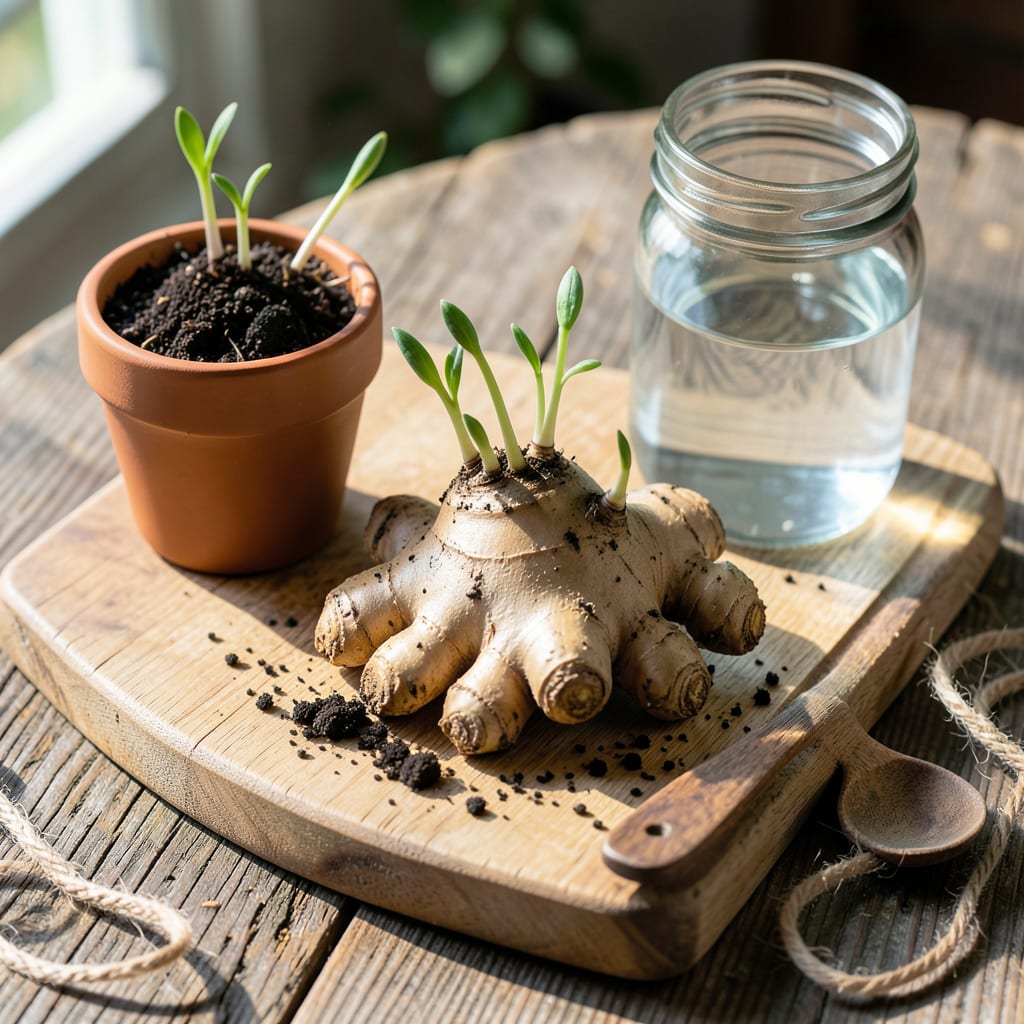
That leftover ginger knob in your fridge can grow into a thriving plant. I’ve turned kitchen scraps into a steady supply with just a pot, some soil, and the right technique.
Pick a rhizome with plump buds, plant it shallowly, and keep the soil warm and moist. In 3-4 weeks, you’ll see fresh shoots—proof that waste-free gardening is simpler than it seems.
📚 In This Guide
To regrow ginger root, you’ll need just a few simple items. Here’s what to gather before you start: fresh ginger root (a plump, healthy piece with visible buds or “eyes” is ideal), a shallow container (like a wide bowl or tray, 2–3 inches deep), high-quality potting soil (well-draining, about 1–2 cups), and a spray bottle for misting. Optional but helpful: a clear plastic bag or lid to create a mini greenhouse effect and a sunny windowsill or grow light for indirect light. Ensure your ginger piece has at least 2–3 buds for the best chance of sprouting. That’s it—simple and rewarding! 🌱
Here’s the method I rely on to transform grocery store ginger into a thriving indoor crop.
Choose a plump, firm ginger root with several visible buds (those little knob-like protrusions). Avoid any pieces that feel soft, wrinkled, or show signs of mold. The more buds present, the more potential growth points you’ll have. I look for organic ginger when possible—it’s less likely to be treated with growth inhibitors that prevent sprouting.
Soak the entire rhizome in warm water overnight. This hydrates the tissue and helps remove any residual chemicals from commercial processing. Gently scrub the surface with a soft brush to remove any dirt or wax coating without damaging the delicate buds.
Cut the rhizome into 1-2 inch pieces, ensuring each section has at least one prominent bud. Let the cut surfaces callous over for 24-48 hours—this prevents rot when planted. You’ll notice the cut areas turn from creamy white to a slightly tan color when ready.
Place the pieces bud-side up on a tray lined with a damp paper towel. Cover with another damp towel and keep in a warm, dark location (70-75°F). Mist daily to maintain moisture. Within 2-3 weeks, you should see small white roots emerging from the cut ends.
Fill a shallow, wide container with well-draining potting mix. Ginger grows horizontally, so width matters more than depth. Plant each piece 1 inch deep with the bud facing upward. Space them 3-4 inches apart to allow room for expansion.
Water thoroughly after planting until moisture drips from the drainage holes. Place the container in a location with bright, indirect light—direct sun will scorch the emerging shoots. Maintain 70-85°F soil temperature for optimal growth.
Keep the soil consistently moist but never soggy. Ginger thrives in humidity, so I place the pot on a tray filled with pebbles and water to create a microclimate. You’ll see the first green shoots pushing through the soil in 3-4 weeks after planting.
Fertilize lightly every 4-6 weeks with a balanced, water-soluble plant food. Yellowing leaves often indicate overwatering, while brown tips suggest the air is too dry. Rotate the container weekly to ensure even growth as the plant matures.
After 8-10 months, when the plant reaches 3-4 feet tall with thick, mature stems, you can begin harvesting. Carefully dig around the edges of the pot to expose the rhizomes. Cut off a portion of the root, leaving the rest intact to continue growing.
Replant the remaining rhizome immediately, following the same depth and spacing guidelines. This cycle can repeat indefinitely, with each harvest yielding more ginger than the last. The flavor intensifies with each generation, making homegrown ginger far superior to store-bought.
The small details make all the difference when growing ginger indoors.
The Selection Factor: In Step 1, choosing organic ginger is worth the extra cost—it significantly increases your sprouting success rate. Non-organic ginger is often treated with growth inhibitors that can prevent your rhizome from developing roots, no matter how perfectly you follow the other steps.
Temperature Matters: That 70-75°F range in Step 2 is critical for root development. If your home runs cooler, consider placing your tray near a heat source or on top of the refrigerator. Conversely, avoid areas above 85°F as specified in Step 3—excessive heat can dry out the developing roots.
Here’s What I Learned: The 24-48 hours callousing period in Step 2 isn’t just waiting time—it’s what prevents your ginger pieces from rotting in the soil. I learned this the hard way after losing my first batch to rot by planting too soon. The cut surfaces must turn that slight tan color before planting.
Planting Strategy: In Step 3, that 1 inch depth and 3-4 inch spacing might seem arbitrary, but ginger’s horizontal growth pattern requires it. Planting too deep can smother the buds, while crowding the pieces leads to stunted growth as they compete for space.
Yes! Choose a fresh, plump ginger root with visible buds (or “eyes”). Organic ginger is ideal since non-organic may be treated to prevent sprouting. Soak it in water overnight to kickstart growth before planting.
Ginger is slow-growing. Expect to see sprouts in 2-4 weeks, but it takes 8-10 months for the root to fully mature. Patience is key—keep the soil warm and moist to speed up the process.
Check for rot or dryness. Ensure the soil stays damp (not soggy) and maintain a temperature above 70°F (21°C). If the ginger looks shriveled, it may be too old—try a fresher piece.
Yes, but it’s less effective. Place a ginger piece with buds in a shallow water dish, changing the water daily. It may sprout, but transfer it to soil for stronger root development.
