
Beautiful Plants For Your Interior
Beautiful Plants For Your Interior
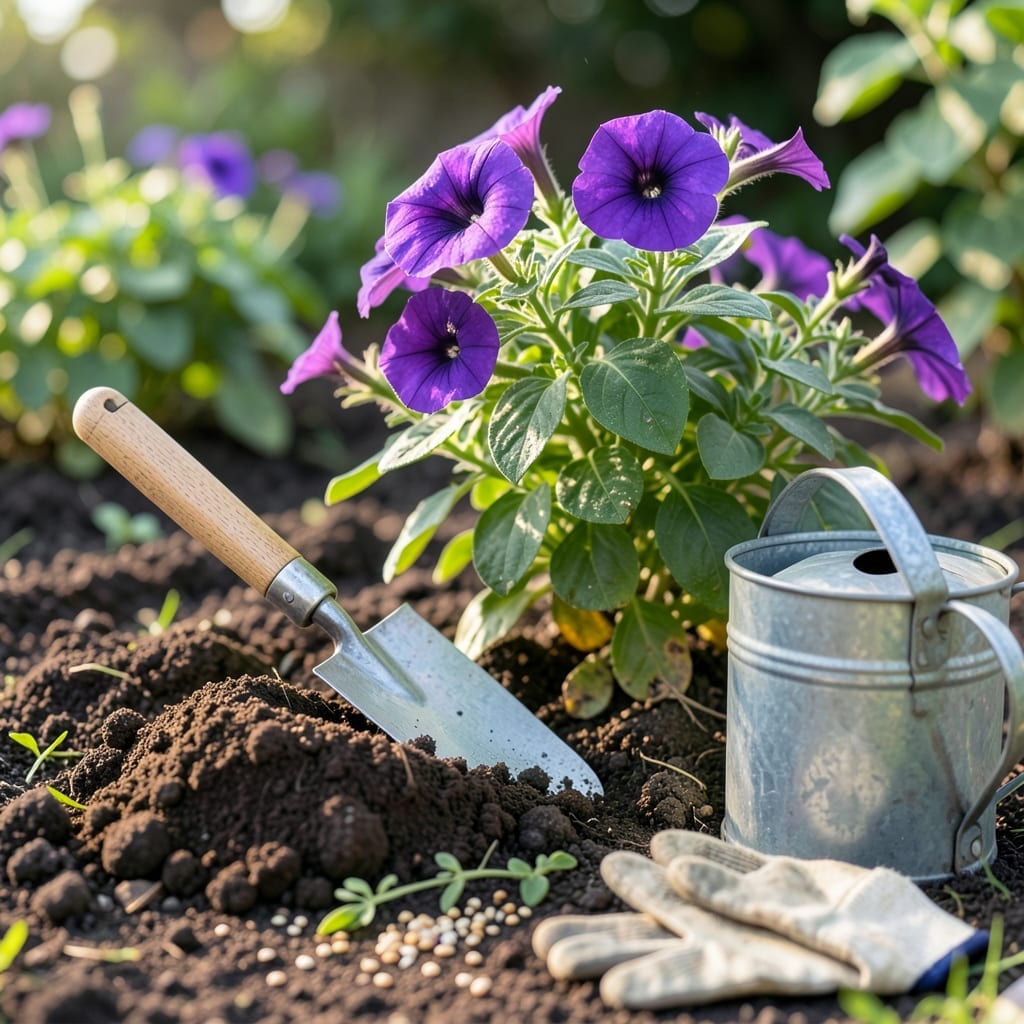
Imagine stepping into your garden and being greeted by a riot of color from vibrant 🌸 Petunias. These beauties can transform any space, but their success starts with how you plant them.
I’ve seen too many gardeners struggle with wilting plants or sparse blooms simply because they missed a few key steps. The good news? With the right approach, you can enjoy a season of stunning flowers.
Discover the simple yet crucial techniques that will have your Petunias thriving in no time. Let’s get started on this colorful journey together.


Planting petunias correctly sets the stage for vibrant blooms all season long. I always start by checking the last frost date in my area, as these flowers thrive when planted after the soil has warmed.
Whether you’re using seeds or seedlings, proper timing and preparation are key. Petunias love full sun and well-draining soil, so I
For seed planting, I start indoors 8-10 weeks before the last frost. Use a seed-starting mix and keep the soil warm and moist. Once seedlings have 2-3 true leaves, I transplant them carefully.
When planting in containers, ensure they have drainage holes to prevent waterlogging. I use a lightweight potting mix and place containers where they’ll get plenty of sunlight throughout the day.
Spacing is crucial for healthy growth. For grandiflora petunias, I space them 12-15 inches apart. For smaller varieties like milliflora, 8-10 inches works well. This prevents overcrowding and promotes air circulation.
After planting, I always water deeply to help roots establish. Petunias need consistent moisture, but avoid overhead watering to prevent fungal diseases. A drip irrigation system works wonders for this.
To encourage bushier growth and more blooms, I pinch back the tips of young plants. This simple step helps create a fuller plant with more flowering stems. Regular deadheading also keeps the blooms coming.
Finally, feed your petunias with a balanced fertilizer every 2-4 weeks during the growing season. This ensures they have the nutrients needed for continuous blooming and vibrant colors. 🌸
With these steps, you’ll be rewarded with a colorful display that lasts from late spring until the first frost. Happy planting!
Choosing the right petunia variety makes all the difference in your garden’s success. I’ve found that matching the type to your growing conditions ensures healthier plants and more abundant blooms. Each variety has unique traits that thrive in specific settings.
From cascading waves to compact grandifloras, there’s a perfect petunia for every space. I love how Wave petunias spill over containers, while Multiflora types create dense, colorful beds. Let me share the best options for your needs.
| Variety | Best For | Sun Needs |
|---|---|---|
| Grandiflora | Large flowers, borders | Full sun |
| Multiflora | Mass planting, beds | Full to part sun |
| Wave | Hanging baskets, containers | Full sun |
| Milliflora | Small flowers, edges | Full to part sun |
For sunny borders, I recommend Grandiflora petunias with their large, showy blooms. They need full sun and consistent moisture to thrive. In my experience, they perform best in well-draining soil with regular feeding.
Wave petunias are my go-to for hanging baskets and containers. Their trailing habit creates stunning displays, and they’re incredibly low-maintenance. Just ensure they get at least 6 hours of sun daily.
If you’re planting in mixed beds, consider Multiflora varieties. These produce abundant smaller flowers and are more heat-tolerant than Grandifloras. They’re perfect for creating colorful ground covers.
For small spaces or container edges, Milliflora petunias are ideal. Their compact size and delicate blooms add charm without overwhelming other plants. I love using them to soften the edges of my patio containers. 🌸