
Beautiful Plants For Your Interior
Beautiful Plants For Your Interior
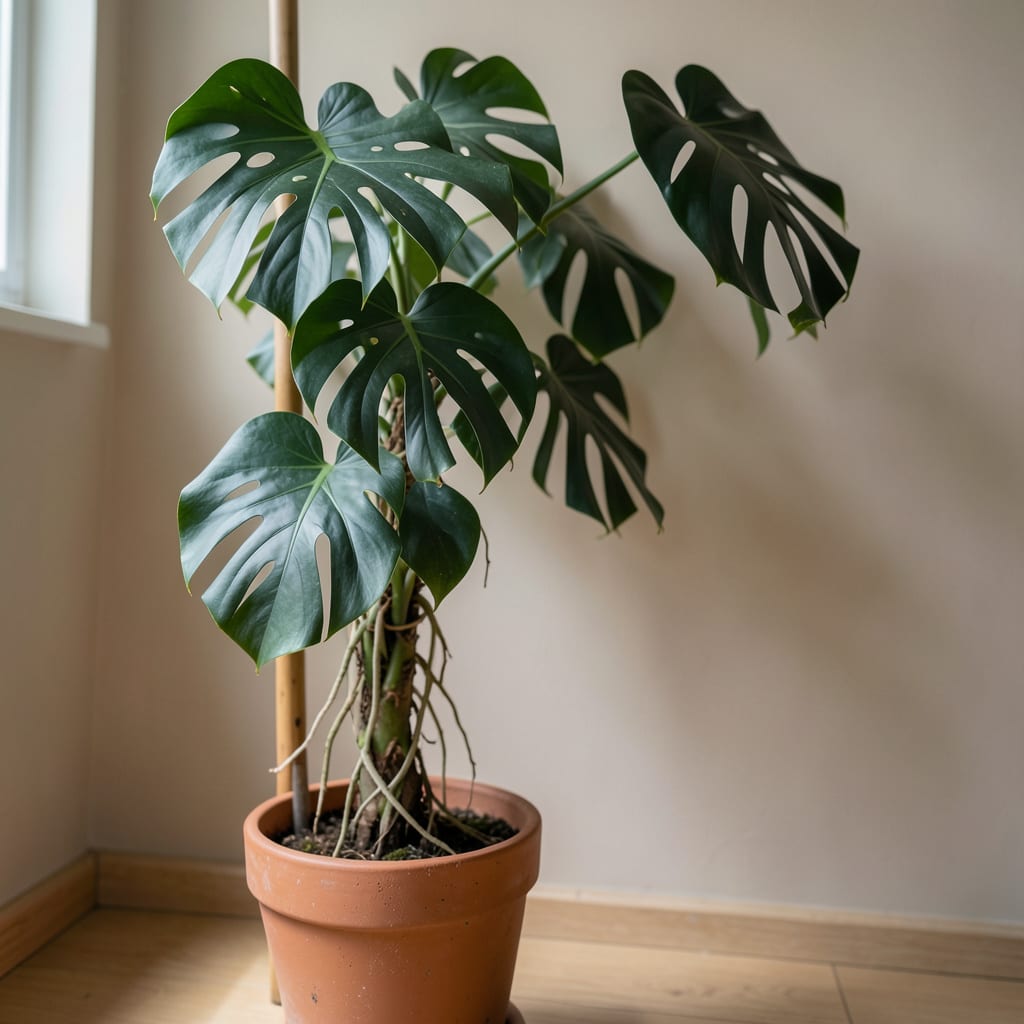
Growing Monstera 🌿 to its full height can transform any indoor space into a lush paradise, but it requires more than just basic care. To achieve maximum height, you’ll need to provide the right conditions and support.
With the right techniques, you can help your Monstera reach its potential height of 6-12 feet in zone 6. Let’s explore the essential factors and practical tips for growing a tall and healthy Monstera.


Growing Monstera to its full height requires understanding the critical elements that determine its growth. The most important factors include light, support, watering, and nutrition. Let’s explore these essential factors in detail.
First, lighting plays a crucial role in Monstera growth. These plants thrive in bright, indirect light for at least 6 hours a day. Placing them near an east or west-facing window is ideal. Too little light can cause leggy growth, while direct sunlight can scorch the leaves 🌞.
The watering needs of Monstera are another vital factor. These plants prefer consistent moisture but can’t tolerate soggy soil. Water them when the top 1-2 inches of soil feel dry. During the growing season (spring and summer), they may need water 2-3 times a week 🌿.
Nutrition is also key to promoting healthy growth. Feed your Monstera with a balanced fertilizer (20-20-20) once a month during the growing season. This provides the necessary nutrients for vigorous growth and helps the plant reach its maximum height.
Finally, providing the right support is essential for vertical growth. Monstera is a natural climber and needs something to grow on. Using a moss pole or trellis can help guide the plant upward and encourage it to reach its full potential height.
By focusing on these essential factors, you can create the optimal conditions for your Monstera to grow tall and thrive. Remember, patience is key as these plants take time to develop their full height.
To summarize, the key to growing a tall Monstera includes providing appropriate light, maintaining consistent watering, offering proper support, and ensuring adequate nutrition. By following these guidelines, you can help your Monstera reach its maximum height and enjoy a lush, tropical display in your home 🌴.
For more specific guidance on supporting your Monstera’s vertical growth, we’ll explore practical techniques in the next section.
By understanding and implementing these critical growth factors, you’ll be well on your way to growing a tall, healthy Monstera that adds beauty and life to your indoor space.
To help your Monstera reach its full height, providing proper support is crucial. Monstera plants are natural climbers and need something to grow on. Let’s explore the practical techniques for supporting tall growth using moss poles, trellises, and stakes.
First, let’s look at using a moss pole. This is one of the most effective ways to support your Monstera’s vertical growth. To set up a moss pole, you’ll need a sturdy pole and some sphagnum moss. Begin by wrapping the moss around the pole, securing it with twine or wire 🌱.
Select a moss pole or trellis that’s tall enough to support your Monstera’s potential height.
Place the support near the base of your Monstera, gently guiding the stems toward it.
Use soft ties to gently attach the Monstera stems to the support, encouraging upward growth.
Another effective method is using a trellis. This provides a broader surface for the Monstera to climb on. When using a trellis, make sure it’s sturdy enough to support the plant’s weight as it grows. You can also use stakes to provide additional support, especially if your Monstera has particularly long stems 🌿.
When training your Monstera to grow vertically, it’s essential to be patient and gentle. Avoid forcing the stems to bend or break, as this can damage the plant. Instead, guide them gently toward the support, and secure them with soft ties.
By providing the right support and training your Monstera to grow vertically, you can help it reach its full potential height and enjoy a stunning display of lush, tropical foliage in your home.
To further enhance your Monstera’s growth, it’s crucial to avoid common mistakes that can stunt its development. We’ll explore these potential pitfalls in the next section.
Remember, growing a tall Monstera requires time, patience, and the right techniques. By combining proper support with optimal growing conditions, you’ll be well on your way to cultivating a thriving, vertically-grown Monstera 🌴.
Growing a tall Monstera requires more than just providing the right conditions; it also involves avoiding common mistakes that can hinder its growth. Let’s explore some critical errors to watch out for and how to correct them.
One of the most common mistakes is improper lighting. Monstera plants need bright, indirect light for at least 6 hours a day. Too little light can cause leggy growth, while direct sunlight can scorch the leaves. To avoid this, place your Monstera near an east or west-facing window 🌞.
Overwatering is a common mistake that can lead to root rot and stunt your Monstera’s growth. Check the soil moisture by inserting your finger into the soil up to the first knuckle. If the soil feels dry, it’s time to water 🌿.
Another mistake is overwatering. Monstera prefers consistent moisture but can’t tolerate soggy soil. To avoid overwatering, check the soil moisture regularly and adjust your watering schedule accordingly. During the growing season (spring and summer), Monstera may need water 2-3 times a week.
Insufficient humidity is another factor that can stunt Monstera growth. These plants thrive in humid environments, typically between 50-70% relative humidity. To maintain the right humidity levels, you can use a humidifier or place the plant on a tray filled with water and pebbles 💧.
To summarize, avoiding common mistakes like improper lighting, overwatering, and insufficient humidity is crucial for promoting healthy growth in your Monstera. By being aware of these potential pitfalls and taking steps to correct them, you can help your Monstera reach its full potential height and enjoy a lush, tropical display in your home 🌴.
By following these guidelines and avoiding common mistakes, you’ll be well on your way to growing a tall, healthy Monstera that adds beauty and life to your indoor space.
Water your Monstera when the top 1-2 inches of soil feel dry. During the growing season (spring and summer), it may need water 2-3 times a week. Consistent moisture promotes healthy growth .
Using a moss pole or trellis is ideal for supporting Monstera’s natural climbing habit. This helps guide the plant upward and encourages it to reach its full potential height. Secure the stems to the support with soft ties .
Monstera needs bright, indirect light for at least 6 hours a day. Placing it near an east or west-facing window is perfect. Too little light can cause leggy growth, while direct sunlight can scorch the leaves .
Common reasons for stunted growth include improper lighting, overwatering, and insufficient humidity. Check your care routine and adjust as needed. Ensure your Monstera is getting the right conditions to thrive .
