
Beautiful Plants For Your Interior
Beautiful Plants For Your Interior
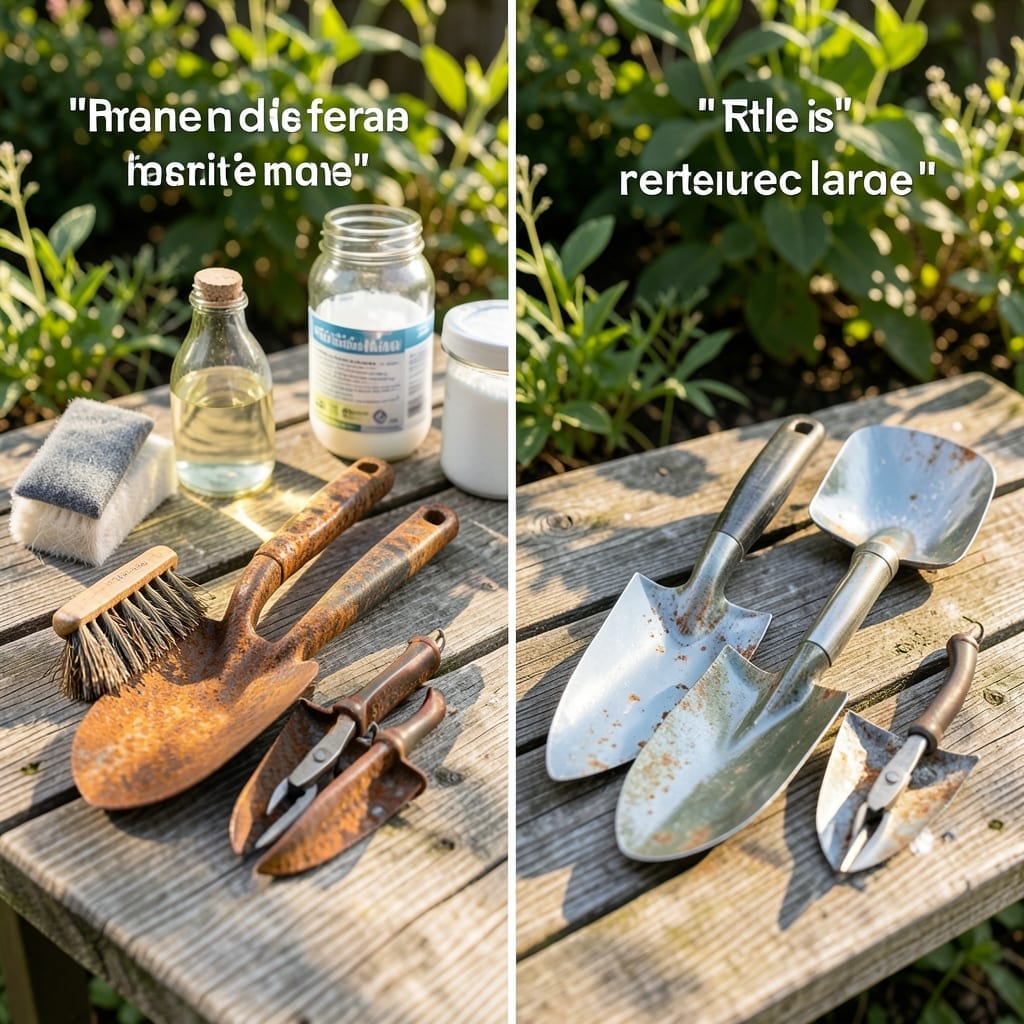
Nothing ruins a good gardening day like grabbing a rusty tool. I’ve lost count of how many trowels I’ve tossed because I thought they were beyond saving.
Turns out, a little vinegar and elbow grease can bring them back to life. The process is simpler than you’d think, and it works on everything from pruners to shovels.
Your tools will look brand new again, and they’ll last for years with just a bit of regular care. No fancy equipment—just stuff you already have in your kitchen.
Best part? It takes less than an hour and saves you money on replacements. Here’s how to do it right.
Rust on garden tools isn’t just an eyesore—it’s a chemical reaction that weakens metal over time. Understanding why it happens helps prevent it. Here are the most common causes:
Rust, or iron oxide, forms when iron in metal reacts with oxygen and water. Garden tools left outside, stored in damp sheds, or used in wet conditions are prime targets. Even humidity in the air can trigger oxidation if tools aren’t dried properly after use.
Many tools come with a factory-applied protective layer (like oil or paint), but this wears off over time. Without a barrier, the bare metal is exposed to moisture and air, speeding up rust formation. Scratches or chips in the coating also create entry points for corrosion.
Soil contains minerals and moisture, while plant sap can be acidic. When these substances linger on tool surfaces, they accelerate rusting by providing a constant source of moisture and electrolytes that promote chemical reactions. Cleaning tools after each use removes these culprits.
Storing tools in piles, unorganized heaps, or directly on concrete floors traps moisture. Concrete absorbs and retains water, which then wicks into metal. Similarly, metal-to-metal contact (like stacked tools) can scratch off protective layers, exposing fresh surfaces to rust.
Rust on garden tools isn’t just unsightly—it can weaken the metal and make your jobs harder. Here’s how to tackle it, fast, with practical fixes for every scenario.
For thin, patchy rust, grab a wire brush, steel wool, or even crumpled aluminum foil. Scrub in circular motions until the rust flakes off. Finish with a wipe-down using white vinegar or lemon juice to dissolve lingering residue. Pro tip 💡: Soak stubborn spots in vinegar for 30 minutes first.
Submerge heavily rusted tools in undiluted white vinegar for 8–24 hours. The acetic acid breaks down rust without damaging the metal. After soaking, scrub with a nylon brush or sponge, then rinse and dry thoroughly. For extra tough cases, sprinkle baking soda to form a paste and scrub again.
If rust has eaten into the metal, use 80-grit sandpaper or a wire wheel on a drill to grind it away. Work carefully to avoid thinning the metal. Always wear gloves and eye protection. After smoothing, apply a light coat of mineral oil to prevent re-rusting.
For eco-friendly options, try a halved potato dipped in baking soda or salt—the oxalic acid in potatoes helps lift rust. Rub the cut side over the tool for 10 minutes, then rinse. Alternatively, sprinkle citric acid powder (from lemons) on rust, add water to form a paste, and let it sit for an hour before scrubbing.
Prevention Tips:
For light rust, 30 minutes to 1 hour works well. Heavy rust may need 8-24 hours for full removal. Check progress periodically and scrub gently after soaking.
Baking soda works best as a paste mixed with water. Apply to rusted areas, let sit for 15-20 minutes, then scrub with a brush. It’s gentler than vinegar but effective for surface rust.
Avoid soaking tools with wooden or painted handles. Focus vinegar or baking soda on metal parts only. Wipe handles with a damp cloth and dry thoroughly afterward.
Always dry tools after use and store in a dry place. Apply a thin coat of mineral oil or WD-40 to metal surfaces monthly for long-term protection.