
Beautiful Plants For Your Interior
Beautiful Plants For Your Interior
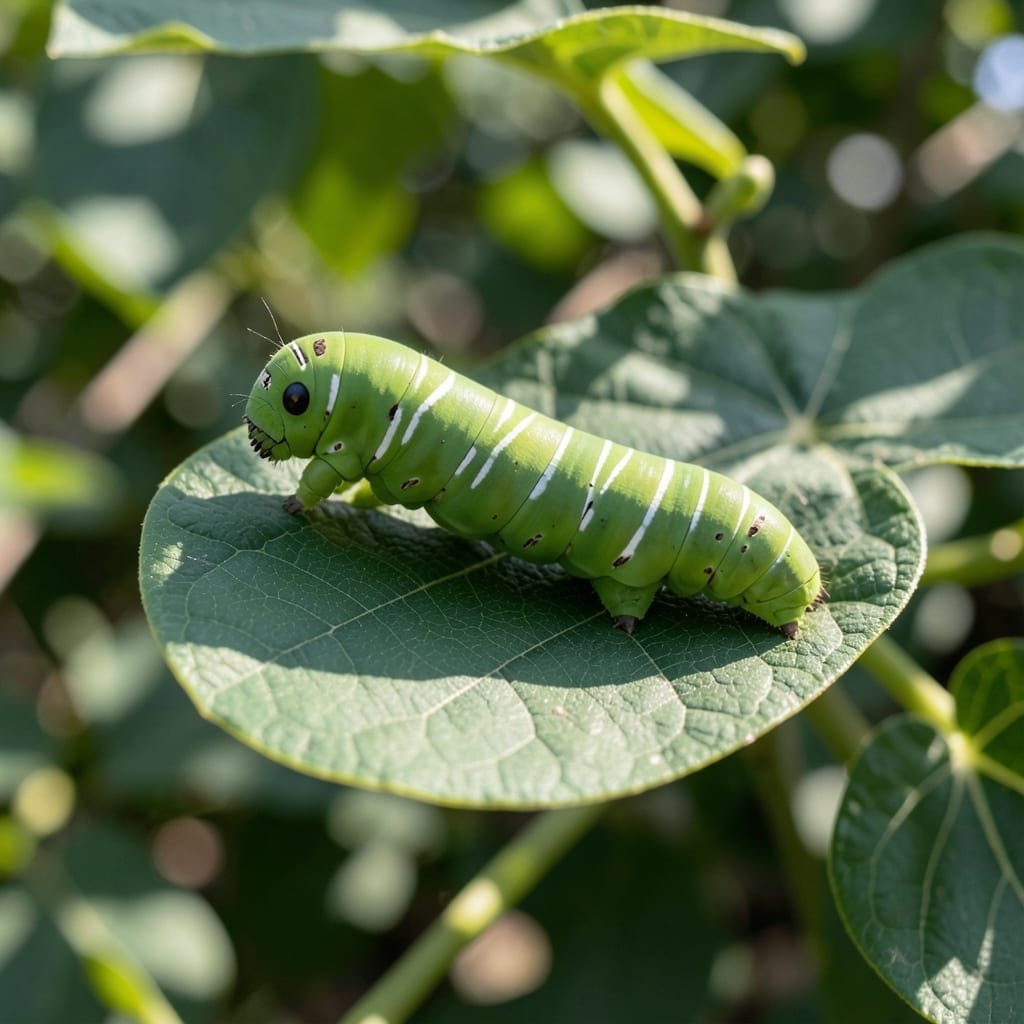
I first spotted them munching my pentas at midnight. Tersa sphinx caterpillars are sneaky night feeders that can strip plants bare before you notice the damage.
Hand-picking works surprisingly well since they’re active after dark. Just grab a flashlight and bucket of soapy water—drop them in and they won’t return. No chemicals needed.
Look for dark green caterpillars with white diagonal stripes and a distinctive horn. They blend in during the day but become obvious when feeding under lights at night.
Prevention starts with removing eggs from leaf undersides. Check plants weekly and you’ll catch them before they hatch.
The presence of Tersa Sphinx caterpillars (Xylophanes tersa) in your garden or landscape isn’t random—it’s driven by specific biological and environmental factors. Understanding these causes can help you address the root of the issue. Below are the primary reasons these caterpillars appear and thrive in your space.
Tersa Sphinx caterpillars are highly attracted to plants in the Rubiaceae (madder) family, as well as other favorites like pentas, lantana, and jasmine. These plants provide the ideal food source for their larval stage. If your garden includes these species, it’s like rolling out a welcome mat for the caterpillars. Their presence is a natural response to the availability of their preferred diet.
These caterpillars thrive in warm, humid climates, particularly in the southern United States and tropical regions. The Tersa Sphinx moth lays its eggs in areas where temperatures consistently stay above 70°F (21°C). If you live in such a region, the caterpillars are likely a seasonal or year-round nuisance due to the favorable weather that supports their life cycle.
In some ecosystems, the absence or decline of natural predators—such as parasitic wasps, birds, or other insects—can lead to an unchecked population boom of Tersa Sphinx caterpillars. If your garden lacks biodiversity or uses broad-spectrum pesticides, you may inadvertently reduce the predator population, allowing caterpillars to multiply without sufficient control.
Overly lush, rapidly growing plants—often a result of excessive watering or fertilizing—create a paradise for caterpillars. The tender, nutrient-rich foliage is easier for them to consume, accelerating their growth and reproduction. If your garden is heavily watered or fertilized, it may be unintentionally fostering an ideal environment for these pests.
Dealing with Tersa Sphinx caterpillars doesn’t have to be a battle. Here’s how to tackle the problem based on the cause, with simple, practical fixes and prevention tips to keep them from coming back.
If you spot caterpillars on your plants, the most effective and eco-friendly solution is to handpick them at night when they’re active. Wear gloves to avoid irritation, drop them into a bucket of soapy water, or relocate them to a wild area far from your garden. This method is immediate and chemical-free.
Encourage natural predators like birds, parasitic wasps, or lacewings by creating a wildlife-friendly garden. Install bird feeders, plant native flowers, and avoid broad-spectrum pesticides. These predators will help keep the caterpillar population in check naturally.
Protect vulnerable plants with floating row covers or fine mesh netting. This prevents adult moths from laying eggs on leaves. Secure the edges tightly to ensure no gaps. For potted plants, consider moving them indoors or to a sheltered area during peak moth activity.
If infestations persist, use organic sprays like Bacillus thuringiensis (Bt) or neem oil. Bt targets caterpillars specifically without harming beneficial insects. Apply in the evening for best results, and reapply after rain. Always follow the label instructions carefully.
With these steps, you can effectively manage and prevent Tersa Sphinx caterpillar issues while keeping your garden healthy and thriving.
They love pentas, lantana, and jasmine. Also any from the Rubiaceae family. These are their favorite food sources, so check these plants first.
At night—they’re most active then. Use a flashlight and gloves to spot and handpick them. Drop them in soapy water for quick disposal.
No, but their spines can cause mild skin irritation. Always wear gloves when handling them to avoid any discomfort.
Organic options like Bt or neem oil work but take 1-2 days. For faster results, handpicking at night remains the most effective method.