
Beautiful Plants For Your Interior
Beautiful Plants For Your Interior
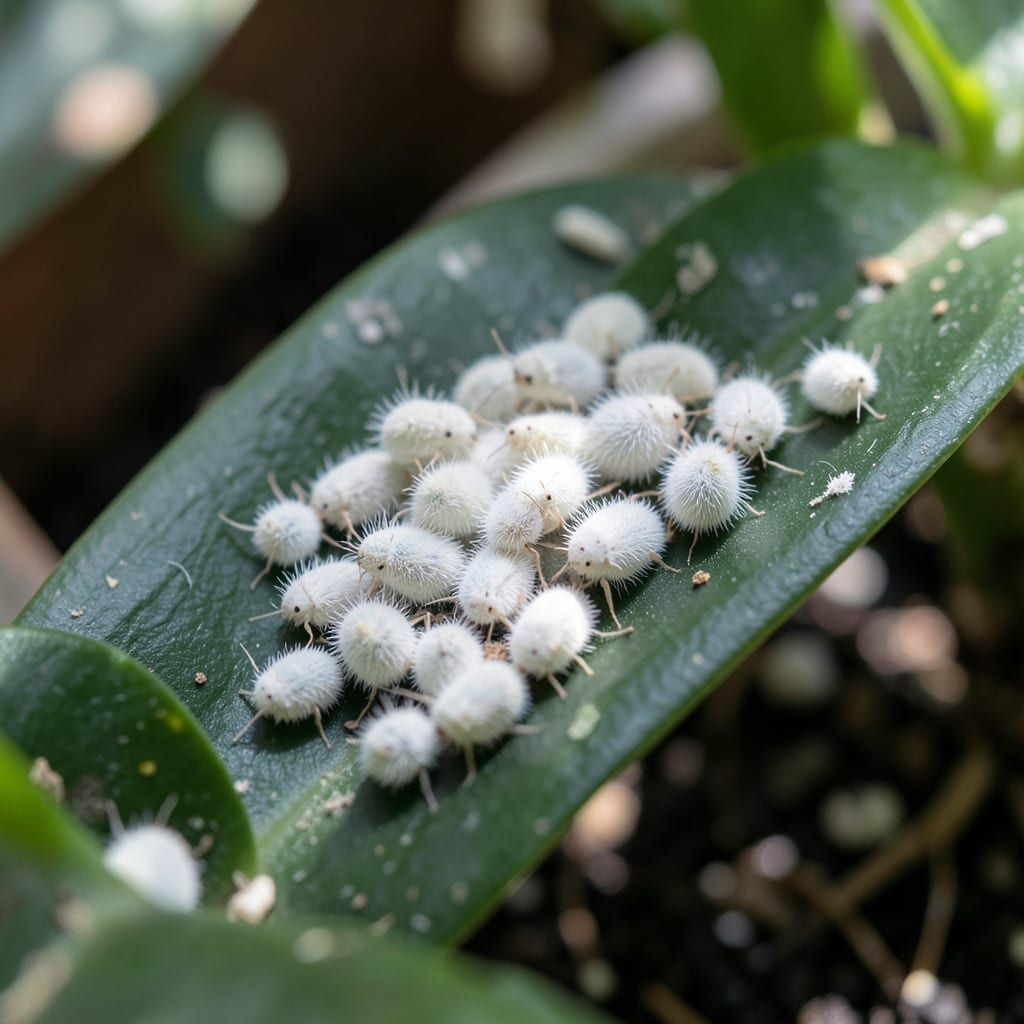
White cottony spots on your clivia mean mealybugs have moved in. I’ve battled these pests on my own collection, and the key is catching them early before they spread to every leaf and stem.
The first sign is usually sticky residue on leaves or nearby surfaces. These bugs multiply fast, but they’re not invincible. A cotton swab dipped in rubbing alcohol removes them on contact without harming the plant.
For heavier infestations, I switch to a weekly neem oil spray that smothers adults and disrupts their life cycle. The treatment works best when applied in the evening to avoid leaf burn.
Prevention is simpler than cure: isolate new plants, inspect leaves regularly, and keep your clivia in good health. Strong plants resist pests better than stressed ones.
Mealybugs thrive on Clivia plants due to a mix of environmental, biological, and cultural factors. Understanding these root causes helps you prevent infestations before they start. Below are the most common triggers, explained with actionable insights.
Mealybugs flourish in stable, moderate environments. If your Clivia sits in low humidity (below 40%), the plant’s natural defenses weaken, making it easier for pests to settle in. Conversely, excessively humid conditions (above 60%) create a breeding ground for mealybugs, as they prefer moist, warm spaces to lay eggs. Aim for 40–50% humidity and ensure good air circulation to discourage infestations.
Dead leaves, spent blooms, and dusty foliage provide hiding spots and food sources for mealybugs. These pests feed on Clivia sap but also consume decaying plant matter. Regularly remove dead or yellowing leaves, wipe foliage with a damp cloth, and clean up fallen debris around the pot to eliminate potential habitats.
Mealybugs are attracted to soft, new growth, which is often a result of excess nitrogen in fertilizers. Over-fertilizing your Clivia leads to tender leaves that mealybugs find irresistible. Switch to a balanced, low-nitrogen fertilizer (e.g., 5-5-5 or 10-10-10) and follow a moderate feeding schedule to avoid promoting pest-friendly growth.
In outdoor settings, ladybugs, lacewings, and parasitic wasps keep mealybug populations in check. Indoor Clivia plants lack these natural predators, allowing infestations to spread unchecked. If you’re growing Clivia indoors, consider introducing beneficial insects like Cryptolaemus montrouzieri (mealybug destroyer) or using neem oil as a preventive measure.
Tackling mealybugs on your clivia doesn’t have to be a daunting task. Here’s how to address the issue based on the severity of the infestation, with actionable steps and prevention tips to keep your plant thriving.
If you spot just a few mealybugs, start with the simplest method:
💡 Pro tip: Check under leaves and in leaf axils—mealybugs love hiding in these cozy spots!
For a larger (but not overwhelming) problem, try these natural remedies:
✨ Note: Always test sprays on a small area first to avoid leaf burn. Apply in the evening to reduce sun sensitivity.
If mealybugs persist, escalate to stronger options:
🎯 Important: Avoid chemical sprays if your clivia is near edible plants or frequented by pets/kids.
Apply a neem oil solution every 5-7 days for 2-3 weeks to break the pest’s life cycle. Consistency is key to eliminating both adults and newly hatched bugs.
No, 70% isopropyl alcohol is safe when used correctly. Dab only the bugs with a cotton swab—avoid soaking leaves. It evaporates quickly without damaging healthy plant tissue.
They often hide in leaf axils or roots. Check these spots during treatment and isolate the plant to prevent re-infestation from nearby plants.
Yes, but use a mild liquid soap at 1 tbsp per quart of water. Avoid harsh detergents which can burn leaves. Always rinse after 20-30 minutes.