
Beautiful Plants For Your Interior
Beautiful Plants For Your Interior
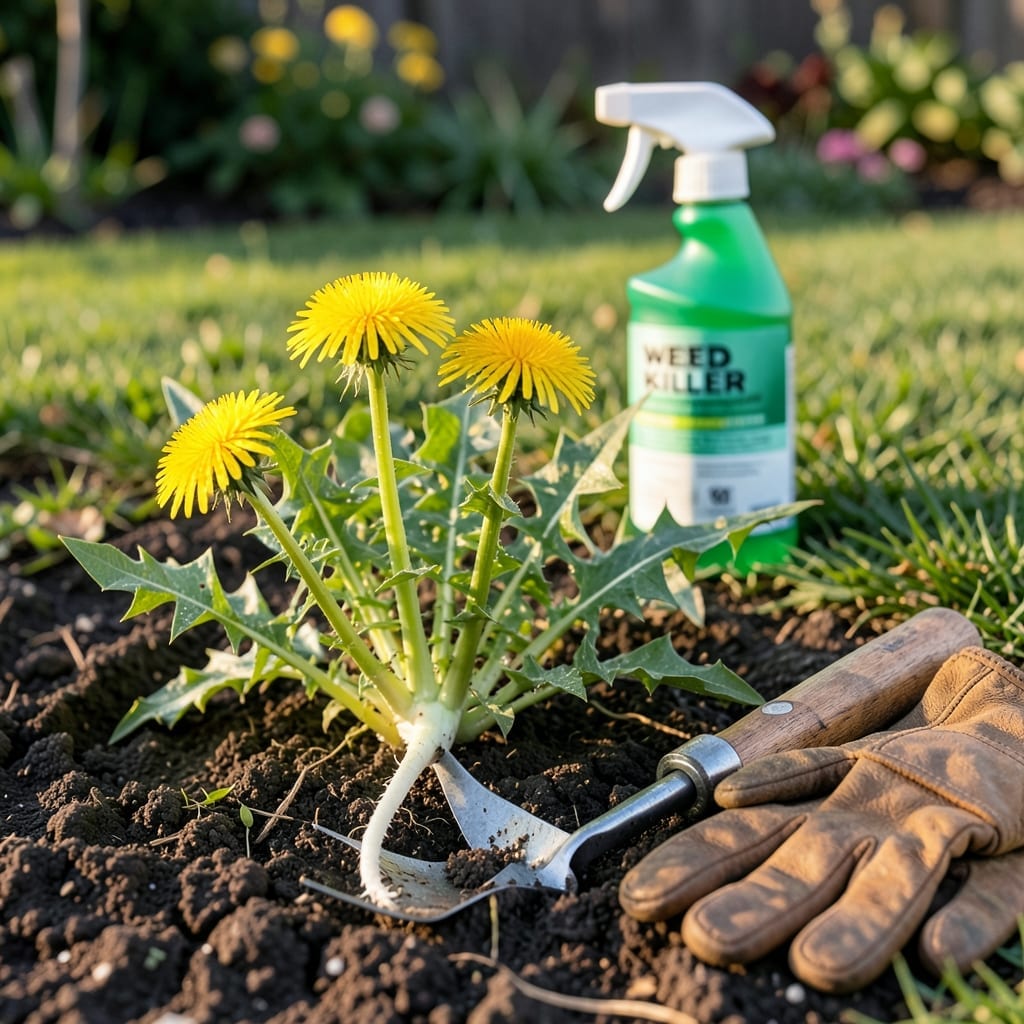
Those yellow blooms are more stubborn than my last diet attempt. I’ve tried every trick—digging, pulling, even begging—and finally found what actually works without turning my lawn into a chemical warzone.
The key isn’t just removing what you see. You’ve got to stop them from coming back, and that means addressing the roots and the conditions that let them thrive in the first place.
Within 2-3 weeks, you’ll start seeing fewer new sprouts, and by next season, your lawn will look like it’s been on a dandelion-free regime.
Works for any yard size, and the best part? No harsh chemicals, just smart, consistent effort.
Dandelions (Taraxacum officinale) are hardy, opportunistic plants that thrive under specific conditions. Understanding why they appear in your lawn helps you tackle the root of the problem—literally. Here’s a breakdown of the most common causes:
Thin, weak, or patchy grass creates open space for dandelions to take hold. When your lawn lacks density due to improper mowing, under-watering, or nutrient deficiencies, dandelion seeds can easily germinate in bare soil. These plants outcompete struggling grass by accessing sunlight and resources more efficiently.
Dandelions reproduce prolifically via wind-dispersed seeds. A single plant can produce up to 2,000 seeds per season, which can travel miles on a breeze. Even if your lawn is pristine, neighboring dandelions can send seeds your way, making prevention a community effort.
Heavy foot traffic, construction, or frequent gardening can compact soil, reducing grass growth while giving dandelions a foothold. Their deep taproots (up to 10 inches long) can penetrate compacted earth, accessing moisture and nutrients that shallow-rooted grass cannot.
Dandelions prefer slightly acidic to neutral soil (pH 6.0–7.5). If your lawn’s pH is off-balance—too acidic or alkaline—it stresses the grass while creating ideal conditions for dandelions. A soil test can reveal whether lime or sulfur adjustments are needed to restore equilibrium.
Inconsistent watering weakens grass, leaving gaps for dandelions. Shallow, frequent watering encourages weak root systems in turf, while drought-stressed lawns allow dandelions—with their deep roots—to survive and dominate.
Dandelions may be stubborn, but these targeted fixes will reclaim your lawn. Address each cause directly for lasting results.
Tall grass gives dandelions shade and space to grow. Mow weekly to a height of 2–3 inches, weakening their ability to spread. Use a sharp mower blade to avoid tearing grass, which can invite weeds. For extra defense, bag your clippings if dandelions are already seeding to prevent further spread.
Dandelions thrive in compacted or nutrient-poor soil. Aerate your lawn in early spring or fall to improve air and water flow. Follow up with a slow-release organic fertilizer to strengthen grass roots. Test your soil’s pH—dandelions love acidic conditions (pH below 6.0). Add lime if needed to balance it.
💡 Pro Tip: Top-dress with compost annually to enrich the soil naturally.
Too much water creates a perfect habitat for dandelions. Water deeply but infrequently—about 1 inch per week, including rainfall. Use a rain gauge to track moisture. Water early in the morning to reduce evaporation and fungal risks. If puddles form, your soil may need aeration or better drainage.
For small infestations, pull dandelions by hand after rain when the soil is soft. Use a dandelion digger or weeding tool to extract the entire taproot (up to 10 inches deep). 💡 Pro Tip: If the root snaps, dig deeper—any remaining pieces can regrow!
Dispose of pulled dandelions in the trash (not compost) to prevent reseeding.
Yes, but only if you remove the entire taproot. Use a weeding tool after rain when soil is soft. Any root left behind will regrow within 1-2 weeks.
Mow weekly to 2-3 inches high. This shades the soil, making it harder for dandelion seeds to germinate. Keep your mower blade sharp for clean cuts.
White vinegar kills dandelions but also harms grass. Apply directly to leaves on sunny days using a spray bottle. Avoid overspray to protect surrounding turf.
Early spring or fall are ideal. Treat before dandelions flower to prevent seeding. For existing plants, remove them before they produce 2,000 seeds per plant.