
Beautiful Plants For Your Interior
Beautiful Plants For Your Interior
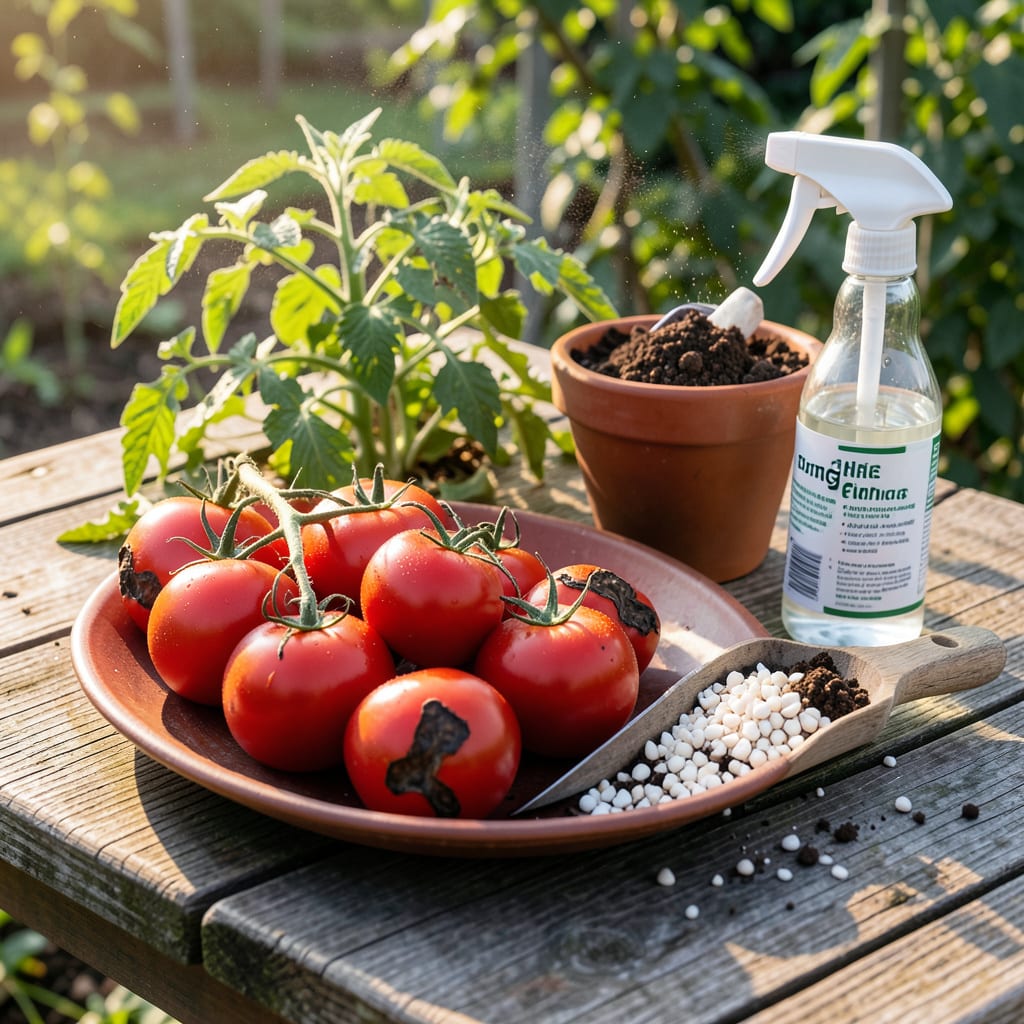
Black spots on your tomatoes mean trouble, but it’s fixable. 🌱 I’ve saved countless crops from bottom rot with simple adjustments that work fast.
This isn’t about fancy treatments—it’s usually a calcium deficiency or inconsistent watering. The solution starts with testing your soil and adjusting your routine. Most gardeners see improvement within 7-10 days of making changes.
You’ll end up with healthy fruit that develops properly without those ugly dark patches. The plants bounce back stronger and your harvest stays on track for the season.
Works for all tomato varieties, whether in ground or containers. Here’s exactly what to do.
Bottom rot on tomatoes, often called blossom end rot (BER), isn’t caused by a pathogen—it’s a physiological disorder tied to environmental and cultural conditions. Here’s a breakdown of the primary causes, each with a clear scientific basis.
The most direct cause is a localized calcium deficiency in the developing fruit. Calcium is essential for cell wall stability, and when the growing tip of the tomato (the blossom end) doesn’t get enough, the tissue breaks down. This often happens even if the soil has ample calcium, because uptake is the real issue—triggered by uneven watering or root damage.
Tomatoes need consistent moisture to transport calcium from the soil into the plant. Drought stress followed by heavy watering disrupts this flow. When the soil dries out, roots can’t absorb calcium efficiently, and when it’s suddenly soaked, the plant can’t distribute it fast enough to the fruit. This “feast or famine” watering pattern is a top trigger for BER.
High heat (above 85°F/29°C) or cold snaps (below 55°F/13°C) interfere with calcium uptake. Warm soils speed up plant metabolism, increasing the demand for calcium, while cold soils slow root activity, reducing absorption. Even a few days of temperature extremes can set the stage for rot.
If your soil pH is too acidic (below 6.0) or too alkaline (above 7.5), calcium becomes chemically unavailable to the roots. Tomato plants thrive in a slightly acidic to neutral pH (6.2–6.8), where calcium remains soluble and accessible.
Over-fertilizing with nitrogen or potassium can cause a growth surge that outpaces calcium supply. The plant prioritizes leafy growth, leaving the fruit starved for the nutrients it needs to develop properly. This is especially common in early-season tomatoes with vigorous vegetative growth.
Act fast to save your tomatoes! Bottom rot, often caused by blossom end rot, can be fixed with these targeted solutions. Address the root cause first, then apply fixes to revive your plants.
Tomatoes need calcium to develop strong cell walls. If your soil lacks it, the fruit’s bottom turns black and sunken. Fix it: Apply a calcium-rich foliar spray (like calcium nitrate or crushed eggshell tea) directly to leaves for quick absorption. For a long-term solution, work gypsum or lime into the soil before planting next season. Prevention tip: Test your soil’s pH—tomatoes thrive at 6.2–6.8. Adjust with lime if it’s too acidic.
Fluctuating soil moisture disrupts calcium uptake, triggering rot. Fix it: Water deeply 1–2 inches per week (more in heatwaves) to keep soil evenly moist. Use drip irrigation to deliver water directly to roots and avoid wetting leaves. Prevention tip: Mulch with straw or shredded leaves to retain moisture and prevent soil cracks.
Extreme heat or cold can stress plants, worsening rot. Fix it: Use shade cloth during peak sun (10 AM–4 PM) to protect plants. For sudden cold snaps, cover them with frost blankets. Prevention tip: Plant tomatoes after the last frost date and choose heat-tolerant varieties like ‘Solar Fire’ or ‘Heatmaster’.
Too much nitrogen or potassium can block calcium absorption. Fix it: Stop fertilizing immediately and flush the soil with water to remove excess salts. Switch to a balanced, calcium-included fertilizer (e.g., 10-10-10 with micronutrients). Prevention tip: Follow package instructions for fertilizer amounts—more isn’t better!
Remove heavily affected fruits to redirect the plant’s energy to healthy growth. With these fixes, your tomatoes can bounce back in 7–14 days!
Most plants show improvement within 7-14 days of consistent treatment. New fruit will develop normally while existing affected tomatoes may not fully recover. Remove severely damaged fruit to focus energy on healthy growth.
Yes! Crushed eggshells (washed and dried) can be steeped in water for 24 hours to create a calcium-rich foliar spray. Apply directly to leaves for quick absorption. Avoid using unwashed eggshells to prevent bacterial growth.
If you’ve added calcium but still see rot, the issue is likely uneven watering. Calcium can only move through the plant with consistent moisture. Use drip irrigation and mulch to maintain steady soil moisture.
