
Beautiful Plants For Your Interior
Beautiful Plants For Your Interior
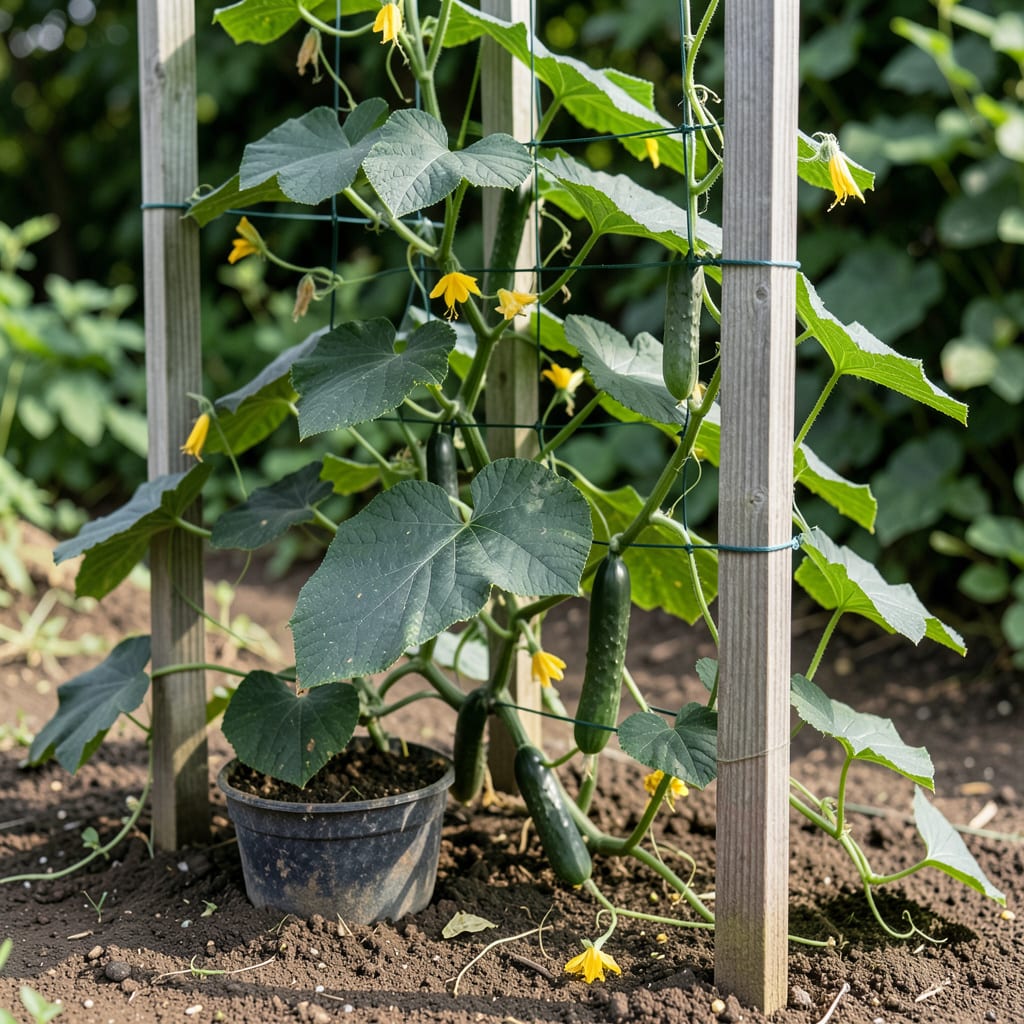
When growing 🥒 cucumbers, one of the most common questions is about their height potential. Cucumber plants can grow surprisingly tall – some varieties can reach 6 feet or more when given the right conditions.
Understanding how to support their natural climbing habit is key to maximizing your harvest in USDA zone 6a. Let’s explore the factors that influence their growth and how to make the most of these vigorous plants.


Cucumber plants are known for their vigorous growth and climbing ability. Most cucumber varieties are vining plants that naturally spread and climb, while some are compact bush types bred for smaller spaces.
The growth habit of cucumber plants is influenced by their variety and growing conditions. Understanding these growth patterns is crucial for providing the right support and maximizing your harvest 🌿.
Cucumber plants exhibit indeterminate growth, meaning they continue to grow and produce new vines throughout the season. This growth pattern requires appropriate support to maximize space and yield.
The height potential of cucumber plants is influenced by both their genetic makeup and environmental factors. While some compact varieties may reach 2-3 feet, most standard varieties can grow much taller when properly supported.
Support systems play a crucial role in helping cucumber plants reach their maximum height potential. Using trellises, fences, or other climbing structures allows the plants to grow vertically, making the most of available space and promoting healthier growth 🌱.
Proper pruning and training of the vines can also encourage vertical growth and help manage the plant’s overall size and shape.
Cucumber plants have a relatively short growth cycle, typically maturing in 50-70 days from planting. This rapid growth means they need consistent care and support throughout their development.
The plants’ climbing mechanism involves tendrils that wrap around supports, allowing them to ascend vertically with proper guidance.
Understanding these growth habits helps gardeners provide the right conditions for their cucumber plants to thrive and reach their full height potential.
By recognizing the natural tendencies of cucumber plants, gardeners can better plan their garden layout and support systems.
Successful cultivation of tall cucumber plants requires a combination of appropriate variety selection, proper support, and optimal growing conditions.
The height of cucumber plants is influenced by several key factors that gardeners can control to maximize their growth. Understanding these elements is crucial for creating optimal growing conditions that allow cucumber plants to reach their full potential height 🌿.
Sunlight is one of the most critical factors affecting cucumber plant height. These plants require full sun to grow vigorously, needing at least 6-8 hours of direct sunlight daily. Inadequate sunlight can result in leggy growth as plants stretch toward available light sources 🔥.
Soil quality plays a significant role in determining cucumber plant height. Plants thrive in well-draining soil that is rich in organic matter and nutrients. Poor soil conditions can limit root development and subsequently affect overall plant height 🌱.
Watering practices are another crucial factor. Cucumber plants require consistent moisture, especially when they’re producing fruit. Inconsistent watering can stress the plants, potentially stunting their growth. However, overwatering can be equally harmful, leading to root rot and other issues 💧.
Trellising or providing support is essential for cucumber plants to reach their maximum height. By training the vines to grow vertically, gardeners can encourage taller growth and make more efficient use of garden space 🌼.
The variety of cucumber chosen also significantly impacts potential height. While some bush varieties are naturally more compact, most standard vining cucumbers can grow quite tall with proper support.
By optimizing these factors, gardeners can create conditions that allow their cucumber plants to achieve impressive heights while maintaining healthy growth and productivity.
Regular monitoring of these factors helps ensure that cucumber plants remain healthy and continue to grow throughout the season.
Successful cultivation of tall cucumber plants requires attention to these critical factors and consistent care throughout their growth cycle.
To maximize cucumber plant height and achieve better yields, gardeners need to focus on providing optimal growing conditions and proper support. Cucumber plants are naturally inclined to climb, and with the right care, they can grow quite tall, producing an abundance of fruit 🌿.
One of the most effective ways to support tall cucumber plants is by using a sturdy trellis or other climbing structures. This allows the vines to grow vertically, making the most of available space and promoting healthier growth. When choosing a trellis, ensure it’s at least 6 feet tall to accommodate the full height potential of the plants 🔥.
Train cucumber vines to climb by gently twining them around the trellis. This encourages vertical growth and helps prevent disease by improving air circulation around the plants.
Pruning is another crucial technique for maximizing cucumber plant height. By removing lateral shoots and weak growth, you can direct the plant’s energy toward producing stronger, more vigorous vines that can support a heavier yield. Pruning also helps maintain a tidy garden and can improve overall plant health 🌱.
Consistent watering is vital for maintaining healthy growth. Cucumber plants require regular moisture, especially when they’re producing fruit. Aim to provide 1-2 inches of water per week, either through rainfall or irrigation. Mulching around the plants can help retain soil moisture and reduce the need for frequent watering 💧.
Fertilization plays a key role in promoting vigorous growth. Feed your cucumber plants with a balanced fertilizer every 2-3 weeks during the growing season. This will provide the necessary nutrients for optimal growth and fruit production. Be sure to follow the manufacturer’s instructions for application rates to avoid over-fertilizing 🌼.
By combining these strategies—providing sturdy support, pruning effectively, maintaining consistent watering, and fertilizing regularly—you can maximize the height of your cucumber plants and enjoy a bountiful harvest.
Regular monitoring of your plants’ health and adjusting your care practices as needed will further enhance their growth and productivity.
With proper care and attention, cucumber plants can reach impressive heights and provide a plentiful supply of delicious cucumbers throughout the growing season.
Cucumber plants typically grow between 4-8 feet tall, depending on the variety and growing conditions. Some vining varieties can reach even greater heights when properly supported. Providing a trellis or other support can help maximize their vertical growth .
Cucumber plants are known for their rapid growth, often increasing in height by 1-2 feet per week under optimal conditions. Factors like sunlight, soil quality, and watering practices all contribute to their growth rate. Regular care and proper support can help maintain their vigorous growth .
No, cucumber varieties vary significantly in their growth habits. While vining types can grow quite tall, bush varieties are more compact, typically reaching 2-3 feet in height. Choosing the right variety depends on your available space and desired level of maintenance .
Yes, you can influence the height of your cucumber plants through proper care and support. Using trellises, pruning lateral shoots, maintaining consistent watering, and fertilizing regularly can all contribute to healthier, more vigorous plants that reach their full height potential. Training vines to climb vertically also helps maximize their height .
